
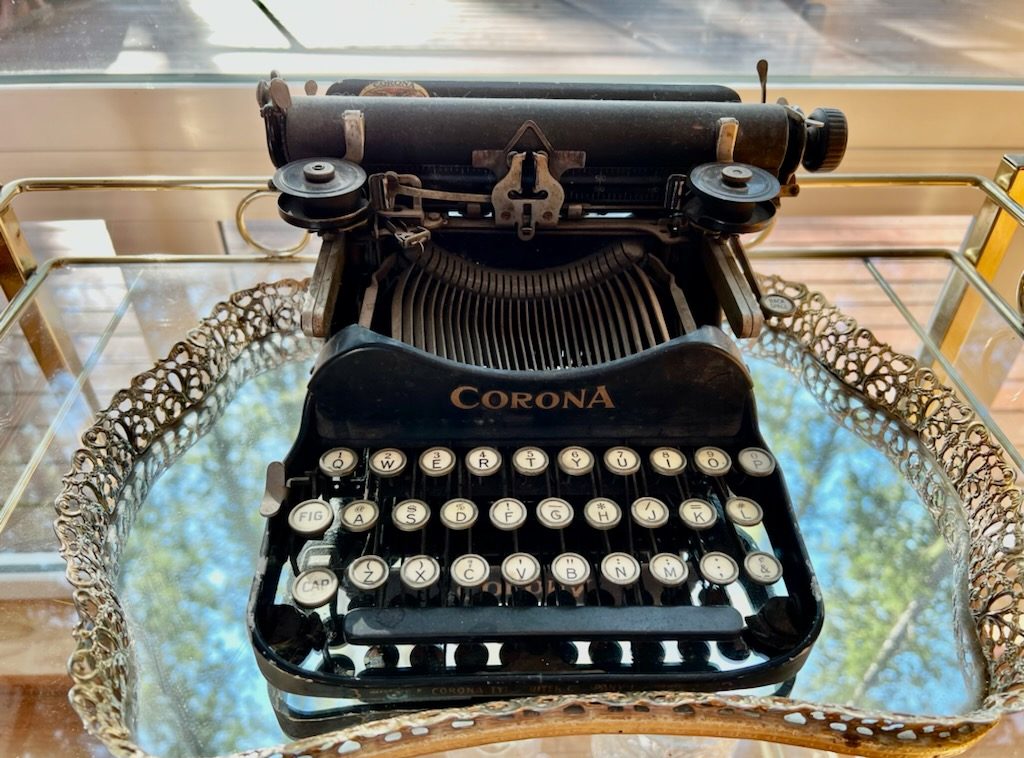
Dear Book Group Members:
I am missing our meeting tonight, but I know the red wine flight or the 5 o’clock Somewhere margarita at Swing’s will be someone’s choice for the evening. Lift one for me.
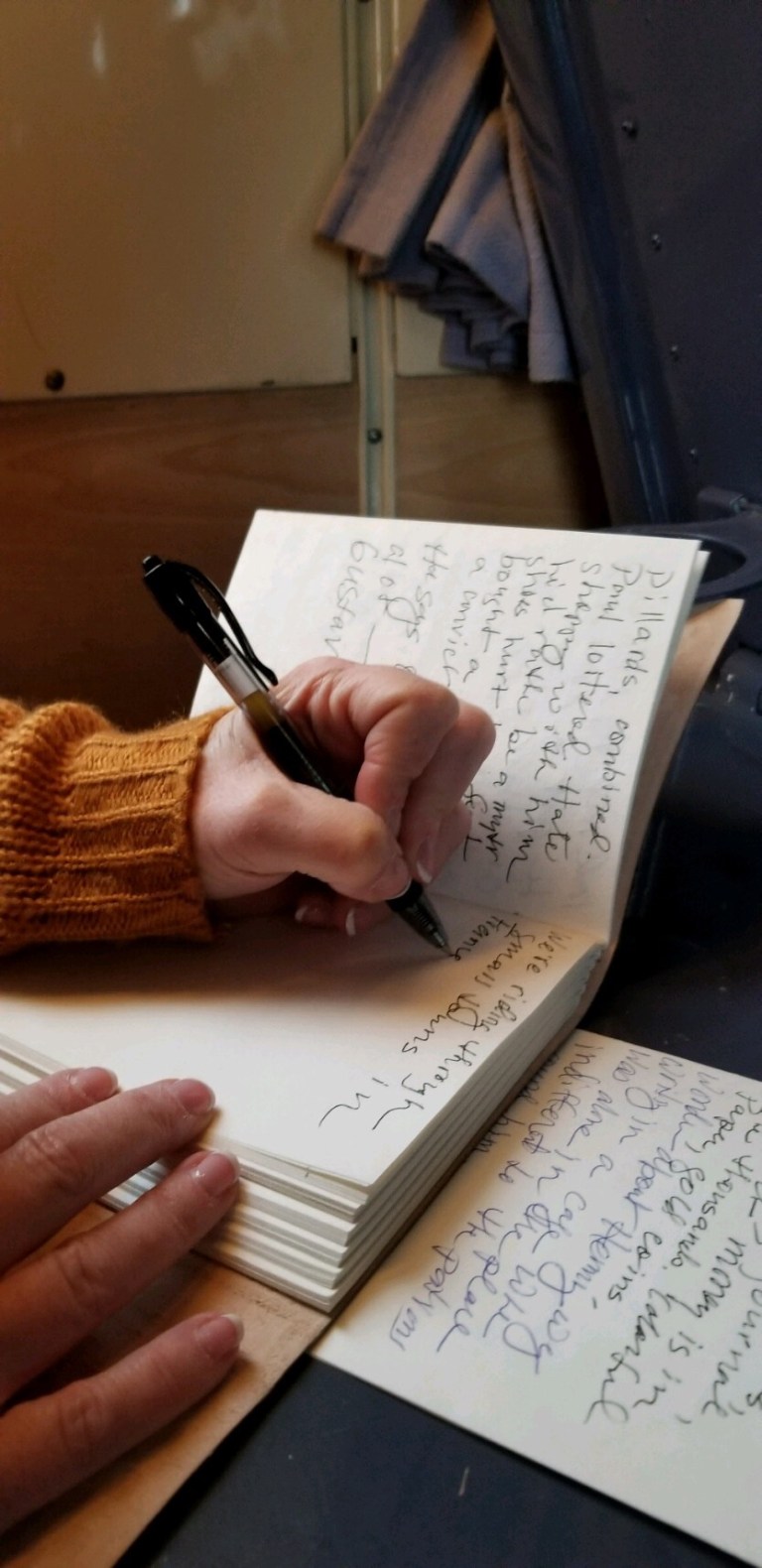
I wish you could see what I see as I write. I am perched on a tall stool looking out grand windows that I have to stand on my tiptoes to reach the latch. 
Three ornate buildings with sculpted balustrades hovering over the tops of the windows and balconies framed with black, wrought iron railings are close enough neighbors I could say hello without raising my voice. When I stick my head out the window, the view down the street is filled with fluttering awnings, sidewalk tables with neatly folded blankets on the chairs, and light from shops spilling out onto the cobblestone streets. 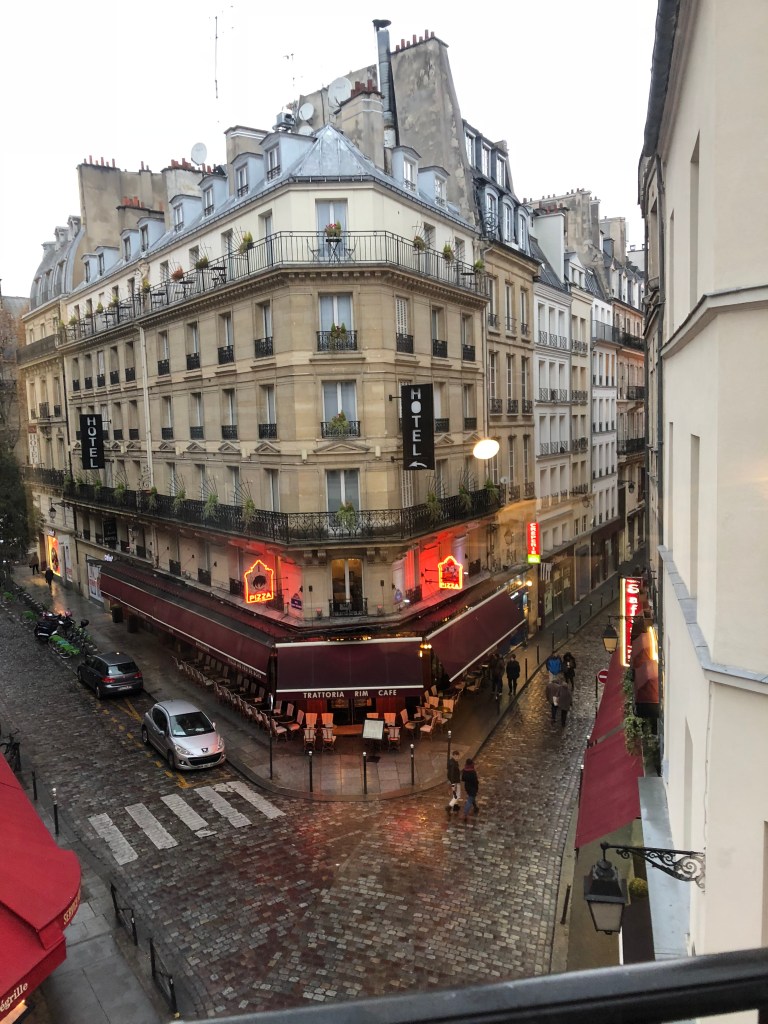
We are staying at 19 Rue de la Harpe, Saint Michel Notre Dame, a third-floor apartment with stairs so narrow, Paul and I had to walk on our tip toes while carrying our horrendously heavy suitcases. Paul has given in—we will buy one more to get everything home. 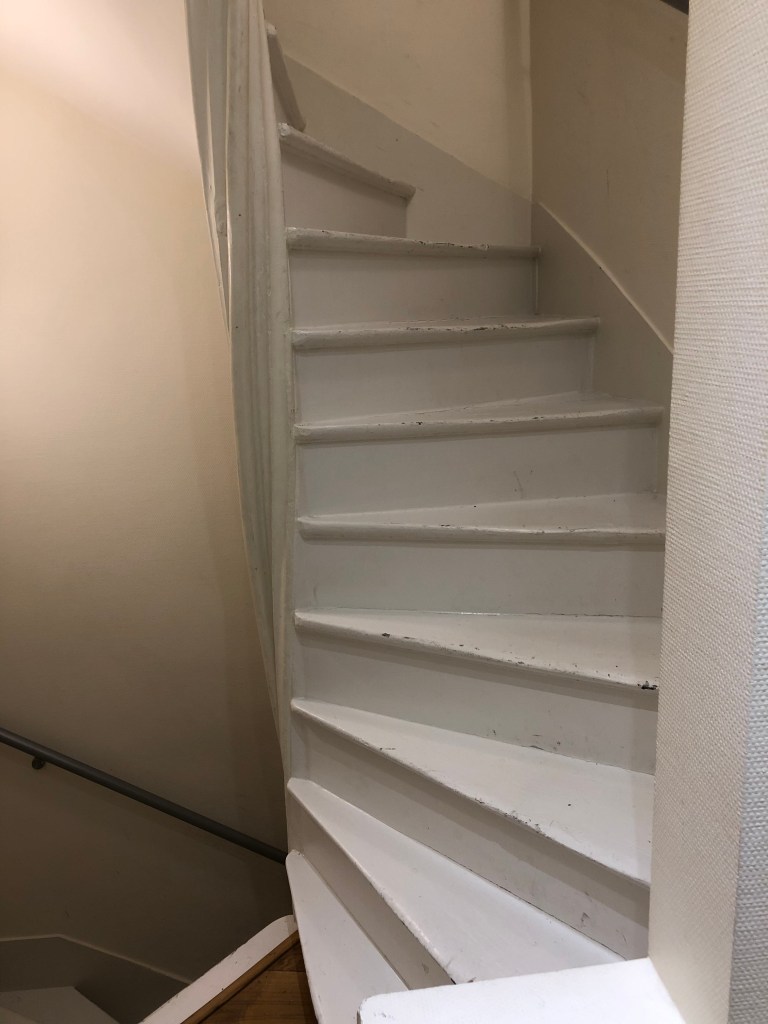
Notre Dame is just over our shoulder here on the Isle de la Cite on the Left Bank. Heavy, tolling bells and singing chimes announce the start of every hour. I run to open the window or stop on the sidewalk to listen. All of Notre Dame’s bells are named and tuned to a specific key. I would like to hear Emanuel, hoisted into place in 1681 and weighing 13 tonnes (Conversion needed) but he is only rung on high holidays or moments of great importance. Guess what? What I always called the “clapper” in the bell (forgive me, I know), is actually called the ‘fighter.’ Paul and I are still discussing the physics of who swings what and what gets hit where. (Now the bell image is gone, oui?) 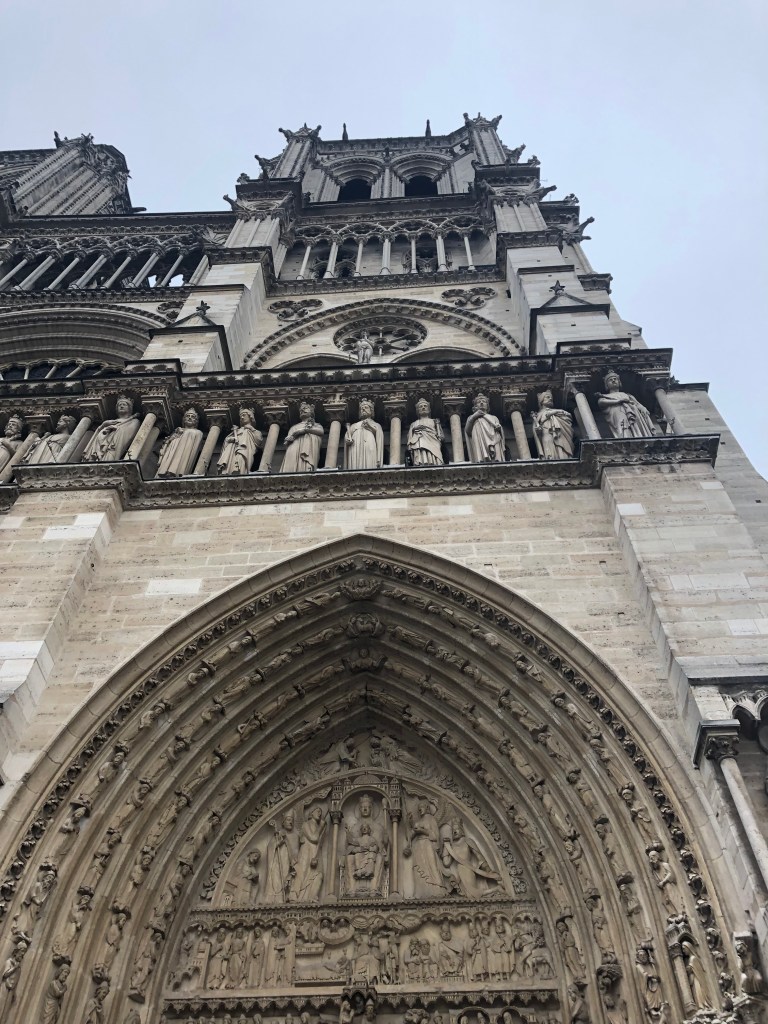
When we were in Normandy on a D-Day tour, I thought of you often. We read those novels on World War II—The Nightingale, the Lilac Girls, All the Light We Cannot See, The Gournsey Literary and Potato Peel Pie Society—and I saw all the characters we brought to life in our conversations. The small French villages where the resistance fighters smuggled children out in wagons and women planted gardens out of the treasured few seeds they had left, and the long fields where they walked and dreamed of a life beyond the ugliness were real—just as we had discussed. 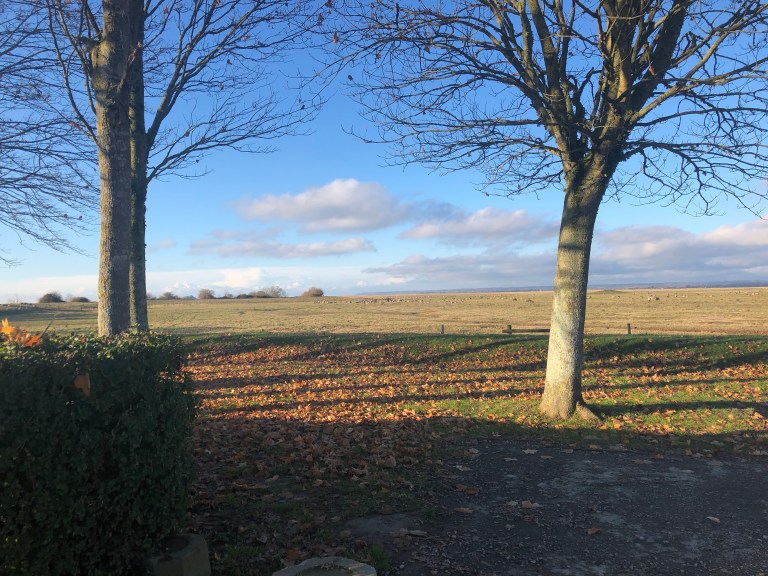
We have had our ‘near accidents’ as always: we almost hit a cow late at night that wandered out of its field, and, of course, the first thing I thought, ‘I can blog about this!’ 
We took up every spare place for suitcases in the train car and Paul and I pretended they weren’t ours; and we stared at our host and hostess every morning at the bed and breakfast inn as they grumbled to one another in murderous French. I am not sure if they resented us or they were having troubles in their marriage.
We have a few more days until we leave for home. I am reading A Moveable Feast by Ernest Hemmingway. We have a tour tomorrow on the Roaring Twenties—Hemmingway, Fitzgerald, Ford, Eliot, Picasso, Dali—all the places they ate, drank and lived. Gertrude Stein better be on the top of the list—she mentored them all, and of course her lover, Alice B. Toklas.
I’ve never been a Hemmingway fan, but I am loving this book. Remember last month when you asked me ‘Lesley, why are you writing? What are you going to do?’ I didn’t how to answer without stumbling over my words trying to make sense of my writing life. So, I’ll let Hemmingway speak for all writers: “Do not worry. You have always written before and you will write now. All you have to do is write one true sentence. Write the truest sentence that you know.”
Looking forward to seeing you in December.
Much love,
Lesley

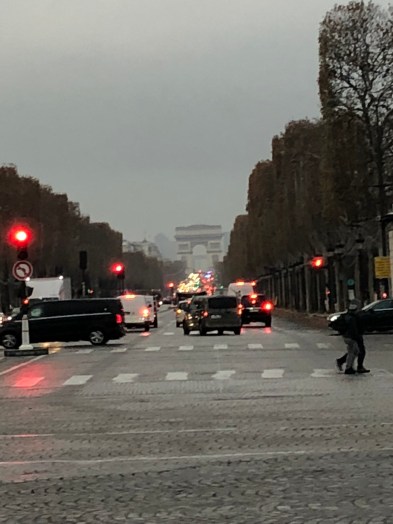
 “It’s 500 euros, Darling,” she coos. “A coat for life, a coat to remember Paris.” I feel myself weakening. If I average the cost of the coat across over my lifetime it begins to seem like a deal. The saleslady wanders away to allow Paul and I time to negotiate.
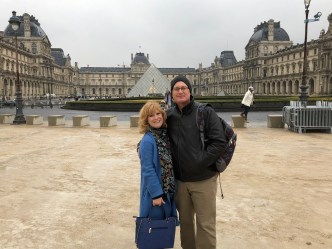 The Louvre’s glittering pyramid looks like it has always been a part of the eight-century year old museum. Notre Dame’s Gothic spire and silent towers come to life when the bells toll. But, it is the moment you catch sight of her that make you swallow the lump in your throat and think to yourself, ‘It was worth the wait.’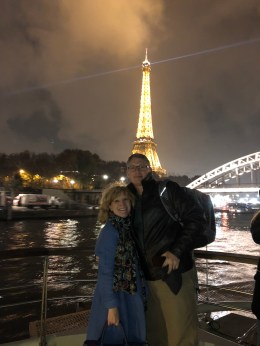
 We’re here. We’re in Paris. I’ve already overcome my initial fears: to find my luggage, secure a taxi, negotiate the language barrier, put in the correct codes to the building, and turn the key in the right lock of the right flat, and figure out how to use the toilet. I was afraid to face a bidet. I don’t quite get it. After 24 hours of flying, sitting, and eating food I normally wouldn’t eat, I need a glass of rose and a salad.


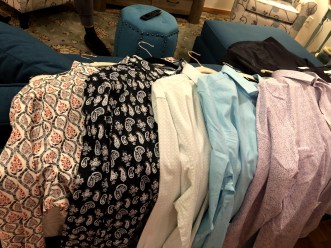 He looked at them and didn’t say much. He stared at his phone and flicked a map on the screen whenever a commercial came on. I waited.
 Lesley Klenk, Author