Our journey to Portugal began with the most innocuous question.
“Where did you get those pajamas?” It was Paul asking the question and we were on the plane from Seattle to London.
“They aren’t pajamas,” I was indignant. “They are lounge wear. They will be very comfortable on the plane.” I held up my leg and pulled the fabric up to my knee. “See, no seams, soft lining. Perfect.” I reached out my toe and kicked him gently. “You are so silly. They are not pajamas.”
“Hmm,” he mumbled and settled his glasses on his nose. It was to be his most frequent comment of the next twenty-four hours–and more.
It was an uneventful journey, but seeing how we were sitting in row 52, it took us ages to get off the plane and into the main center of Heathrow Airport. We looked at our watches. We had twenty minutes to get across the airport and get on the plane to Lisbon. I shouldered my backpack and looked grimly at Paul. “Ready?” He nodded. We began to skirt around the edges trying to get around the Seattle crowd that had flown with us. Every time I managed to inch forward, an older lady with hair that looked like George Washington’s, shuffled in front of me. She was really shuffling–her heels never left the floor. I looked at Paul and the woman’s husband was blocking his progress. Fuming, I bounced behind them on my tip toes like Mohammed Ali psyched for a fight. “Come on,” I urged silently. When they broke left for the escalator, Paul threw his head right towards the elevator.
From there we climbed more stairs, took more elevators and finally arrived at Terminal 5. Terminal 5 in Heathrow is the gateway to Europe, and with the right timing, you could fly right through. This is where I prepared myself. My new favorite TV show, Border Security, Australia, had taught me how to sail through Passport Control without being pulled out of line for an inspection. I steeled myself. I did not know where Paul was, but it was every person for herself now. Don’t be too friendly; don’t stare; don’t look away; don’t tremble, don’t cut lines, and above all–don’t bring fruit. The sniffer dogs will get you every time. I passed.
I turned around and looked for Paul. He too, watched a lot of Border Security, and he had survived the non-inspection. So had shuffling George Washington and her silent husband. We jostled in line to get on the plane. “Paul, I don’t think our bags are going to make it.” I scanned the row of suitcases riding up the ramp of the plane outside the window. I did not see any robin egg blue bags. I began to worry.
The pilot and the stewardesses were obnoxiously cheerful.
“We’ll just go once or twice around the hole and then we’ll be on the way,” the pilot said with a note of satisfaction in his voice.
“What hole?” I hurumphed.
“Hmm. I think it is the city,” Paul said not looking up from his book.
Two stewardesses pulled their cart up to us after we had cleared the hole’s airspace.
I’m starving,” I whispered. “What the best sandwich?”
“Oh, darling, you’re peckish,” the blonde one cooed. “You might fancy a Jolly Hog Sausage Bap.”
I looked at her blankly. “A sausage sandwich?”
“Yes, with ketchup and brown sauce.” Her eyes were merry as she returned my gaze.
“I think I’m going to just get a cocktail,” I announced weakly. I was still pondering the origins of brown sauce. “Do you have an apperol spritz?”
“Orange?” she inquired.
“Yes.”
“Madge, will you go to the back and get a bottle opener from my purse? 22A fancies a tipple.”
“Tipple?” I squeaked.
“You did say a spritz?” I nodded. “Yes, it’s definitely a simple tipple once we get the bottle opener.” She expertly flipped the lid off the bottle and handed me a cup of ice. “Here you go, dearie.” She looked at Paul. “You want a tipple too?” I turned to look out the window. I have a history of not being able to control my giggles.
“Glass of wine, please.”
“Why didn’t you order a tipple?” I swirled my orange drink in my glass.
“Please.”
I smiled at him and placed an impulsive kiss on his cheek. “We can discuss this later, okay?” I saw his eyes blaze with recognition. First, I must search Google for the murky origins of the word tipple. Perhaps it was a British Airways pun. Or not.
“Hmm.”
We got to Lisbon, fought a crowd of welcomers and searched for our bags. Paul checked the airtag. There they sat, the robin egg blue beauties, on the runaway in Heathrow. We were stuck with the clothes on our backs and whatever we could snuff up in our backpacks. It was a disaster: we each had one pair of underwear, one pair of socks, and the pants and shirt we were wearing.
“Paul…” I wailed.
“Hmm,” he responded with raised eyebrows.
“You are right,” I pouted. “Lounge wear is just another name for pajamas. What am I going to do?”
“Hmm,” was Paul’s careful response.
I’ll tell you what we did. We filed a claim with British Airways and, as I read the paperwork, I saw that I could claim up to $1000 in toiletries, clothes, shoes, and meals until our bags arrived.
The next day I hit Portugal’s main shopping district, Rua Agusta, and proudly marched through the stores wearing my cozy, no-seam, flannel pajamas. It was hot, the crowds were dense, and my thighs drowned in the flannel garb. I couldn’t manage to max out my British Airways claim, but I did buy some Portugal-only clothes for the beach while also scoring four sweaters for the upcoming Olympia winter. I failed in one capacity: I could not find Paul his favorite “whitie tighties” that seem reserved for men over age sixty. In our case, he was ahead of his time, I guess.
I tossed my overflowing bags under a table graced with a crisp white table cloth and pulled my sticky shirt off my skin.
“Sangria, please, white.” I huffed. Oh dear, that was rude. “Por Favor,” I waved. The waiter nodded his head knowingly. I don’t often have a drink on my own. My grandmother would have called me a hussy, but Paul had a different reason.
About ten years ago, we were in wine country in California. Paul had a headache and I was starving. I ended up sitting at a bar at a country club eating a French dip sandwich and arguing with the bartender about the need to recognize the designated hitter as an approved position. I guess I raised my voice because I was politely escorted from the building because of “non-member entry.” I should go back. I’d taunt him with Edgar Martinez’s acceptance into Coopertown.
So here I am in Portugal a decade later sitting in my pajamas at a ritzy restaurant on Rua das Portas de Santo Antao. The sangria arrived, and I knew instantly mine was better. I make it every year on the first ninety degree day in Olympia. I lifted my finger for one more glass, and I debated with myself whether or not to tell him a glut of brandy would bring out the fruit flavor. I smiled and kept silent. I’ve grown in ten years and I am pretty sure my pajamas would not support my cause.
When I was a little girl, my mother washed my hair every Sunday night in preparation for the school week. Back then you didn’t go to bed with wet hair; it was thought you could get a cold. So, while my hair was drying, I could sit in front of the television and watch Mutual of Omaha’s Wild Kingdom. Every time I heard the opening music of the show, I leaned forward and scanned the screen for elephants. If they were there, I willed my hair to stay wet and heavy.
On our recent trip to Thailand, we visited the Elephants Hills Sanctuary in Khao Sok National Park. We stepped out of the vans and watched the sixteen gentle giants emerge from the fields and walk in a single line towards us. The youngest was fourteen and the oldest was seventy-six. As we stood in the shade of the trees and listened to the guide, I slipped through the group towards the ancient female.
Mai Ri, the oldest elephant at the sanctuary, was born in 1943 when thousands of elephants were used as laborers to haul logs out of the Thai forest. They were used by the military to carry supplies, and they were captured in the wild and shipped to countries all over the world to work in circuses. Mai Ri has difficulty standing, so she shifts her weight from one leg to another. Her breasts sweep the earth as she walks, and she is blind in one eye. When she passes by a tree, her scarred ear flap catches on the bark and tears her already shredded skin. She has only one tooth in her mouth. No one knows her complete story; likely she was one of the rejected elephants found on the streets of Bangkok carrying tourists for less than a dollar a ride.
Before we bathed and fed the elephants, we got comfortable with their immense size by stroking them and touching their ears and trunks. The mahouts—the elephant caregivers who spend twenty-four hours a day with them—watched carefully and used commands and thin sticks to guide them. Mae Ri stood as if she were asleep while I patted her shoulder and ran my hand down her trunk bleached yellow from the years of sun.
We walked the elephants to a pond and stood on the trampled grass while the animals slid down the muddy bank. They blew water out of their trunks and jostled each other looking for the coolest spot. Mai Ri slowly sank to the bottom of the pond and rested there. Only her trunk was above water. Soon, the mahouts spoke to the elephants and they all lumbered out, climbed the hillside, and rolled their skin back and forth, side to side, like ships bobbing on the water. Mud streamed from their sides and hit the path in circles. Mai Ri stayed on the bottom until her mahout crawled down the water’s edge and spoke to her. She followed the others to the bathing stations.
Paul and I joined Mai Ri at her pad. She waited for us, lifting her feet and swaying back and forth. Paul sprayed her with the hose, and I tossed buckets of water on her back. Together, we used coconut fibers to scrub her skin. Her one big brown eye gazed towards the empty, green field beyond us. A little afraid, I leaned my head to rest on a real-life elephant’s trunk. I felt her skin, smooth in some places and bristly in others.
I held Paul’s hand as we left the elephant sanctuary in the air-conditioned van. The driver (who I can only assume was fired upon our return) decided to take a short cut back to the camp. We bumped over craters in the road and rounded a corner where a traffic jam of vans was negotiating the entrance to a large, penned area with wooden viewing stands. Elephants wearing traditional Thai decorations stood in a line with giant rickshaw baskets high on top of them. They lowered themselves to their knees to allow people to climb them like a ladder. Once the baskets were bulging with people, the elephants stood up and began to walk. Heavy chains rattled with their footsteps, and they were prodded with a short hook, an ankus, by their mahouts. Riders kicked the elephants behind their ears urging them to go faster. The massive creatures ascended steep, man-made hills and the riders screamed as the basket slid backwards. They shouted as the baskets slid forward on the downhill side. As far as they were concerned, it was a roller coaster ride.
Is there a difference between the sanctuary and the tourist attraction? No one knows how many of Mai Ri’s babies were taken from her, how much pain and indignity she endured over the years, and even now, the performance she does twice a day at the sanctuary—swimming when she doesn’t want to, getting baths she does not need, and waiting to be fed by people afraid of her searching trunk—likely try her patience as an elderly matriarch.
The other people in the van shouted at the driver for taking us past the attraction. They contended we shouldn’t have been exposed to such cruelty. But not one of us unlocked those heavy van doors and demanded an end to the atrocity. ‘We went to a sanctuary,’ was the sanctimonious message passed through the seats as if that absolved us of putting our own desires above those of the elephants.
Travel industry experts say the elephants cannot be released into the wild because there is not enough habitat left to support them, and financial resources are limited, so there must be a means to recouping the costs.
Protected by the swaths of cool air and the guilty silence all around me, I sent a message out to the universe hoping Mai Ri recognized that my touch came from the truest part of me—my childhood self—and I wanted only to honor her. Given her long life, and perhaps her longing for her lost children, I hope she understood.
(I’m tidying up my electronic files and discovered this one was left behind a few years ago…)
I am a person who lives by the ocean. I look out my window or stand on the beach and know that what I see and what I touch will not be the same the next time my gaze wanders back or I feel the rocky shore under my feet. In some moments on my trip to Switzerland I have felt a tightening in my chest and an impatience in my search for a limitless view. It was not the landscape that caused my distress, it was that I couldn’t connect. To put it simply, every time I called Switzerland, I got a busy signal.
To be amid such beauty—soaring, pointed, silent, massive Alps, glacier lakes in a teal green that forced a scream of ‘cold!’ from me each time I burst from the water, Heidi chalets tumbling across unbelievably emerald grass that undulates across the valleys in waves—all of it delivers such pleasure to the eye. However, beauty is not everything.
Someone told me once that people can be kind, but it does not equate to friendship. I would say that is true in Switzerland. Everyone has been unfailingly kind, but I have not met anyone who was willing to pull back the curtain and let me into their interior space where they unpin their hair and let it swing free.
For most people life is messy, and perhaps for some Swiss it is. Hot mess should be my first name. I am the one whose bra straps never tucked neatly inside my shirt as a teenager; I am the one who threw my head to the skies and howled to my children ‘you two are killing me!’; I am the one who “ugly cried” in public places and couldn’t stop it if I wanted to.
I want to be perfectly frank: I am writing about MY experience in Switzerland. I am writing from the lens in which I see the world. I know it is my experience, because I’ve spent the last few days wondering why I could not string together a few words to make a sentence. I’ve stared each night at a blank computer screen and questioned what was wrong with my fingertips. Most of the time they trip merrily across the keys. For a week they have been silent. They woke up this morning.
We left central Switzerland yesterday and drove as far south as possible while still staying in the country. We are in Gandria, a tiny hill village on Lake Lugano, a few miles from the border with Italy. There are four languages spoken in Switzerland—German, French, Italian, and Ramanesh (an old dialect of Italian). If you divide Switzerland into sections that touch the surrounding countries, you can see that the Swiss who live in Geneva and farther east speak French while the Swiss who live in the north, for example Appenzell, speak German. Here in the south Italian is the language for the Swiss, but in my experience, I see no Swiss—it’s Italian through and through.
The sound of people speaking Italian swirls around me like curling wisps of smoke. “Buongiorno!” cries the tabbacci shop owner as he peels back the doors to his kiosk. “Buongiorno,” sings the waitress next door as she sweeps crumbs from the table. We even got a muttered “Buongiorno,” from a grisly fisherman as he passed us in his dory while we bobbed in the lake during our morning swim. My heart is light, I traipse along the crooked, stone paths, and my smile is wide as I raise my wine glass and grin at the waitress.
Why is it that I can embrace one culture and be untouched by another?
There is only one war memorial in Switzerland. It is the Lion of Lucerne, carved into a rock in Lucerne. It is a dying lion, head in anguish on its paws, lying on its side. It commemorates the Swiss Guard soldiers who were killed in 1792 during the French Revolution. The monument is visited by over a million people each year in Switzerland. It acknowledges the loss Switzerland endured fighting for someone else. Mark Twain called it “the most mournful and moving piece of stone in the world.” The Swiss revere the monument but still feel the sting of its controversy. Switzerland is adamant. They will not glorify a moment in history where Swiss citizens died for a foreign monarchy. After the defeat in France, the country turned inward—developed their own economy, kept their own counsel, stated their own neutrality. That is the way it has been for generations, despite what happened to the rest of the world.
So, it has me thinking about the concept of collective history. I do not advocate for war as a resolution to a disagreement, but I do believe in two things: the value of speaking your mind and acting with your heart. Simple, I know, but those two values have been my North Star. Collective history means we were all there even if we saw it from different perspectives. It means we were all changed in some way and the memory of the events continue to inform us over time. Being a part of something bigger than yourself allows you to become something more. You may not have thought you had the courage to do something unknown, but with allies on your side, you trust someone has your back. Leaders are created through collective history. Leaders emerge because of events, not in spite of them. Sacrifice inspires us to find a common purpose and to rise above the fray.
A few years ago, we visited Normandy, France, and Paul and I walked along some of the D-day beaches. We sat on the bus with people from Canada, England, France, and even Germany. Being American, I expected the tour to be all about the American’s role in D-day, but I was soon silent in shame. Yes, the United States landed on Utah and Omaha, but the British stormed Gold, the Canadians fought on Juno and the British and the French commandeered Sword. Collectively, eight allied countries, 7,000 ships and landing craft, and 160,000 troops stepped onto French soil on June 6, 1944.
The Swiss did recently break with some of its strictest approaches to neutrality—they joined the U.S. and others and imposed sanctions on Russia after it invaded Ukraine. They also contributed 1.3 billion francs to aid Ukrainian refugees.
So, what does this have to do with Switzerland and my struggle to connect? I’m not sure. Just as I choose to stand on my ever-changing beach with its detritus floating in from all directions, the Swiss have their immovable mountains. We each know our place in the world, but perhaps visiting one another is worth answering the call.
(I’m tidying up my electronic files and discovered this one was left behind a few years ago…)
We made our way to the crown jewel of Venice—the top of the Rialto Bridge that slices across the Grand Canal. The aquamarine water churned below us, and boats of all kinds dashed helter skelter across the rushing water. Black gondolas with curved tips steered by with men in striped shirts poled and oared with the precision of threading a needle. Lacquered speed boats rode low in the water with tinted windows and hidden occupants going to even more secret destinations. My least favorite, the vaporetto (government water taxis), chugged up and down the canal picking up and dropping off passengers in a smog of diesel fumes. The commotion, the fervor, the energy was intoxicating.
Paul squeezed my hand. I squeezed back. It was our signal born of twenty years of marriage where we had to sneak around our three children to have some semblance of a love life.
Before we met, I felt seasoned by life and was sure, even as a single mother, I knew what I was doing. I could work all day, drop one child off at baseball, pick up the other child from art class, get us all home, take the pantyhose off, feed the dog, pop the frozen chicken cordon bleu in the oven, put peas in the microwave, and crack the lid on the 1-minute rice. In 18 minutes, we sat down for dinner. Later, after the homework and brushed teeth, we all went to bed. In the space between the efficiency and the certainty however, I was lonely. I read books in the silence, a cat laying at the very end of the bed my only companion.
Then it all went to hell. We met, dated, and got married all within a year. There were three kids to haul around, a new house with acoustics that made it sound like I was the one playing Call of Duty, a fenceless yard that caused us to cajole and beg the dog to come in from the night, homework was forgotten, and cavities happened. Life was no longer lived with a precise certainty, but I was happy. A husband lay beside me each night.
That brings us to our 20th wedding anniversary trip—three weeks in Italy. The children are grown, I’m paying the dog sitter $75 a night for peace of mind, and there is a nine-hour difference between Europe and Washington state. Everything is in place. An open-ended, lazy schedule has allowed for plenty of time for…hand squeezing.
“Where are your pills?” Paul looked up from the toiletries bag he was unpacking.
“Here,” I held up my daily vitamins and apple cider vinegar pills.
“Not those,” he said. “You know…the medicine.” He gave me his little boy it’s-almost-Christmas-morning face.
“Oh no,” I sat down on the edge of the bed and twisted my socks in my hands. “I forgot that medicine.”
Paul’s face looked exactly like it did in 2011 when Michigan beat Ohio State scoring 40 points in the game. Coach Urban Meyer had let him down that day. Now it was my turn.
I have chronic bladder infections caused by narrow ureters that hold onto germs and turn them into infections. These infections aren’t the kind where you just take some drugstore pill that turns your pee orange. My bladder infections cause me to scream in childbirth-like pain and, as Paul drives me to the emergency room, I yell at him that it is all his fault for injecting germs into my ureters.
It was an untenable situation until a kind, elderly doctor wrote me a prescription for Macrobid, an antibiotic, and leaned into whisper, “Take one after intercourse. It’s enough to kill the infection in its early stages. But,” he cautioned me, “no more than four in a day.” Right.
So, what does all this have to do with Venice? Everything. Absolutely everything.
The next morning while Paul was still sleeping, I decided to find a pharmacist in a city with maze-like corridors, twisting waterways, and bridges to somewhere that become nowhere. The faded Italian lettering on the sides of the buildings was meaningless to me. I opened up Google maps without a lot of felicity; I’m a give-me-the-directions kind of girl. And, I have a history. I get lost everywhere. I went to a mall in Thailand and forgot my phone; I wandered around Notre Dame in circles and finally collapsed in a Chinese food restaurant and cried; I took the wrong staircase to our resort in Zihuantanejo and ended up in a secret drug meeting in the jungle run by the cartel (I think). Hence, Paul doesn’t trust me to go anywhere in a foreign country by myself. But, this was important. Italy would not be Italy if…well, you know.
I somehow made it to the Rialto Bridge. I waded into the mass of people swirling around the coffee places, elegant stores, and tabbacci shops. On my phone screen I looked at the picture of the Farmacia Morello. I ignored the address. Landmarks. I needed landmarks. Google answered my prayer. Basilica S.Maria Gloriosa dei Frari rose out of the melee, and blessings of all blessings, the Farmacia with the bright green cross stood across the street.
“May I help you?” A young man with a nose ring and curly black hair leaned forward and I cleared my throat.
“Macrobid? Do you have it?” I stood up straight and tried to look respectable—not like a foreign hussy.
“That medication is an antibiotic. You need a doctor note,” his eyes were kind above the nose ring.
“I have a prescription. The medicine is at home. I am on vacation,” I paused for effect. “with my husband.” I tried my best to look rational. He knew that I knew that we were playing the let’s-not-talk-about-what -we’re-really-talking-about game.
The pharmacist studied me for a moment with his head titled to the side. “Okay, okay.” He hustled behind the counter bending to grab a white box. “I give you Macrobid.” He handed me the box. “Seven euros.”
“Seven? I echoed.
“Yes, ma’am. There are twenty pills. Will that be enough?”
“It better be,” I muttered. “Grazie.” My head held high, I sashayed out of the farmacia. I could tell he knew it wasn’t just about sex; it was about the Call of Duty, the recalcitrant dog, and those subsequent visits to the dentist. We’d put in the time then, now was the payoff.
So, that is how I saved Venice. And Florence. And Tuscany, Rappallo, and Rome.
It all started because of a tiny white lie, but by the time we tried to catch it by its tail, it was too late. It was Saturday night in Reykjavik, Iceland, and the Spring crowd was itching for a party.
“Let’s go for it,” I murmured to Paul while keeping an eye on the growing crowd in the bar of the Apotek Hotel in downtown Reykjavik. I fluffed the large, colorful pillows behind my back on the bench seat as we surveyed the tight of group of people waiting for dinner reservations or drinks in the bar.
“It’s 8,900 kroner,” Paul replied sipping his martini. “Do you think we need a $75 dollar dessert?” He pointed to the cost of the humdinger in the menu and tapped his finger on the price.
“It comes with fireworks,” I said lifting my chin to the ginger-haired waiter. “How often do you get fireworks?” I asked and placed our order.
The Apotek hotel is located in the center of the city. Large windows face out onto Althingisagardurinn Street, where restaurants, a church, and the original parliament building, Althingi, straddle the city park. The hotel was originally known as the “Reykjavík Apothecary” or Reykjavíkur Apótek. It was designed and built in 1917 and renovated in 2014. Think of it as an iconic building as well as a hotel. It is an architectural gem in the city as well as party central.
“You know it’s her birthday,” Paul commented as the waiter placed my rosy, pink gin drink on the table in front of us.
“Really?” the waiter’s face brightened. ‘I’ll tell the wait staff.” He turned away.
“Wait,” I called. “Will you take our picture when it comes?” He nodded and hurried out of the room.
That is how the innocent lie was spun.
Slam!
The front door opened and shut in the ferocious Icelandic wind. A large, blonde man with Nordic-blooming red cheeks wearing electric blue, spandex jogging pants sauntered to the corner of the room where an aging, but carefully put together, woman was cocooned in the far window of pillows and fluffy, wool blankets. He held out his arms and roared hello. The woman jumped up and wrapped her tiny legs around his torso.
“My goodness,” I whispered to Paul and sipped my pink concoction.
“Shhh,” Paul said staring at his phone. He was working on a deal back at home, and as long as I didn’t wrap my legs around his waist and make a scene, he was content.
Slam!
A large family squeezed past the door and into the vestibule. The mother had that look of exhaustion I remembered from 25 years ago. She was literally on her lips, or her last leg, or just one moment short of hysteria. Her husband looked around for the restroom and ditched her with two children under the age of six and her elderly in-laws standing next to the largest window facing the park. The kids immediately climbed up onto the bench and began blowing wet bubbles on the glass. The mother sank onto the jewel-tone hassock and peeled the jackets off the kids.
“She needs a drink,” I observed and tipped my head in her general direction.
“Sshh,” Paul said under his breath. “You have no idea how your voice can carry in a small room like this.”
Slam!
We all looked towards the door as a young, twenty-something woman with impossibly long legs with equally impossibly long blond hair burst into the bar. She sashayed into the noisy, bright room wearing patent leather black boots that stretched above her knees. Up top, a short rabbit fur jacket grazed the top of her bare tummy. Paul lowered his phone to peek at her.
“Better not. Remember, it’s my birthday,” I said slightly louder than necessary as the woman took off her coat and shook out her platinum tresses.
“Happy birthday to you, Happy birthday to you,” three waiters bearing a large copper platter of desserts rounded the corner and placed the enormous tray in front of me. A fireworks cone in the middle of the ice cream and cake hit its stride and began spurting fire in earnest. Dried ice snuggled around the dishes began to smoke and waft towards us grower thicker and thicker.
People began clapping and whistling and Mr. Spandex stood up and motioned the bar to join him in singing happy birthday.
“Sing, Paul.” I said under my breath. “The birthday girl can’t sing to herself.”
Paul looked at me and warbled weakly as the ginger-haired waiter took my camera and clicked a few pictures.
“Thank you,” I said smiling at him as I dug into a pink, rosebud piece of cake.
“This was more than I expected,” Paul said rotating the tray to him. I placed one finger on it and stopped it in its tracks.
“If you touch the rosebud cake, I’ll make a scene.” I let the platter swirl towards Paul and licked my spoon.
“Happy birthday, dear girl, you don’t look a day over fifty,” the large Nordic man and his girlfriend patted my shoulder with enormous hands. “Goodbye,” they called.
Thank you, my fifty-eight years love you odd people. I thought.
I looked down and a sticky child with defeated brown pig tails stared up at me.
“Here,” I said sighing and held out two macaroons. “One for your brother too.” She scampered back to her mother and buried her face in her mother’s shirt. When she sat up a chocolate smear was emblazoned across her mother’s chest.
“I have to go to the bathroom,” I said to Paul. “Touch the rosebud cake and you will regret it.” He nodded and dug into a caramel-looking flan.
When I emerged from the toilet, there she was—tall boots, short jacket, fake hair.
“Oh hello,” she said smiling, “Happy birthday!” She had a pile of bobby pins scattered next to the sink. One by one she pinned them up into some secret location in her hair. “How old are you?”
I thought for a minute. All this subterfuge was getting tiring. “As old as your mother, dear.”
“I don’t think so,” she said with the bobby pins clenched in her teeth. “My mum’s not forty yet.”
“So,” I said slowly as I did the math, “You are saying I am like your grandmother’s age.”
“About sixty?” she smiled dazzlingly.
“Not quite but yes.”
“Yep, that’s how old my mum’s mum is.”
I thought of all the comebacks I could possibly summon in that moment. My mind went blank. This girl’s life was a blank slate. She had no idea how many dumb men she would date much less might marry. She had no idea that menopause would make her waist into a tree trunk. Someday she too would pee when she laughed and fart when she snorted. I knew in that moment that I needed to hug that mother in the bar and bless that woman who loved the man in spandex.
“Have a great life,” I said over my shoulder.
Slam! The Icelandic wind wound its way through the Apotek hotel and restaurant and closed the door firmly on my exit.
Buttons. It is possible to tell how much feral masculinity a Greek male has based on how many buttons he has undone on his shirt. I’m sorry. I don’t have visual proof of this phenomenon–the men did not cooperate, but I am sure you can envision it.
Men in Greece—as most men in the United States—start with their top shirt button undone. It only makes sense. No guy wants to be so buttoned up his Adam’s Apple is straining to maintain its blood supply. Now, two buttons undone reveal both a healthy Adam’s Apple and a titillating peekaboo view of a man’s chest. It’s the third button that separates the wheat from the chaff—and the easy going from the creeper.
Throughout our travels in Athens, the Peloponnese Peninsula, Corfu, and Crete, lots of Greek men have so many shirt buttons undone I can envision exactly what their first-of-the-morning belly scratch looks like. The more undone buttons, the more audacious the behavior, in my experience. Add in a few gold necklaces and mats of thick black hair, and the air practically buzzes with overt machismo like bees suckling at the breast of the hive.
My first experience with a triple button undoer was our tour guide for the Acropolis and the Parthenon. Small in stature, but large in Greek pride, Spiro wore a Jumanji safari hat and spoke into a microphone.
“Athenia, the goddess of our great country, was bestowed the honor of the dedication of the Parthenon for her wisdom and for her love.” He smiled at the group, sweat trickling down the inside of his shirt. My hand shot up in the air. Spiro paused and desperately looked around at the group. He sighed. “Yes, Madam, you have a question?”
“I was just thinking…how is it that Greek men thousands of years ago did not let their women leave the house, but they worshipped a goddess?”
Spiro stared at me for a long moment and straightened the collar of his shirt. “Athenia was not a woman. She was a goddess.”
Okay, well then.
My next experience happened a few hours later while Paul was napping, and I was shopping. We have an unwritten rule we’ve used for 23 years. While on vacation, he yawns and says he’ll take a rest after lunch while I sit up tall and suggest that I shop so as not to disturb him. It works.
I was in a dress store. We didn’t know it, but most of Greece shuts down on October 31. Only a skeleton crew of tourist-related activities continue until March 1 when the country awakens from its slumber and throws open its doors for the visitors seeking Greek salad, windmills, and ruins. Dresses were on sale, and I was flinging them over my arm envisioning dinners in which I looked like a local. Never mind the fact that the locals were the ones cooking and serving the food.
“Madam, I take these for you to the dressing room.” The shop owner held out his arms, and his too-tight shirt lifted up exposing a dark tunnel of a belly button covered by a thick fringe of hair. His shirt was unbuttoned three buttons down, which, when you think about it, means a single button was all that stood between me and a half-naked man.
I dutifully followed him to the “dressing room” which turned out to be his office/lunchroom. He draped the dresses around the room and then pulled the door shut behind him. I didn’t know where to put my purse, so I plunked it in the middle of the desk. It was somewhere between removing my shirt and sliding out of my pants that I realized there could be a camera mounted somewhere in the messy room. I yanked my clothes back on and threw open the door.
“I’ll take this one, and I must leave. My husband is waiting for me.” I held up the dress and extended thirty euros to him.
“No, I have more for you.” He dove towards me holding a necklace and earring set. He grasped me by the shoulders and turned me around, so I was facing a mirror. He whipped the necklace around my throat and purred, “Beautiful, yes?” My shoulders shivered. His hot breath fluffed the hair just under the nape of my neck.
“Okay, I am done,” I said firmly. “Put them both in a bag.” I grabbed the necklace and tried to turn around. He didn’t move. Smiling smugly, he whispered, “beautiful American woman.”
“Agnacious!” The necklace slid to the floor and the rotund man knelt to pick it up. Head down, he tugged on the tails of his shirt in a desperate attempt to cover his sagging belly. A tiny woman dressed completely in black from the scarf on her head down to the manly black leather shoes on her feet, slammed a purse the size of a suitcase on the table next to the cash register. A large gold cross swung wildly across her chest.
She shoved the bag containing the dress and the necklace at me, and I left the store. I had just one question: was it his mother or his wife?
Just after we got to Crete, I woke in the middle of the night with the flu. In a tiny part of my brain, I knew I would be fine, but during the hours of vomiting, body aches, chills, and fever, I was certain I was going to die.
Paul left to find a pharmacy as soon as it was light. When he came back an hour later, he lined up box after box: Tylenol with caffeine, instant glycerol enema, colon probiotic, herbal relief for constipation.
“Who talked you into all of this?”
“The pharmacist.”
“Get me in the car, Paul.” He paused and gave me that look. He was weighing his options: give in and drive me there or go back again by himself.
“Now,” I growled. He pulled the keys out of his pocket.
We parked our tiny rental car in front of the pharmacy and Paul helped me in. Yep, there he was. The Greek Creeper. He had three buttons undone, two thick gold chains, and a big, gold coin ring on his middle finger which he tapped on the Formica countertop as we negotiated my symptoms.
“Look, I’m not constipated. I vomited. I need something for my stomach,” I croaked. I tried to peer around him at the medicines on the I shelf.
“Nauseous?” He asked and crossed his arms across his chest and leaned back against the shelves.
“Sort of, but not really. It’s my stomach.” In my delirious state I knew what I needed, but I couldn’t remember the name of the medicine.
“Ah, pregnant,” he said smiling and shaking his head in approval at Paul.
The utter absurdity of his statement made it impossible for me to speak for a moment. “No,” I said deliberately shaking my head back and forth. “I’m not pregnant, it’s my stomach. My stomach hurts,” I wanted to call him some vile names, but I didn’t know any in Greek. “I’m old,” I stuttered. “Too old.”
“Not too old, maybe.” His eyes flicked to Paul. He turned and began looking through his shelf of boxes with pictures of women holding babies.
“Pink,” my eyes flew open. “Pink medicine. Pepto Bismo. There. Right there.” I pointed to the shelf where a box of Gaviscon sat. “It is the same medicine, just a different name.”
“No, that is not the right one for you,” he said and turned back to his shelf to rearrange the boxes again.
Paul cleared his throat. “We’ll take that one.” He tapped his finger on the Gaviscon.
“Very well.”
It was silent in the car as we retraced our route back to the rental.
“Pregnant?” Paul’s timing was perfect. Even as horrible as I felt, I couldn’t help but give him a small smile. Now we had to decide what to do with all the constipation medicine.
Zihuantanejo is a magical town. If you read my blogs you know it captured my heart years ago. I just found out Mexico feels the same way I do.
Paul Klenk hitting the pool of Paseo del Morro, our hotel
There are 177 Pueblos Magicos in the entire country of Mexico. What is one? A “Magic Town” is designation granted by the Mexican government as a best place to go in Mexico. It is not an easy title to earn. The town or village must apply for the special status and form a committee to showcase their town’s beauty, historical importance, natural wonders, and cultural traditions. If the town is successful, the government provides funds to improve infrastructure, communication opportunities and tourism-based employment. The government insists on one more quality before it bestows the moniker—magic. How can a town demonstrate magic? Read on.
It is our third trip to Zihuantanejo. We are awakened each morning by roosters lustily crowing in the sunrise; we keep the toilet lid closed in case an iguana takes up lodging there, and the local waiters in the bar downstairs sing “American Pie” and “Islands in the Stream” with gusto even though they are still mystified by the difference between American syrup and jam and bring them both to our table for our inspection. Yoonel, one of the staff who remembers us each time we come, sidled up to me at the doorway and whispered, “Miss Lesley, I am now the Assistant Desk Manager.” He raised his eyes heavenward in gratitude, and I gave him an elbow squeeze. To me this is all magic. Even the possibility of an iguana surprising us in the toilet bowl.
One online dictionary defines magic as, “an unaccountable noun.” Another says, “the power to use supernatural forces to make impossible things happen.” Still another postulates, “a person’s magic is a special talent or ability that others admire or consider very impressive.” So, magic can be an impossible event made possible or a single person with a special gift. My daughter, SarahKate, said, “It is a thinning of a veil between this world and another.” I like that.
Put all of it together, and you have Zihuantanejo.
Zihuantanejo is a small town on the Pacific coast where blue-footed boobie birds soar overhead with neon-azure feet and western Mexico chachalaca pheasants rustle in the bushes as loudly as miniature elephants. Other than the way the crow flies, Zihuantanejo residents are five hours from aging Acapulco, twelve hours from sophisticated Puerto Vallarta, and six hours from stalwart Mexico City. Few people own cars in Zihuantanejo that would actually make it more than 100 miles, so double all of those times and imagine spending them on a dusty bus–that’s how isolated this small town is.
Most people in Zihua (short version the locals prefer) start their day by sweeping their front stoop or walkway. It is a beach town and sand is everywhere. The act of sweeping off the old is necessary to welcome the new. It is creating a blank slate and being open to unknown possibilities. Yesterday a butterfly landed on my nose and studied me gravely before taking flight. I’d be lying if I didn’t think in that moment someone or something was putting a spell on me.
Zihuantanejo is a place where a single yodeling goose can guard a family’s house, people sternly tell their dogs to stay home and see them in town an hour later, and children teach their younger siblings to navigate a skateboard through the Zocalo (town square) by riding three across, all holding hands, and people have to scatter or risk getting tangled in the mess of beribboned braids and scraped knees.
Green pozole soup
On Thursdays in Zihuantanejo, you are only allowed to eat pozole soup for lunch. Seriously. Made of chicken, radishes, onions, jalapeno peppers, and these odd little things that look like tiny spines (hominy), there are three choices of color for your soup–red, white, and green. If you just thought of the colors of the Mexican flag, congratulations, you pass. Pozole is also served with shots of mezcal. Don’t even confuse it with tequila. Mezcal comes in unmarked bottles and is stored under the counter. You hold up your tiny mug, and a nonchalant young slip of a thing will fill your cup so it is quivering to the top about to cascade over. (Or, maybe that is your hand that is quivering after too many free shots).
Even the locals recognize tourists if you visit often enough or you are a heavy-handed tipper. You guessed it–that’s me. There is a teenage couple we see at nighttime. She wears a dress with a wide flouncing skirt, and he is garbed in jeans, large boots and an even larger cowboy hat. They carry music from restaurant to bar and dance the zapateado—a combination of toe taps and heel stomps matched to traditional Mexican music. Paul thinks it is a 4-H project, I think it is college savings, but we both agree they are the real thing.
Dancing the Zapatedo on the Paseo de Pescador–
Umbrellas pop open to shade the elders of Zihua
There is one more example of Zihuantanejo’s magic, and it causes my eyes to crinkle at the corners in a rush of emotion. All over town umbrellas pop open like luscious tropical flowers when you least expect it. They burst open unexpectedly at the beach while crossing the sand, or drift in and out of the foliage in the trees on the way home from school, and even two of them will pop at once in a boat crossing the bay. These nylon flowers dotting the landscape are carried by children to protect beloved grandparents from the sun and it is a honor to carry them.
I love the yodeling geese, flying skateboards, whirling umbrella flowers, foot-stomping music, shockingly hot food, burning, mysterious alcohol, and more. I love the chaos of Zihuantanejo. I love it all. Each day from sunrise to sunset, Zihuantanejo is a blaze of color, light, and sound. The events happen in singular moments, yet they all belong to the collective whole.
All of this is magical to me, but I am on vacation, and I don’t have to chase down the cheeky dog or walk carefully around the goose’s pen. So, it brings me back to SarahKate’s words and I think I know what Mexico requires of its magic towns: to thin the veil between my experience and the town’s life. They must be kept separate, so it remains authentic and real, yet the near opaqueness allows me to know Zihuantanejo in an intimate way without approximating it. Magic.
Fisherman fish at night at Zihuantanejo. Their panga boats (tall bow with a low stern) are beached high on the sand all day, and when the sun begins to set, the men, their hands full of tortillas stuffed with beans, finish their dinners, and walk down to the water’s edge to help one another push their boats across the wet sand. They place logs under the sky-blue bottoms and roll the boats on the logs. It is the smallest man’s job to race to the back of the boat, grab the last log and run it around to the front of the boat so there is no pause in the boat’s return to the sea.
The boats come back with the sunrise, and Paul and I join the rest of the town to greet them at first morning’s light. The boats float offshore and bob across the horizon in an orderly line. Then, one by one, a fisherman guns his motor, flies through the water, and hurtles his boat as far up onto the sand as possible. At the last minute, he pulls his motor up and the boat glides to a stop in the sand. Other fishermen rush forward with the logs, and they grunt together and push the boat up higher. By eight in the morning, the entire flotilla is back home. The crews unload their catch and spread the fish on blankets next to their boats. Townspeople and restaurant owners come to purchase fish for the day. Children dash between the boats clapping their hands at pelicans who, although huge, are known to sneak between the boats and gobble up a mess of fish right in front of a tired fisherman.
The daily ritual of the boats departing at night and returning in the morning is the magic that holds the lives, culture, history, and beauty of Zihuantanejo together. I think of it as the continuous drumming sound of the waves on the beach, but to the people of the town, it is the steady beating of the heart. I feel the thrill of the impossibility of boats flying onto the sand. The veil is lifted, and I am welcomed to a town that embodies magic in all its grubby, funny, sweet, and lovely splendor.
Zihua fisherman beaching his boat after a night of fishing
Zihua fishermen moving boats down to the water using logs for traction
November has rolled around again as it inevitably does, and here it comes: my birthday. Every year without fail it comes barreling down the freeway of my life bringing with it all the detritus of my years which includes—unhappily and shamefully—my furniture problem.
The Lady Sings the Blues entertainment center
Each November I re-arrange furniture all over my house. I move rugs from one floor to another and empty bookcases and swap them with ones from another room. I have even moved my bed from one wall to another and then back again–and Paul never even knew it happened.
November is a hussy who whispers in my ear, ‘here we go again. Another year you haven’t lost ten pounds, another year you haven’t finished a new book, another year your family is growing without you.’ My birthday month is the eleventh of the year. It has none of the excitement of Month 1: New Years! new start! OR Month 12: Cozy Christmas and hot toddies.
November slaps me in the face with dead, wet flower beds, winds that scream up the inlet and threaten to rip off my roof, and rain, lots of it. I can’t really blame my birthday month for the weather, however. I do live in the Pacific Northwest.
Weather be damned. I know how to defeat the Novembers of my life. My mother taught me a wonderful trick using towels to move furniture. Just lift one end of a couch, shove a towel under both feet, do the same at the other end, and you can merrily push a giant couch around a room like it was shopping cart. I have even perfected the towel solution on stairs. Lay down thick blankets, turn the desk on its back and slide it down the stairs without a scratch. So many things take place while Paul is at work…
Sadly, moving my old furniture to new places only satisfies my need for escape for so long. Then an itch comes to buy new furniture and, of course, there is the need to sell old furniture. It’s like an infinity ring. It goes and comes full circle again and again. If I was a thoughtful, planning kind of person, this could all be accomplished in a time like Month 4: April. Nothing happens in April.
I swear, the furniture itch becomes a frenzy the minute I put away the Halloween decorations. All Souls Day dawns wet and miserable and I rise from bed with a single goal: get new furniture. If I attempt to psycho-analyze myself, furniture becomes the symbol of distraction. Creating the perfect room with the right colors, feeling of whimsy, and solidness of wood hides my fear of growing a year older. I can’t stop the onslaught of time, but the purchase of a beautiful buffet and hutch can make me feel better. It’s a high I can ride for a long time. At least past Christmas.
A dear friend said to me this summer, ‘I love your house. There are so many odds and ends and inherited things, it’s just you.’ It was a compliment I know, but it haunted me. If only she knew. I own a teal rug that was my mother’s, and I had to promise to keep it for life; I have an entertainment center I painted dark navy blue–Lady Sings the Blues–last November, and it hulks in the corner of my family room like a cave; I have lamp shades that have to be turned delicately so you won’t see the scars of their previous lives at Goodwill.
The soon to-be-departing Versailles Green bookcase
I did a terrible thing ten years ago. Chalk paint. It’s where you take a perfectly good piece of wood furniture, and you paint it a color like Robin Egg Blue, Versailles Green, or Lady Sings the Blues. I have all three colors in my house. Paul even had a high boy with thirteen drawers, and I painted them different colors. It was cool. Until it wasn’t.
Paul’s chalk-painted highboy
I am stuck with the Lady Sings the Blues entertainment center, but I am ready to discard my Versailles Green bookcase that was once a beautiful cherry wood.
“So, you see,” I explained to Paul sweeping my arm across the span of our living room. “In a well-dressed room, solid, matching furniture anchors the space and allows your eye to travel from one vignette to another.” I lifted my eyebrows and shifted my head to the corner of the room.
“I don’t see the problem.”
“The bookcase. It’s green.”
“You painted it.”
“I know. It was a mistake.”
Paul raised his eyebrows and pointed back over his shoulder to the family room.
“Yes, I realize the navy blue entertainment center is quite intense, but I am not interested in touching that this year.” My voice remained calm. “I want this hutch and buffet. This lady had it online last summer for $1700, now it’s down to $1200, and I bet I can get her to knock off another $100. I know how to work FBM.” Paul tilted his head to the side.
“Facebook Marketplace, of course.”
“Of course.”
I held up a finger in warning. He went silent.
“I’m going to West Seattle tomorrow to view it. If I like it, I will give her a deposit and we can pick it up after we get home from vacation.” Oh yes, did I mention that? We’re going on a two-week vacation in a few days, I’m having a birthday dinner party on Saturday, and I have yet to get a pedicure. Priorities, Lesley…but it was November.
I didn’t clean my car before I left on the 70-mile trip to West Seattle. There were the usuals: a bag of ten bathing suits and their matching cover ups for Goodwill, two mysterious wire baskets begging to become a new project, and a quilt. Quilts are a touchy subject in our house. I have 57 of them. But do you know how much a good Pottery Barn Kids quilt is worth? When the grandkids come they can have a new one on their bed every day for a month. If they ever stay a month…
I got to “Bobbi’s” house (some people have fake names on FBM), and it was a three-story, multi-million-dollar abode with views of Seattle, the Olympic Mountains, and Vashon Island. Solid wood furniture anchored every room, cashmere throws were tossed with abandon on the edges of couches, and I didn’t see any odds and ends. It was perfect. So was she. There wasn’t a wrinkle on her face, her hair was that silver platinum that looked good enough it might not be a dye job, and she was barefoot. Even her painted toes looked effortless.
“It’s down here in the basement,” she called as she swept down the stairs. There it was. It was even better in real life. Sixty-five inches wide by eighty-eight inches tall, the Stanley Villa Library Bookcase was solid, timeless, elegant, forever. It was everything I wanted to be.
“Do you have any room in your price?” I asked innocently.
“Do you know much this is discounted already?” Her eyes darted with fire.
“How about $1100? That way I can tell my husband I got a great deal.”
“Fine. But I want it to be through Zelle. I don’t do Venmo.”
I sat down on the edge of her Restoration Hardware white, duck cloth couch and prayed I knew our username and password to Wells Fargo. While I typed away, she removed all of her collectibles from each of the sixteen cubby holes. I noticed they had Home Goods stickers on the bottom of them. My stomach rumbled a bit. I started to sweat. Why was she moving her things off the hutch? Didn’t I tell her I couldn’t come back for two weeks?
Now, there are lots of kinds of sweat—clean running sweat, hot summer day sweat, but there is one sweat that is like a runaway train. Nervous sweat can fill a room with its pungent odor. It’s a wrinkle-your- nose, move-away-from-the-person, wonder-why-they-aren’t-wearing-deodorant kind of sweat. It had a name: fear sweat. Out of control sweat. November Furniture Problem sweat. I was wearing a cashmere sweater. You could almost see the sweat climbing out between the fuzz. I was nervous. I was fearful. I stunk up the room. It was bad.
“Okay, let’s move this.” She grabbed one side of the buffet/hutch combo. It towered over her head.
“I can’t pick it up right now,” I stammered. “I was hoping you’d hold it until we get back.”
“Why don’t you take the bottom half now and come back for the top on Saturday?” she demanded. She tapped her tanned, bare foot with the tiny, painted toes on the couch cushion.
“I guess I could do that.” How long does it take to cook a prime rib? How many people was I having for my birthday party? Maybe my neighbors could come over and turn on the oven for the prime rib. If they put it on low, maybe I could pull this off.
I went over to the other side of the buffet/hutch. It was mine now. If anything happened, she had my money, and I had this humungous piece of furniture that needed professional movers not two fifty-something year olds with flabby arms.
“Lift the top off,” she instructed. “We’ll put it down and then move the buffet.” We both strained at our corners. It lifted two inches. “Come on, you can do this, right?” She lifted her side, and I lifted my side with bent knees and shaking legs. Then Bobbi decided to step over the corner of the couch while carrying her side. I saw the top of the hutch begin to tip, its crown molding the first to go. My mouth opened to scream, but it was too late. The eighty-eight inch hutch crashed onto Bobbi and pinned her onto the crisp, white couch. The glass shelves fell and shattered around her. She was silent and didn’t move.
In addition to fear sweat, I have another horrible habit. I laugh in really bad situations. I laugh cruelly when someone slips on the ice, or falls into the bushes, or farts in a quiet room. I can’t help it. I began to feel it bubbling from the bottom of my gut and I dug my fingernails into my sweaty palms. “No,” I growled inside my head. “You can’t do that.”
But Bobbi looked like the wicked witch in the Wizard of Oz after Dorothy’s house fell on her. All I could see were her legs sticking out. She began to move under the huge hutch.
“Bobbi,” I yelled. “Don’t move. There is glass everywhere.”
“My shoes,” I heard her mumble underneath the Stanley Villa Library Bookcase.
I dug around in a hallway and grabbed the shoes. When I got back, she had pushed the hutch so it was standing on the carpet. Her face was white, and she looked dazed. I looked away as she put her shoes on. I couldn’t look at her. I knew I would start giggling and that would be bad. Terribly bad. I carefully picked up all the big shards of glass and put them on the wet bar.
“Where is your vacuum?” I whispered.
“I’ll do it later.” Suddenly she looked old and tired. She had wrinkles just like me. “I was in an accident and destroyed my knee. I couldn’t even come down here. That’s why I am selling it. I’m sorry, but you’ll have to get new glass for the shelves.” I nodded miserably.
Don’t ask me how we did it, but we got the buffet into my car. I wrapped my grandkids’ new Value Village Pottery Barn quilt around the massive bulk, and I squeezed the bathing suits and coverups into the nooks and crannies of the cubbies.
I cried all the way home. It took two hours and eleven minutes to drive the seventy miles from West Seattle to Olympia in rush hour traffic. I drove in the slow lane because I knew if I had to slam on the brakes that thing was going to shoot out the front window like a casket out of a hearse. I cursed my November Furniture problem. It had seemed like such a lark. Just drive to West Seattle, negotiate a deal, pick it up two weeks later when I would be tan and my hair would be bleached. Now I had half a piece of furniture with broken shelves. A woman had been injured because I hadn’t spoken up and said, “we do not have the skills to lift this furniture.” Now I was going to have to rent a U-Haul truck, beg Paul to come with me, cook a birthday dinner in absentia, and, most grating of all, live with the Stanley Villa Library Bookcase forever. It was never coming out of my house. No one would be able to move it. My birthday had won again. It had defeated me.
I know the only escape from impending birthdays is the final goodbye. The vignettes of my life, (the odds and ends) bring me the thrill of the chase and the satisfaction of the deal. Almost everything I own is second hand. There is a tale behind every nick, scratch, broken shelf, stain, and loosened thread. They are evidence of a life lived well. My November furniture problem rears its ugly head once a year as a reminder to keep moving, fix the broken, do away with the no longer needed, and even, sometimes, buy something new. New to me, of course, and always brimming with a story.
Poor Bobbi.
Postscript: I originally published this essay a year ago. I still suffer from my November Furniture problem. This year I switched my two guest rooms and moved my grandkids’ bunkbeds and a murphy bed downstairs while moving a double bed and all of our exercise equipment upstairs. Oh…and I also moved the Lady Sings the Blues (navy blue) entertainment center upstairs. I ditched the towel trick and asked Paul for his help on that furniture move. I’m not stupid. I don’t want to end up laying underneath a bemouth bookcase looking like the wicked witch of the Wizard of Oz.
My loneliest time in traveling is when everyone I love is sleeping at home and I am awake and by myself in an airport. I feel as if I have been forgotten, and if I wasn’t careful, I could end up on the wrong flight and find myself in Istanbul or some other faraway place when the doors opened on an unknown world.
I left my favorite dress in Budapest because I couldn’t imagine wearing it again. The memory of it swooshing around my ankles as I watched couples waltz in circles in a city park while the sun set over the Danube would make my heart ache for not being there again. But just as the old adage is correct—you can’t go home again—it is also true a lifetime happens once, and you can’t get it back to do a do-over.
I have struggled with my writing while I have been on my trip. The heat was so oppressive, and our schedule had this start and stop shuffle to it like I couldn’t find the notes to the music I usually hear or feel the drumming in my chest that whispers, “Lesley, write.” I also couldn’t pin myself down. Who was I? I was no longer the mother responsible for the child, I was, at times, the travel companion whose skills tended more in the direction of asking for help instead of figuring it out through observation. SarahKate is latter if you didn’t know.
I think the dissonance happened because of the span of time that stretches, overlaps, and extends beyond in a parent child relationship. Think of it as a series of roads going in all directions. Where the roads intersect, your life joins with someone else’s, and you add a new name to your identity. I’ve always been a daughter. Throughout my life, I happened upon new roads and added the titles of sister, mother, wife, friend. Sometimes the roads are just crossings, other times they parallel one another, and even other times they merge for a long time, seamless, the two signposts becoming one before finally separating, because roads are by nature and design meant to be singular.
I’ve known SarahKate since before she was born. Before her birth I had a childhood, friends, lovers, an unhappy first marriage, and another child all tied together like a knitted wool hat that prepared me for her, my child. I knew from the time I was young that I would have a redhaired daughter. I can’t tell you how, but I knew it as firmly as I knew my middle name, my favorite book, or the qualities in a best friend. SarahKate has known me for as long as she has had memories. She was not born with the knowledge that she would someday have a mother with red hair. It just fell from around my face and brushed her newborn cheek from the moment she opened her eyes. I was 26, and it was the flaming, bright, startling red hair that she now sees in the mirror each day.
We had only a few scrapes on the trip—a incorrect train platform, a couple of misunderstood comments—but it was SarahKate who brought me to a place of acceptance that no one else has been able to on an issue I am facing as thick and impenetrable as the thorny thicket around Sleeping Beauty’s castle.
My parents helped me raise my kids after my divorce when my kids were tiny. I moved to another state, got a job working in a downtown office building, bought a house by myself, and traveled around the country delivering workshops. While all of that was happening to me, my parents were there for SarahKate and her brother—fixing dinner, lighting candles on the table, taking them to sports’ practices, tucking them in at night. They (except for the respite time they had in Arizona in the winter) did it all. It allowed me to work on my career which gave me the experience I needed to get my job in Olympia where I ultimately met Paul and knew that I was home for good.
SarahKate can tell me things about my parents, particularly my mother, that I didn’t know because I was gone so much during that time in her life. My mother brushed her hair, took her shopping, made cookies with her, watched television with her, walked the dog with her, and in general was always a buzzing presence that made everything else happen. My mother was the glue for them just as she was the glue for me and my brother when I was growing up.
Out of the deepest respect for my mother and her privacy, I won’t go into the particulars of the challenges she is facing as she grows older or how helpless I feel as her road diverges and leaves the one we shared. Many senior citizens experience breaking bones, becoming a widow, losing a pet, watching friends pass away, staring at a family vacation spot in the rearview mirror, and feeling a quiet despair about the days that seem endless—all markers on a road they alone know. It is her journey, her destination. I can only hope to wrap it in some semblance of dignity, so she doesn’t awaken one day to find the doors have opened at Istanbul or some other faraway place.
If do-overs could happen, I would find my mother’s Budapest dress for her to wear again. My father’s arms would be the ones around her impossibly tiny waist, his cheek would be against hers with his Aqua Velvet aftershave mixing with her Chanel No. 5 perfume as they swayed to Moon River, the song from the movie, Breakfast at Tiffany’s, the song they owned together. Her brilliant, stunning red curls would swing in the light as they danced in circles.
When your daughter says, “Do you want to go on another trip?” You say YES. You always say yes, I told my husband Paul, because the moment may not come again. Life has the habit of sometimes getting in the way. Last year SarahKate and I traveled to Iceland together, and this year it is three countries—Switzerland, Hungary, and Austria. Nine months ago, when we did the long-distance pinkie-swear promise that neither of us would back out, I remember thinking what a nice calm trip it would be…central Europe. How much trouble could we get into? The real question was how could we manage our different styles? One thing I know for sure is when an American redhaired mother daughter duo come to town it can be a hot mess.
My daughter is all logic, and I am…almost entirely imagination. Yet, we are each successful at solving problems. I can feel her reaction to that statement before she even reads this essay. SarahKate was born a teenager. When she is annoyed—or better yet, aggravated—she drops her arms to her sides, rolls her eyes heavenward, and drags herself across the floor like a juvenile gorilla whose character has just been besmirched. Then she’ll pause…and remember that I do indeed get us out of scrapes.
So, let’s cover a few problems we encountered on this trip. You tell me: is using logic or imagination better for solving problems?
We met in the Zurich airport having arrived from different parts of the world. I had fluttered over to Europe by taking the short cut—the North pole—in less than twelve hours. She had spent twelve hours in New York’s JFK before she even boarded her transatlantic flight.
“I have the keys to the rental car, a nut thing for your low blood sugar, and you better hope your bag made it.” She stopped and put her hand on her hips. “Let’s go.”
I stared at my little girl. Her long, curly red tresses were gone. Her hair was cut so short I could see the skin of her scalp peaking out from the precise lines made by skillful shears. There was just one beautiful curl left in the front. I clamped my lips together.
“I got tired of being hot all the time,” she countered with a frown.
Well, she always was a sweaty kid, I thought.
I trailed along in her wake as we waited for my bag to show up. SarahKate has been a social worker for the last ten years, and it has worn on her. It’s been my experience that sometimes people’s edges soften over time. SarahKate’s have sharped. Not in a bad way—instead, like a chef’s sharp knife. She’s turning thirty in a few days, and that sharpening is purposeful. A career change is in the works. SarahKate is not making a slight turn. She is working on an Master’s Degree in Emergency Management, taking nursing courses and even working on a ship captain’s license. I am just glad to see her.
My bag in tow, we reached the ladies room and encountered our first problem. The airport had installed a coin machine and a turnstile at the entrance of the restroom.
“Try a quarter,” I twirled my suitcase in a circle.
“It doesn’t work.” Her head was deep in her purse.
“Try a euro. I bet they aren’t picky.” I slowed the suitcase when I saw her eyebrows touch each other in a scowl.
“I only have one franc and we both have to go to the bathroom.” She sighed. “Let’s go get some change.”
“Nah, we can do this.” I mentally measured the distance between the turnstile bars. I positioned her against the first bar and slid in behind her. “Put the franc in and we’ll both go through at the same time.” It worked just like a greased pig going down a chute.
“What about your bag, Mom?” It sat on the other side of the turnstile. I imagined myself crawling back under the bars. It might work. Imagination versus logic. I’m generous. Put a point in each column.
During SarahKate’s childhood, I was the undisputed boss of the family. Ask anyone. They will shudder, drop their heads and whisper, ‘It’s true.’ But, I have gladly given up my title and I’m now grateful SarahKate takes the lead on the things I don’t want to do—drive, navigate, keep track of time, and remember to bring the tickets. That leaves me responsible for shopping, drinking and eating. It’s the perfect partnership.
“Hmm…Fast route or safe route?” she asked as we sat in the idling car. Putting our favorite Van Morrison on the playlist, we took off for the journey between Halisberg and Meiringen, the two Swiss towns in the vicinity of our Airbnb chalet. A mere 8.6 miles, it should have only taken us thirty minutes on the curvy roads at the most. Google Map’s evil side (Fast Route) emerged and lead us onto a small dirt road that got smaller, darker and twistier.
“Pretty sure we’re on a bike path,” I piped up.
“No. Google Maps is constantly being updated, Mother.” When she calls me “mother” I know she is feeling superior to me.
“Oh dear,” I whispered, my eyes gleaming in triumph. Ahead of us a group of cyclists all dressed in professional gear with padded shorts and skintight shirts were grinding up the steep grade. They crested the hill and pedaled towards us. Their eyes were hidden behind their dark glasses, and they streamed by us in the red and white colors of the Swiss flag. They did not speak, and I could hear the straining of their breath as they passed our windows. Put a point in the imagination column.
We prepared for the trip by each choosing an activity that was a “ten”—in other words non-negotiable. We HAD to make them happen. SarahKate chose to go to Carl Jung’s House in Zurich. The Jung Museum had an address, times of operation, tour guides, and pamphlets. It was going to happen. I chose a Cow Crossing. It is a traditional event in the life of a village in rural Switzerland. Each year in late summer, the Swiss dairy farmers climb high into the alpine meadows to retrieve their large herds of cows that have been munching on the brilliant green grass for a couple of months. The cows wear large, heavy bells the size of soccer balls, and, as they descend the rocky paths, the townspeople hear them coming by the dull tinkling of the bells. Everyone celebrates by meeting the cows and guiding them through the town. The people wear traditional festival clothes, the cows are given crowns of flowers, and they sing (the people, not the cows). I knew cow crossings were taking place all over Switzerland in September, but there certainly wasn’t a schedule, at least not one I could find.
“Explain to me how we are going to find a road where the farmer has chosen at that magic moment to bring his cows down from the alpine meadows and take them home to the farm’s pasture?” SarahKate’s hands gripped the steering wheel. The little Hunyadi came with lane assist which meant my daughter was constantly arguing with the car and pulling the wheel back into her control.
“It will happen. I know it will.” I gazed out the window at the sedate scenery of small rolling hills with flashes of bright blue water darting between the dells. We had headed northwest out of Zurich after SarahKate went to Jung’s house. She had seen his study left untouched for over fifty years. I had picked up two new cashmere sweaters at a garage sale that I had dickered down to thirty francs. We were both pleased.
“Let’s go to Appenzell,” I yelled pointing at a sign the Hyundai had just passed. “I have a feeling.” We trundled into town and sat down for lunch. Our waiter was friendly and even knew how to tease two American women who bickered non-stop while eating fried perch and coleslaw.
“Hey,” the waiter paused at our table and bent over to speak in a low voice. “Go to the street. Something magical is about to happen.” My eyes blazed at him. I knew instantly what it was. I heard the low, hollow sounds of the heroes’ bells returning from their summer away.
“Where are you going?” SarahKate called as I dashed out of the courtyard and into the street.
The cows walked like royalty, their milk chocolate-colored bodies swaying side to side as their hard black hooves clomped along the street. They were led by an older gentleman wearing brown leggings, a fringed leather coat and a white blouse that blossomed out of the top of his collar. More people wearing aprons, feathered hats, and smocked shirts walked alongside the herd, switches in hand, guiding the cows through the streets of Appenzell. I expected to hear singing, but instead the townspeople chanted and crooned in the same tones as the bawling of the bells.
“Thank you,” I said to the waiter. “That’s all I really wanted from Switzerland.” He bowed and gave me a salute. Point for imagination.
Later that night we sat, exhausted, at a local pub and ordered dinner. I was still on my cow crossing high and SarahKate was explaining to me how Sigmund Freud was jealous of Jung’s popularity. Hmm. Although it would be a detour, I was interested in the roots of Freud’s jealousy. Another time.
“Here you go,” the waitress said with a flourish and set down my plate. Scallops of pale white meat swam in a rich brown gravy. “It is your calf.” She smiled politely.
“Don’t call it that,” I felt my eyes burn.
“But, what is wrong? You ordered calf, did you not?” She looked uneasy.
“Mom, it’s okay.” SarahKate patted my hand.
“I know what veal is, but no one has ever called it a calf right before I ate it,” I pushed my plate away. “I feel terrible.”
“Mother, you are not a bad person for eating veal. In fact,” SarahKate said stabbing the pork cutlet on her plate, “that little baby calf probably gave someone just like you great joy when it participated in its first,” she waved her fork like a conductor’s baton and swallowed her bite, “and ONLY cow crossing. Be happy.”
Point for logic, I suppose. There are some things you don’t want to imagine. I dug into my veal and chewed thoughtfully. It was delicious.
The Cinque Terre is part of the Italian Rivera where small villages hang off cliffs of granite and hover over the waters of the Mediterranean. The most famous towns are: Manarola, Riomaggiore, Corniglia, Vernazza, and Monterosso al Mare. Painted vibrant pink, yellow, and coral, they string along the coast connected only by hiking paths. To reach them, visitors must park their cars high in the hills and walk down. Vehicles are not allowed in the villages, so unlike the constant and annoying buzz of the Vespas in Rome and Florence, all you can hear is the sound of daily life drifting out the narrow open windows of the tall houses connected to one another. Dogs stand in the doorways and peruse the tourists passing by, and children play ball in the piazza, often scolded by the elderly men who collect on park benches and tap the rubber ends of their canes for emphasis.
The first time I was in Cinque Terre, in 2007, I was on a day trip with Paul from our Mediterranean cruise. I half-listened to a guide explain that all house colors must be approved by a “Commissioner of Good Taste,” but what I was really doing was watching an older gentleman in an apron and baggy, worn polyester pants stand in his window frame and use an extended paint brush, like the ones kindergarten children use, to daub green paint onto the worn slats of the shutters of his house. They are open during the day to string laundry out to dry, but they are pulled shut at night to deter the mosquitos. He winked at me. Enchanted, I promised myself I would return to the Cinque Terre.
In 2013, my best friend Belinda suggested a trip to Cinque Terre. For the four years I lived in Tulsa while working on my doctorate, Belinda and I had tea most afternoons together. We nursed babies and commiserated on my miserable first marriage and her pie-in-the-sky (now deceased) husband. A friendship of thirty plus years, there is no one I’d rather go to Cinque Terre with–other than Paul.
“Are you okay, Paul? We can go together in a few years.” I saw him hesitate for a moment. Not to say yes or no, but, instead, thinking, ‘I don’t want to miss it.’
I was 46 in 2013. I am a firm believer that the most beautiful time in a woman’s life is when she is in her forties. Her lifelong friendships are made. She’s had enough relationships in her life that she knows a good man (or woman) when she has found one. She drinks champagne in her cozy pajamas, hands the car keys to her children trusting that someone will watch over them, willingly contends with an acquaintance about politics, mourns for longer than is necessary when her dog passes, and has discovered a moisturizer for life. She is not afraid any more.
I write this, and I fervently wish I was in my forties again—this time to savor the years like beads on a string that get lost one at a time until you have only one or two precious ones left in your fist. If you still have them, hold them fast. You’ll need them in your fifties. That’s a whole other decade better addressed another time.
I was primed to meet Billy. Belinda, already in her fifties, knew so much more than I did in my forties. She knew that a Billy meant trouble. A Billy meant flaking paint on tall shutters. A Billy meant a lark is never just a lark.
Trattoria dal Billy sits on the top of Manarola’s largest hill. It has three levels: a few street-level tables, two inside rooms with a large open space from where you can see the sea and the sky meet, and a protected outdoor terrace with a rock wall that overlooks the steep vineyards. An almost vertical stone staircase, shaded by a lemon tree, connects the spaces together.
I don’t know what it was about that night that made me laugh with abandon, flirt without shame, put my glasses in my purse and lock eyes with a man who stared at me—Billy.
Billy was not much to look at. He was short, dark haired, and with a shadow of stubble on his cheeks and chin. He hunched over the reservation book and constantly conferred with his staff preparing tables and cashing out customers. His eyes slid to our table and in between plates of bread, fish, and potatoes, I blushed when I saw him whispering to our waitress with his eyes trained on me.
“He wants you to see a picture of him from his fishing days. He had curly hair.” She handed me a dusty 8×10 frame that had been propped up on a long shelf that extended across the room underneath the large, picture windows.
Billy’s photograph was faded with curly edges under the smeared glass. Without my glasses, I had to hold it close to my nose to see it clearly.
“Oh my,” Belinda said taking the picture from me and looking closely at it. She and I put our heads together and giggled. Out of the corner of my vision I saw Billy’s head snap up and turn to me. In the photo he was wearing a tiny, red speedo bathing suit and lounging against the side of the boat. His hair was indeed curly and long. He was holding it back with one hand and an easy grin was spread across his face. He was holding a giant swordfish and blood covered his hand where he gripped it tightly.
When I stood to return the frame, he motioned to us for a picture. Belinda and I stood on either side of him, and he put his arms around our waists. Just as we pulled apart, I felt a quick pinch of his fingers on my butt. Startled, I yelped.
“Watch yourself,” Belinda advised.
“It’s just innocent, B,” I said.
“Maybe to you,” she whispered.
Then the lights went out and the whole restaurant went dark. Voices started singing happy birthday in the kitchen, and as the waitresses entered the main dining room, they made their way to our table. The rest of the diners, now swigging the free grappa and limoncello being passed around the room, joined in the song. Although it was not my birthday, the girls set the cake down in front of me, and one of them leaned down and whispered, “he wants to kiss you.”
I felt Belinda’s hand cover mine, lightly like a piece of gauze applied to a burn. For a moment I knew what it was to be a comet streaking across the sky. It only happens in a blue moon; it’s never in the same place twice; it’s meant to be enjoyed for the moment, it’s never to be spoken of again.
“No,” I said smiling at her young face. “No.”
Now, in 2022, Paul and I are within a couple of hours of the Cinque Terre. “Let’s go to dinner there. I want to see Billy,” Paul jingled the rental car keys in his fist.
“I’m sure he doesn’t work there any longer,”I said.
“No, Kathi and Mike said he did when they were here in July. Come on.”
It was cold the night we went to Billy’s dal Trattori. I had only a cheap rubber coat I had purchased from Walmart to ward off the chill of the evening. The wind was blowing in from the water and even though we were far from it, I felt the salt brush my face like a kiss. We carefully walked down the steep steps, a few lemons still high in the tree above our heads. I had my phone clutched in my hand with the picture of Billy, Belinda and I saved on the screen. Nine years is a long time and many, many guests ago. I wondered if our encounter still occupied a part of his mind like it did mine. Unlikely.
We didn’t have a reservation, and I watched Billy and his head waitress argue over whether to give us a table or not. “I’m sorry, we just don’t have room for you,” she said coming back and speaking to us.
I held up my phone. “I met Billy nine years ago,” I felt a little dizzy balancing on the uneven stair. “I don’t think he’ll remember me, but I thought I would show it to him.” She took the phone from me and began to laugh.
“Eduardo, come here. Come see how handsome you were!” She held my phone to him, and he squinted and put his reading glasses on. He shook his head and spoke in rapid Italian. He shook his head again and threw up his arms motioning towards a table in the corner of the terrace. They seated us and I sat down stunned. He was not Billy, the owner of the restaurant. Nine years ago he acted a part that was not his. He waved his hands over the top of the restaurant like a conductor working his orchestra. Feeling sick, I realized I did too. We were both actors that night. For me, it defined the margins of my marriage and they are crisp, white, and well-trimmed like good sails on a boat should be. Paul took in the shock in my eyes, and I understood that moment of hesitancy he had when I left for Cinque Terre with Belinda. It wasn’t an issue of trust; it was a knowledge that a moment would take place that would change me in some undefined way, and he would not know how it happened.
It became so windy, we gathered up our things and prepared to go. Eduardo came out of the main building and motioned impatiently to me. He shoved two bottles of thirty-year aged balsamic vinegar glaze into my purse. He put an arm around my shoulder and another around Paul and nodded his head for a picture. I stood there, confused, my Walmart coat hanging from my hand and the precious balsamic vinegar bulging in my purse.
“Hey, now,” Paul said patting Eduardo on the back. “Don’t go pinching my butt or anything.”
Hubris. I’ll be the first to admit that I think I can do way more things than I can do.
Like riding a Vespa.
In the final days before we left on our trip to Italy, I madly booked tours in the five locations of our trip. Food tours, a concert, and skip-the-line access everywhere because, in addition to having too much pride, I am also impatient.
“Honey, I’m booking a Vespa and Wine Tasting Tour,” I yelled through Paul’s office door at home. He was working on his computer and whistling. The words were barely out of my mouth when the whistling stopped. I heard his chair roll backwards and the door creak open. I even heard Sibby shake her collar and get to her feet.
“Do you think that is such a good idea?” Paul leaned against the door frame of the kitchen where paper, my phone, and my computer surrounded me. He folded his arms across his chest. Any good marriage counselor will tell you that crossed arms means resistance to an idea.
“Sure. I can do it,” I said showing him the Budget Italy Tour picture of all the sweet, young people scootering along waving at the camera. The sun was shining, the road was empty, the medieval town, San Gimignano, beckoned in the distance. “It says we will ride to this town in the Tuscan Hills, taste wine, eat lunch, and then return back to the Vespa place.” Paul stood unmoved and Sibby, the golden retriever with a great deal of hair, lowered her butt to the floor. They both looked like they didn’t believe me. “Paul, I can do this. Everyone can ride a Vespa. It’s like a scooter.”
No, it’s not.
We pulled into the Mailbox Etc. store where the Vespa company rented a garage in the back. Five shiny Vespas were lined up outside the door. I looked closer and a black one had several scrapes on its sides and the front fender was missing over the wheel. Up close, it looked more like dirt bike than a scooter—just with tiny, cute wheels.
“Okay, I am Vincenzo, I will be your guide today,” He walked the line of Vespas, pausing to run his hand across the gleaming silver chrome of the handlebars. “First off, I need to assure you can ride safely.” He gestured to the black one. “Get on.” Paul obediently straddled the machine with his feet on the ground, twisted the key, turned the handles back and forth and squeezed the brakes. He sat down on the seat and vroomed off to the end of the parking lot. He made it look easy.
“Okay, your turn,” Vincenzo pointed at me. “Pick one. Pick the pretty orange one.” I couldn’t move. Paul was circling the parking lot and doing that Vin Disel move where you put your foot down and spin the motorcycle in a half circle.
“I can’t.” I stared at Vincenzo’s Sibby-like, brown eyes. “I can’t.”
“But you have paid?” Panic made his voice a little higher. “Your husband is ready.” He pointed to Paul who was just about ready to ride with no hands.
“I can’t.” Poor, young Vincenzo looked uncertain. Obviously, everyone he knew could ride a Vespa. I stepped closer to him and said in a low voice. “Look you don’t know me, but I promise you, I can’t do it. I would crash…like into something, not just myself.”
Sighing, Vincenzo waved Paul back. He had to whistle to get his attention, actually. My husband was bent with his chest to the handlebars pretending to be Tom Cruise racing alongside the airplane runway.
So, four Vespas left the Mailbox Etc. parking lot. Our teenage leader, Vincenzo, Robbie and Travis from Tennessee, and me and Paul. I rode behind Paul on the black, beat up Vespa. It was really not meant for two—at least the two of us.
Vincenzo led us out to the highway where we rode in a line on the side of the road. We stayed on the white line inches from the shoulder. Cars whizzed past us honking, and good old Vincenzo and Robbie and Travis honked back. Paul couldn’t. I had his arm in a vise grip.
“We are on a freeway! What is that kid thinking?” I screeched in Paul’s ear.
“I am going to stop this thing right now and turn around if you can’t get a hold of yourself,” Paul snapped. Unlike when we drive together in the car, my mouth was directly in his ear even with our helmets on.
“What do I do? I don’t know what to do. Tell me what to do,” I moaned over the buzzing of the Vespa motor. Vincenzo looked back and gave us a thumbs up with a big grin.
“Don’t move so much. Hold onto me. I have to balance both of us,” Paul talked out of the side of his mouth concentrating on the road. “Lean into me.”
“Okay,” I said and leaned forward to lay against his back.
“Ooh, that’s nice,” he said.
“What?”
“Your breasts,” Paul announced.
“Paul, that’s not even funny. This is dangerous.” I jerked back up as bits of gravel kicked up from under the front tire.
“Don’t move!” Paul grabbed both hand brakes. “No, it’s good. When you lean against me like that you don’t wiggle so much. Just stay like that.”
We rode. I was terrified. I didn’t know where to hold on, and my short legs prevented my feet from resting on the platform behind Paul’s legs. I finally gave in. I wrapped my arms around my husband’s torso and clasped my middle fingers together over his tummy. I laid my chest onto his back and nestled my chin into his shoulder. We would have been the perfect picture for Budget Italy Tour’s advertisement.
We motored towards San Gimignano, and the road of the valley fell away. Carefully, I sat up and looked on either side of us. Olive orchards streamed down the hills like grey and silver smoke and curled against the land. Purple grapes, plump and full on vigorous green stalks, marched in leafed rows down the hills while the branches and leaves of white grapes, softer and already harvested, sank into the soil ready for sleep. Cypress trees, tall and singular, paraded down the landscape.
It looked exactly like—Tuscany.
“Breasts!” Paul hollered.
“What?”
“Lean forward!”
We were on a steep incline and the Vespa was groaning under our weight. It slowed to 20 kilometers an hour and then to fifteen kilometers an hour.
“Should I jump off?” I yelled in Paul’s ear.
“No, just lean in, Honey. Lean in.”
We crawled up the hill at a tortuous pace. Cars six deep honked impatiently behind us and pulled into the center of the road to see if there was enough room to pass. Alas, there was not. Everyone, including Robbie and Travis, had to plod up the hill behind us. Vincenzo sat at the top of the hill waving the cars on, looking more like a safety officer at an elementary school than a cool Vespa wine tasting tour guide.
Hubris. It doesn’t matter who you are. It gets you every time.
There are nights you feel like a princess, and you just have to go with it. My new dress and shoes—a silk gown with gauzy, see-through sleeves, the fabric scattered with blooms, and the length hitting above my knees just right, and then, of course, paired with four-inch-high Tommy Hilfiger wedges all made me feel willowy and sensuous.
“Wait up, Little Goat,” Paul called huffing behind me a good twenty feet. “My feet are hamburger, give me break.”
“Little Goat?” I laughed. If I had not been in such a good mood, it would have been a much different conversation.
“Yes, you are bounding around on your toes on those shoes. I just see you head bobbing up between all the people.”
“I can’t bound on my toes, wedges are platforms; it’s like regular walking just much higher,” I retorted.
Florence had changed during our five-day visit. The first day was ninety degrees and our cotton clothes clung to us in the heat and humidity. Tonight, the wind was brisk with a little bite to it. The air was clearer, and everything–the white façade of Santa Croce cathedral outside our porch, the thick, red tiles of the immense round dome of the Dumo, and the lantern-shaped lights on the street corners—stood out in stark shadows in the twilight.
I shivered.
“I wish you had a regular coat,” I told Paul as he adjusted the collar of the sports coat I insisted he bring.
I had told him, “You never know when you’ll need it for an event you hadn’t planned on.”
“What do we women bring for those moments?”
“A pearl necklace.”
“Why aren’t you wearing yours?”
I didn’t feel like it.”
And then, just like me not minding Paul calling me the Little Goat, he didn’t mind wearing the sport coat. He didn’t mind at all.
We should have been exhausted, in our pajamas, drowsing in front of the TV. In a single day we have visited the Uffizi Art Gallery, climbed the Duomo’s dome and bell tower, and now we were on the way to a Three Tenors concert. We sped through the streets where the owners of restaurants were pulling down plastic curtains to protect the diners from the wind. We were late for the performance. The proprietor at the bottom of our building offered to put our dinners in a warmer for us to eat later, but instead we jumped up from our table, grabbed hands and shouted, “We’ll see you for dessert, Ciao!”
When you start shouting the language of the place you are visiting, you’ve made it. Florence was ours.
The Uffizi Gallery, opened in 1560 when the local mafia family, the Medicis, started hauling in art they had in their palace and hanging it on the walls. Five hundred years later, the Uffizi is stuffed with art. Shaped like a horseshoe, two sweeping galleries are crowded with thousands of years-old marble statues and paintings of historically important Romans and Italians as well as the ubiquitous Madonna with Child. Who knew though, that most of the statues had been repaired over the centuries with extra body parts from defunct statues, and many of the works were painted by one artist but a different one had signed his name over the top after the painted had dried?
“I’d be pissed for eternity,” I said solemnly to Paul. “I’d find the faker and haunt him and his family forever.”
“Yep,” Paul patted my shoulder. “I have no doubt.” I’ve been known to wish for revenge.
Now is moment I have to apologize to Paul. I called him an idiot. He wanted to climb the 463 steps of the immense Duomo dome. Its real name is the Cathedral of Santa Maria del Fiore, but she is called the Duomo. Massive, she dominates the skyline of Florence, and you can feel her ownership of the city. Calling them “interruptions and resumptions,” it took 150 years to complete the Duomo, and Filippo Brunelleschi, the final architect and builder, burned his notes and plans used to build the double dome (one inside the other to hold it together) making it a near impossibility for the current architects to figure out how to maintain the structure. Idiot.
Back to the other idiot. “We are fifty-five years old, we do not exercise AT ALL, we drink way too much wine, eat too much cheese, your blood pressure medicine had to be increased, and I am considering botox. Why do you think we should climb it?”
But we did. We used the same staircase the workers did all those generations ago, and at the top we saw the whole swath of Florence stretching out in red roofs, church spires, the glinting Arno River, and palaces on the hills in the distance. It was so exciting that, buoyed by our success, we dashed across the piazza and climbed the Bell Tower which was 414 steps. On our way down, the bells began to toll, and I felt like I was being rolled from side to side on an old ship. We passed the opening where we felt the powerful push of the metal bell through the air as its gong, gong, gong pulsed steady and unrelenting. Though my teeth were bouncing around in my skull, it was stupendous.
So, it brings me to the last event of our crazy day. I had bought tickets for a Three Tenors concert. Now I knew they weren’t the real Three Tenors—Carreras, Domingo, and Pavarotti—but I was hopeful it would be like Las Vegas where we once saw one guy who could sing exactly like Billy Joel and Elton John.
These guys? First of all, only one of them was actually on the cover of the program. The other two were subs. They sang for an hour and a half, and they were pretty good. I called one of them Hair Flipper because he liked to bend deeply at the waist and throw his head back, so his hair cascaded around him, another guy I nicknamed the Hulk, because that guy had a head like a boulder, and the last one I called Mike the Neighbor.
“What? He doesn’t look like Mike (our best friend),” Paul wrinkled his forehead and frowned.
“No, he looks like Mike the neighbor who only replaced half his roof and doesn’t mow his lawn,” I whispered.
“Oh,” Paul said nodding. “He does look like Mike the neighbor.”
They sang arias from La Traviata, Rigoletto, and Tosca. They entered the stage and exited the stage. Over and over.
“Why don’t they just stay up there?” Paul asked.
“It’s all about getting in character,” I sat on the edge of my chair. I just wanted to hear them sing Nessun Dorma—a song I first heard in 2007 and makes me weep every time I hear it. But it wasn’t to be. When people started leaving during the third version of The Marriage of Figaro, the three tenors hastily tied it up and bowed. Hair Flipper, the Hulk, and Mike the Neighbor. They held hands. Ooh, gross, I thought.
Giggling, we ran back through the cold where the owner of the restaurant called out, “You’re back! Come tell me about it!” We sat with him and drank Moscato wine and ate tiramisu while I told him all about my names for the three singers. He wasn’t offended at all.
So, we’re packing up. We will look like idiots once more as we wheel our four robin’s egg blue suitcases across the piazza towards the taxi stand. Florence has been glorious; Tuscany, we’re on our way…
There are 5, 518 miles between Olympia, Washington, and Florence, Italy. The time difference is nine hours which means Paul and I have just a couple of windows of time when we can talk with our friends and family. Our house sitter, someone we have known for years, made some serious mistakes at our house, and, per our ADT alarm system, we realized people were coming over to our house all night long every night for five nights. On Saturday night alone, our front door was opened 19 times between midnight and six am.
Paul and I spent all Sunday in a tiny Fiat car with our six pieces of luggage piled to the ceiling behind us arguing over how to handle it. It was supposed to be a beautiful drive through the countryside from Venice to Florence, but we somehow got stuck on the autostrade, and all we saw were tall grey, metal walls and the inside of tunnels. Paul thought if we gave the house sitter a good chewing out, he’d snap out of it and get better. I didn’t think so. Something had withered inside me. My trust was broken.
We have no idea how many people went through our house, if they looked through our messy pantry with all the boxes of forgotten taco shells, laughed at the absurd number of pillows on my couch, upended a cup and saucer from my great-grandmother’s china and pretended to drink from it, or (bile races through my stomach here) slept in our beds. I don’t know if they looked at my photo albums on the living room coffee table and flipped through the pages, a drink in their hand or a joint pinched in their fingers and skipped to the end because they were bored.
I don’t know if they petted Sibby or pushed her away because of her horrible habit of jumping on people. I don’t know if Lily cowered outside afraid to come in but more afraid of the coyotes who have treed her in the past.
We talked to the house sitter, and he promised no more guests, he’d settle down, it would be quiet.
“Please send me a picture of Sibby and Lily,” I asked. “Please, so I know they are okay.”
When I woke up the next morning, there was no picture. I had no way of knowing if they were okay. I sucked in a giant gasp of air and fell into a panic attack where I couldn’t remember how to breathe. I say fell, because it is like falling. Air can only come in, the room spins, the dizziness makes me want to throw up, and my legs won’t work. The worse it gets, the more I panic, and I am convinced I am going to die. In the deep recesses of my brain, I remembered a trick someone had told me about.
“I7, 84, 46, 3,” I wheezed. Random numbers. By talking, I must breathe out. “64, 17, 32, 17, 42,” my shuddering slowed. Paul held my hand and looked at the floor. There was nothing else he could do. My breathing finally returned.
“You sure like the number 17,” he said rubbing my back.
All day I was as brittle as glass, and I stepped carefully on the cobblestone streets afraid I might slip into the cracks.
Operation Move Sibby went smoothly with the help of neighbors and friends. She is now staying with two other golden retrievers and I hope they are speaking their special language of limited conversation but lots of smiles. Lily is back home with three different families caring for her in the next couple of weeks.
I don’t know what you do to thank the people who saved the places of you that are the most vulnerable, the most exposed, the most naked. I will find a way. But it will have to be without words because if I had to speak of it again, I’ll have to start counting.
Perhaps you wonder why this hit me so hard.
In July, my son was diagnosed with cancer. I was there for the surgery, but he didn’t want us to miss our trip to Italy, so he and his family are weathering his bouts of chemotherapy alone. They are taking it one trip to the clinic at a time. He counts the days of treatment he has left. His goal to is to be well enough to shoot his bow during deer season November 1.
Having a child with cancer makes me feel like all the doors and windows of my house are open and I cannot return home. It makes me feel like my grandchildren have wandered into a cornfield and I can’t hear their voices over the clatter of the corn stalks in the wind. It makes me feel like a part of my body that became a part of his body betrayed us both. It makes me feel like strangers are idly riffling though our lives with little interest.
So, I guess you could say being unable to stop the violation of your home shares a whisper of a resemblance to being unable to stop cancer invading someone you love.
Every day since July 7, I have practiced self-talk. He will be okay. He is young and strong. The survival rate is over 95% with the chemotherapy. He will be okay. It is my mantra and I say it over and over again every day.
Last night, as we walked back through the maze of streets, the hulking, silent Duomo brooding in the twilight and the Ponte Vecchio glowing in the last of the sunset, we heard the sound of music. We crossed the street and followed the sound of a single violin. We found the violinist in the piazza outside the shuttered Uffizi Gallery where the Birth of Venus lay sleeping inside.
He played for the crowd, he played for himself. He spoke little, but the music soared up between the walls of the buildings and seemed to weave its way between all of us sitting on the stairs. It grew darker until we could barely see him, but he continued to play. Paul and I left while he was still playing. I wanted to remember his music living and breathing, strong and knowing, healing and whole. I wanted to remember that even though I could not see him, he played through the darkness.
“No, no, Miss. Say it again.” Our tour guide, maybe eighteen years old with spiky hair and a chipped-tooth smile, pinches his fingers and thumb together, Bacaro!” He kisses his fingers and explodes them open in the sky. “Bacaro!”
“Bacaro,” I say enthusiastically and kiss my fingers and watch them fall open like a drooping flower.
“Better, better!”
Paul and I are on the Definitive Bar Tour, advertised as visiting six bars with six snacks with six glasses of wine—all in three and half hours. Easy. The Klenks can handle that no problem.
We met Francesco in the university district where the Grand Canal opens up to the enormous lagoon of aquamarine water churning with the passage of speed boats, vaporetto (water taxis), gondolas, and tiny fishing boats manned usually by a young boy or two. Imagine a cruise ship and a canoe next to one another. It is stressful to watch, but so far, we haven’t seen any collisions or casualties.
We take off—Paul, me, Francesco, the tour guide, and a couple from Chicago. They didn’t talk the entire tour. I watched them chew and swallow—that’s it.
“Stop here.” Francesco left us in the middle of a street in Piazzale Roma with tourists surging around us. “Come now, now,” he waved from a tiny, low doorway between a lace shop and a hotel.
“Dive bar,” I whisper under my breath to Paul, as we squeezed into a narrow room with flapping posters on the wall and a table-like counter running around the perimeter of the room. Older men stood at the bar top eating bread with toppings without expressions. When they were done, they threw back a shot glass of wine and left greasy napkins that floated to the floor.
“Ooh,” I breathed.
“You can pick a cicchetti for yourself or I’ll select some for the group and we’ll all share them together.” The Chicago duo chose their own. Reluctantly, I wished I could read the Italian and know if I was choosing octopus or not.
The glass case was probably five feet long and filled with slices of French bread piled with meats, cheeses, spreads, and unrecognizable lumps.
“Cicchetti?” Paul asked. He totally massacred the word, but Francesco did not correct his pronunciation.
“Yes, yes. It is what separates Venetians from Italians. You will not find cicchetti, a small snack, in other places on your vacation.” He laughed. “Sir, I tell you what is here, and you choose. And then your wife.” He smiled at me.
Bud, if you want a tip, learn my name. Paul gripped my hand. Twenty years of marriage and he didn’t just read my mind. He heard it.
“Let me see what we have here. We have like your grilled cheese, I think.” He pointed to a fried bread sandwich. “But in Venice, we add a surprise, an anchovy in the middle and dip the sandwich in a batter to fry in lard. Delicimo!”
“Next one?” I inquired.
“This is Baccalà Mantecato,” he said pointing to crostini spread with a white fluffy concoction that looked like marshmallow. “It is salted cod spread.”
“Next?” I asked peering into the finger-print smudged glass case.
“Fior di Zucca, fried pumpkin blossoms stuffed with ricotta,” Francisco said meeting my gaze. “Very Venetian, you know.”
“I’ll try that one,” I spoke up. Paul picked one piled high with meat. We stood along the countertop and chomped on our cicchetti. Mine was creamy and salty and Paul’s took a bit more effort. He tried to eat it in several bites, but the meat was layered and didn’t pull apart well.
“Now the other part of visiting a bacaro, which now you should know is a local bar, is you drink a small glass of wine. Venetians pop into bacari all day long for a snack and a little glass of wine.” He carried four tiny glasses of white wine to us. Paul and I looked at each other. We tipped them back in one gulp.
“Very good. You drink like Venitians, no?” The Chicago couple drank theirs in sips.
“You can carry it, if you like,” he offered them. In Venice, you can walk with your drink. Never plastic, no.” he shook his head in disgust. You take a glass, you bring a glass.”
“These small glasses are for just a taste of the wine. When you order one, say ‘l’ombra bianco if you want the house white wine or l’ombra rossa for the house red. I’ombra means shadow in Venetian culture. It means the little shadow it makes in the face of the church.”
Paul and I looked at each other. All good information.
“So, this is called a desk.” He patted the scarred countertop. “A true bacaro has no chairs. You eat standing up and then go about your business. If you want to sit at a table in a bacaro, you pay two euros more each.” We gathered our stuff up and prepared to move along to our next five stops.
We ate Sard in Saor, crostini with fried sardines and pickled onions garnished with raisins and pine nuts in the Jewish ghetto. Throughout the centuries and during World War II, Jewish citizens were locked into a gated square each night in their neighborhood even though they spent their days building and working on Venice like anyone else.
We tasted glasses of fresh red wine that had been harvested, pressed, and immediately put into wine barrels for sale. It was delicious and reminded me of the fresh sangria I made at home.
The time flew by as we inhaled giant meatballs made of finely ground beef, egg, Italian bread, milk, Italian parsley, garlic, salt, pepper, olive oil and some Grana Padano cheese. Then, it is fried not baked. We slurped tiny tastes of Tuscan wine.
By the time we finished olives stuffed with meat, prosciutto and gorgonzola, pecorino and sottocularino, we were stuffed. However, those miniature glasses of wine didn’t seemed to complete the snack.
We said goodbye to Francesco and the couple from Chicago. I did give him a tip. His enthusiasm was fetching, and his dimples were delightful. I still can’t say bacaro with conviction, and cicchetti is way beyond my pay grade.
The next day through, Paul and I confidently made our way to the glass case in a bacaro and ordered three crostini a piece. A pair of young women watched us as we pointed and selected our snack.
“Do you need to know what to do?” I asked.
“Yes, would you help us?” they said visibly relieved.
“Okay, pick out which cicchetti you want—that is the name for the crostini or a fried thing—and then tell them what kind of l’ombra you want, white or red. It’s a little glass of wine.”
“What about you guys?” One of them pointed to the large glasses of wine we carried with our plates and the table we had commandeered.
“Uhh, I paused. “What can I say? We’re as American as it comes.”
Good morning from Joy, Illinois. It’s 5:30 am. on one of the last days of May, 2022. It is not my usual waking time, but when the pink and orange sunrise steals into your bedroom, it’s insistent.
Begin your day, it said.
The just-awake robins and finches chatter in the tall sugar maples with quaking leaves and lightning bugs slide back into the grass surrounding the massive, spreading oaks waiting for twilight to return. The intermittent croaks of the young toads quiet down in the muddy section of the pasture—they’re thinking about moving to the bushes higher up on the hill.
The big bull—mottled with a cream and sable hide and two curving horns that span at least two feet—turns to look at me and flicks his tail. He stands between me and the two black, elderly mama cows, ages twelve and fourteen, who have had their last calves.
Old girls, the neighbor called them. They probably wouldn’t last the winter. They’re headed to town at the end of the summer. Their calves nudge the udders hard to bring down the milk.
Old girls, I mused. I tried not to think too much about that.
The corn started late, the neighbor said. Came up well, early actually, but then one day, it spiked to ninety degrees and it all burned up. The earth cracked, he said shaking his head. We planted again.
My son, Connor, and daughter-in-law Samantha, are new to the small town 40 minutes outside of the Quad Cities—Moline and Rock Island hail from the Illinois side of the Mississippi River, while Davenport and Bettendorf nod from the Iowa side. The Mississippi River is high now from the spring rains, and it lolls back and forth against its bank moving with a laziness that is deceiving.
Not a time to go into the river, or crick, the neighbor said.He knows a swimming hole down the road that gets deeper every year because the force of the water comes over and dives straight down into the earth. It just keeps digging, the neighbor looked up at me. No end to it, he comments.
Paul and I drove fast from the airport, anxious to see our little ones (big ones too) after four months apart. He crested a hill at sixty, and we landed on a gravel road on the other side.
Goodness, I thought, someone needs to fix this stretch of road. It stretched alright—another eight miles to their house. Their road is numbered now—140th—but it’s known as Rainbow Barn Road to everyone in Joy.
A decrepit white barn sitting at the top of a hill, Rainbow Barn is a smiling Jack o lantern with few teeth, and its peeling paint reveals softened, grey wood that was once hard and new. The barn is known all over Mercer County for the rainbow painted high above the sagging double doors. The cheerful colors are a landmark to the residents in the area, telling them where to turn to travel to Eliza, a tiny town with a brick school house or to Muscatine, a bustling town on the River in Iowa.
The original owners of the barn painted the rainbow years ago, and the elders of Joy say there were a few reasons for their decision. Hope was one, they said. Another was joy. Rainbow Barn was born, and it means something different to everyone who passes it. It makes me smile, Sam said. In tribute to it, she painted a rainbow on their new, white and blue chicken coop. The neighbors love your rainbow. It makes them smile, someone told her.
The babies, as we call them, put on mud boots to play in the yard. They look comical, running through the velvet green grass, shirtless with dusty knees and elbows from where they have crawled under the bars of the fence around the barn. At three and four, they don’t pay attention to the bull staring at them with narrowed eyes. As you can guess, they get hustled back into the yard with a scolding; they don’t pay much mind.
Last night we sat on the back stoop, drinking beer, and watching the kids play on the slip-and-slide. We squirted Dawn soap on their round tummies, and when they reached the end of the plastic and landed in a small pool, bubbles rose into the air and drifted towards the sunset that was just slanting into the cornfield. We forgot the soap would get in their eyes, so we rushed to wipe their faces with our shirts, not wanting them to feel any pain.
Which brings me to end of this piece. On one of the last days of May in 2022, while we’ve been cocooned in this perfect world where neighbors stop by for a quick visit and the last rays of the sunset awaken the lightning bugs from their slumber, there are families unable to speak because of their grief. In Texas, they are planning funerals instead of birthdays and sitting in the lonely silence of small bedrooms where little shoes and toys still litter the floor. Their children are gone. They will never live on Rainbow Barn Road or dance next to a staring bull, or shriek with laughter as their slick bodies fly down their newest toy. The children of Uvalde don’t live in Joy, Illinois.
Icelanders believe in Huldufólk—hidden people—supernatural, mythical beings that live high in the craggy, green bluffs that circle the sky and alongside the tumbling, icy streams that meander through mossy flatlands that lead to the sea. Appearing and disappearing just out of the corner of your eye, elves, fairies, trolls, and ghosts look and behave like humans and enter and depart a person’s life leaving a faint mark only the wearer can see. The mark they leave, you ask? It is a pointer—the direction in which to go.
Although my Nancy Drew heart beats fast at the thought of tripping over an elf who impudently steps in my way, it is not I who will bear the mark when we leave Iceland, I believe it will be my daughter, SarahKate.
SarahKate invited me to accompany her on the first leg of her three-week journey through Iceland, Scotland, England, Amsterdam, Norway, and Denmark. She is in that in-between place that some of us experienced in our youth—momentarily free from responsibilities and brave enough to embrace the unknown.
I see her clearly at moments on this trip—the stubborn little girl who hated to wear shoes—and then she wavers out of my sight when her eyes gaze far out into the sea and I have no idea where she has gone. Unlike my boys who are…well, boys…SarahKate is introspective, loyal, and to be perfectly honest, somewhat of an Eeyore (the donkey from Winnie the Pooh). If there is a cloud in the sky, she will point it out.
We have switched places. I refuse to drive; there is no need to be criticized for something I know I am barely competent at. At the rental car place, they warned us that car doors can get caught in an Icelandic wind gust and tear from their hinges. Now each time I go to open the car door, she peers over the top of her glasses as if I am a teenager and warns me to “watch out for the wind.” Yet, when she spots a humungous waterfall from the road, it is I who says, “are you sure?” We return to the car waterlogged wishing we hadn’t spent so much time on our hair that morning.
While in Vik, a lovely village adjacent to a black sand beach, I feel an oozing wetness trickle down my calf and discover a rope burn from Sibby’s leash has burst open. Her face blanching at the sight of the mess and my grimace of pain, SarahKate hustles like a parent and talks to a local woman who tells her to take me to an unmarked clinic high on a green hill where a kind doctor applies a burn patch and bandages me up. I feel comforted and safe with my daughter at the helm.
We have merged our pictures through Air Drop and, although it appears seamless which are hers and which are mine, there is a freshness and an eagerness in her photos while I feel mine look still and staged. I realize that, although she came from me almost twenty-nine years ago, she has cut the last tether and is leaving on a road of her choosing.
The hidden people of Iceland are known to cause mischief, speak in the wind, and drop trinkets at the feet of the unsuspecting. Tomorrow SarahKate will get a new tattoo that symbolizes who she is grounded and whole and who she will be in the unknown world that lies ahead. My reasons for finding the hidden people are different from hers—I want to catch them by their sleeves and hold them fast, while my darling, Eeyore daughter would say to them “climb aboard and come with me.”
I married Larry, the high school typing teacher, in a field dotted with bison on the Blackfoot Indian Reservation in Montana. There is no record of our marriage other than the witnesses that stamped their feet on the frozen grass, but the place where we stood was crowded with lost souls who were forgotten by time but not by Larry.
In the mid-1990s I worked for the federal government as an education researcher helping school districts implement grants. My laptop computer weighed fourteen pounds and needed an external modem to access the world wide web; I did not have a cell phone, Google Maps, or anything else. I was divorced with two small children, and I cobbled together overnight babysitting stints when I traveled. I look back on it now, and I don’t know how I managed it. It felt like I carried the two of them, one on each hip, across a tight rope without a net to catch us if we fell. Each time I took off on an airplane, I only cared about the number of hours it would take for me to arrive home. I was headed to Browning, Montana for a one-day meeting. Thirty-six hours. What could happen?
The little plane was shaped like a bullet with silver domed walls and ceiling. We bent in half to enter the doorway and, when I passed the cockpit, it looked like a scene from the movie, Apollo 13 with bald men intent on their papers, maps, switches, and dials. There were ten seats on each side of the plane, which meant we all had window seats, however, the luxury ended there. Drinks were served by shoving a container of beer and soda down the aisle to the next person.
Somewhere between Spokane and Great Falls, we heard a thud and a crushing whine, and the air beneath the plane dropped away like a roller coaster ride. My stomach flew up and bounced against my throat. Bile sloshed in my mouth. It felt gritty, like sand. I gulped it back. I jerked my head to look over my shoulder out the window. Black smoke was streaming from the right-side engine. Its propeller was still. The flight attendant backed into her seat and pulled the straps over her head. Her eyes were huge, and she puffed air out between her lips in little bursts almost like she was in childbirth. “Tighten your seatbelts,” she squawked.
“Folks, we are in an emergency. We have been cleared to land in Missoula. Listen to your flight crew. This is for everyone’s safety. We will be exiting from the back of the plane. Now,” I imagined him squeezing the controls, “please lean over and grasp your knees.” “The ground was rising rapidly to meet us, a wide swatch of white foam covered the runway, and two fire engines, lit with red and white pulsing lights, waited for us.
We landed hard. I realized why we had to grasp our knees. A woman a few seats up who wasn’t grasping her knees rose like a balloon and smacked against the ceiling. The whole plane bounced in the air and hit the ground again. I could hear every nut and bolt groaning as they strained to hold on to one another. The fire retardant whooshed up the windows like the plane was in the middle of a car wash where everyone was ghostly green, and the world was suspended in the center of a soap bubble.
As my nineteen fellow passengers raced to the bank of public phones to call their loved ones, I walked to the rental car desk. “Can I get a car, please? I’m going to Browning. I’ll return it to Great Falls tomorrow.” My fingers trembled as I handed the woman my credit card. She tilted her head towards the lines at the phones. “I don’t have any anyone to call,” I said and slid the keys off the countertop.
That wasn’t exactly true. I could have called my parents, but while I was crying on my end of the phone, they would have been gazing out on the sparse landscape of the Arizona desert waving a silent hello to their neighbors in their golf carts. They lived in two worlds, and I tried not to intercede during their respite time. They helped with the babysitting during the summer when they were back in the Northwest, but I was on my own during the chilly, rainy, god-awful months of winter. My ex-husband was gone—on a ship to the Antarctic, camping out in a friend’s place in Half-Moon Bay, showing up a couple of times of year acting like I should have saved a seat for him at the holiday table. My marriage had been terrible, but I consoled myself that I had been half of something that when together was whole—until it was less than half when it was over.
My suitcase retrieved, I sat in the tiny Toyota Corolla, a comical clown-size rental car, flipping the map of Montana in ninety degree turns trying to figure out how to get to my destination. I used my finger and thumb to pinch across the map using the scale at the bottom as my ruler. I put the car in gear and gunned it. “Browning, here I come.” Highway 93 took me north of Missoula and climbed into the Rocky Mountains. I urged the protesting little car on, flattening my foot on the gas pedal and grinding it ruthlessly to the floor. Twilight was replaced by night by the time I sped past the town of St. Ignatius and the straight road changed to hairpin turns. The tiny sullen car and I traveled 223 miles together, and the gas tank marker wobbled at less than a half a tank in the bleak light of the dashboard. I shake my head now. What an idiot. Why didn’t I turn around and go back to Portland and just tell my boss I was in a plane crash? I was thirty. That’s the only answer I can give you.
I slowed as I reached the edge of Browning. A billboard advertised “Browning Pencil Company. You Can’t Erase Us.” A devilish little cartoon boy was pictured holding a huge pencil against a scroll of paper. Faded and curled, the advertisement was falling off the board in strips. White painted letters covered the top. “Closed Now. Thanks for 50 years of Business.” Everyone needed a pencil. Why was Browning erased?
There was a main street with a blinking yellow light, a bar with a half-lit neon sign that was missing the “C” in front of the oors, and a concrete block hotel with a rolling lidded drawer where I slid my credit card to a silent woman who used the carbon machine to make my receipt. She didn’t look up when I asked her about a place to eat. She pointed over her shoulder.
“oors it is,” I mumbled to myself.
“What’s good?” I asked as I pulled my fingers away from the sticky, plastic menu.
“Burger.” Gladys, the waitress, chomped her gum and stared at me. The roots of her bangs were sprayed so stiff they erupted from her forehead like a fountain.
“Burger it is then,” I sighed. “I’d like it well done, please.”
“Yep.” She vanished.
I looked around the restaurant. Five cowboys hunched over their beer at the bar, their dirt-encrusted boots hooked around the legs of the stools, their wrangler jeans tight at the crotch. One at a time they glanced over their shoulders at me. I sank into the torn plastic sanctuary of the booth.
Thankfully, my burger arrived, steaming on an overflowing platter of French fries. I lifted the bun. The meat was bright red—so red I pulled back. Jesus Lord, I thought. “Miss? Gladys?” I said faintly. “I thought I ordered it well done?”
“You did,” she said shortly. “You haven’t had bison before, have you?”
Bison. Bison. “Isn’t it kind of like buffalo?” I whispered.
“Lady, do you want your burger or not?” Her voice was loud and carried to the men at the bar.
“Yes, everything is fine. Thank you.” I covered the burger with a pile of napkins and slid it next to the ketchup and jam holder. I inhaled the French fries and wondered what the motel vending machine might hold.
When I stood up to leave, the familiar strains of Glen Campbell’s song, the “Rhinestone Cowboy,” floated out of the hidden speakers. I closed my eyes and remembered 7th grade choir. I sang in a small group with Tommy Owens, a hunk of a boy who lived three streets away and played touch football in the street as I rode my bike past his house ten times a day. Our little group wore wide-bottomed white jeans, long-sleeved white shirts, cravats, and white cowboy hats my mother was tasked to find. I swayed back and forth to the music as I waited to pay my bill.
“Rhinestone cowboy, bum, bum,” I crooned quietly. Then I was startled out of my memories of 1979 when I felt a hand grab a large portion of my rear end.
“Want to dance?” I turned and recoiled as one of the guys at the bar released my buttock and moved his hand to my waist. “I saw you dancing.”
“No,” I tried to pull my arm away. His teeth were stained a shiny brown varnish. His shirt had not been washed for a long time. The stench of bison burger hovered around him like a cloud.
His hand tightened. “Come on now,” he jeered in my ear. “Dance with me, Honey.”
Gladys stomped from behind the cash register, her sprayed bangs aloft in a storm. “Norman. Knock it off. She said she didn’t want to dance. Leave her alone.” The other four men stood up and leaned back against the counter.
“Gladys, shut up.” Norman’s grip tightened on my arm.
Gladys grabbed my other arm. “Norman?”
“What’s going on out here?” A cook emerged from the kitchen. Raw. crimson bison juice covered his white apron. As Gladys and Norman began to argue with the cook, I jerked away from both of them, threw a ten on the counter and ran out the door. It slammed behind me, its bells jangling against the frame. Panting, I dashed across the street to the miserable motel. I dropped my purse letting everything rain onto the ground while my hands patted the concrete feeling for my door key. I lay awake all night, fully clothed, shivering in the chill air. I got up to check the lock on the window and the chain across the door. I wondered if my children were asleep in their Toy Story sleeping bags on my neighbor’s living room floor.
********
During this time in my life, I prided myself on my professional attire. Realizing it was Montana and not quite spring, I wore a navy, wool pantsuit instead of a skirt. I held the line, however, on my shoes. Sling back, kitten shoes with a tiny 2-inch platform heel gave my 5-foot-tall frame a bit of height and shaped my calves better than flats. Climbing into the clown car, I set my lips in a firm line and floored it out of the motel parking lot. This day was going to end with me putting my kids to bed.
I drove fast on Highway 2. I wasn’t sure how long it would take to get to the school. The car was facing a set of mountains that erupted from the foothills of the Rocky Mountains. According to the infamous map that got me from Missoula to Browning, the two mountains, Chief Mountain and Rising Mountain, were the two sharp and pointed peaks facing me. They were covered in snow, and it was hard to see where they parted. The only indicator of their separateness was the intense blue of the sky between the two of them. They were beyond the Going-to-Sun Road which was the turn off to the Pre-K-12 grade Blackfoot Reservation School, my work location for the day.
I left the highway and turned onto a gravel road. Children ambled in pairs and small groups and moved slowly towards the school in the distance. Little girls tossed their long hair in the wind and the boys hitched up their pants as they scuffled along in shoes missing their shoelaces. I didn’t notice the speed bump until I was almost on top of it. I tensed as my car’s front bumper hit the ground while the car’s back end hung in the air. To my right was fencing around a wide field with clumps of brown grass sticking up from piles of snow. I squinted. Leaning over the wire close to my car was a group of large animals. I thought they were cows, but, given their tall, curved horns and broad bodies, I realized they were bison. Eight bison to be exact. Eight bison all leaning against a sagging wire fence that strained at their bulk.
Their breath came out in frozen clouds. Taller than elk and moose, wide as grizzlies, and smarter than cows, the bison leaned precipitously close to my car searching for the small, tender green stalks emerging on the side of the road. Their eyes were vacant. I sat with my hands on the wheel. How many people see bison up close? They were behind a fence. I kicked open the clown car door. I carried a disposable camera in my briefcase for moments like this.
I shuffled towards the group my little kitten heels slipping on the icy road. I held my camera up and positioned the group in the tiny, blurry view finder. The bison had moist, black nostrils and matted, poodle-thick hair that grew from their ears across their broad heads. Click. I held my finger down to make sure the picture was perfect. While I wound the film to the next picture, I heard hooved-feet scrabble at the edge of the road. I pulled the camera down and came face to face with a bison so close I noticed his eyelashes curled back against his fur in ringlets. He drew in a breath and huffed at me with a whoosh. Strings of snot and mucus slapped against my hair and face. I felt it drip down my chest where my suit parted on the sides of my blouse. He heaved up another breath, and I scrambled around the car. The next blow of bison boogers hit the passenger side window. I got in the car waving my hands around too disgusted to touch my face and clothes. I finally wiped the gunk all over the fabric seat next to me.
The bison snot smelled of grass, poop, and a smell I couldn’t identify—something internal, primordial, and guts-like. I looked in the rearview mirror, and it looked like I had a glossy, facial mask applied to my cheeks to improve the elasticity of my skin. I put the car in gear and flew over the speed bump scraping the back bumper this time. I didn’t pause as I sailed past the children who were still moseying towards the school building.
An hour later, with wet circles staining the front of my silk blouse and hair glued to my forehead, I was ensconced in the school cafeteria where 18 teachers spanning grades kindergarten through 12th-grade sat on the uncomfortable lunchroom benches. I went through slide after slide of examples for using the grant money. I proposed portfolios, a collection of evidence including assignments, interviews, and self-reflections about student learning. After several hours with a break for lunch, I turned on my kitten heels and asked if anyone had questions. I waited for a hand, two hands. There was none. Hurt, I turned to pack up my briefcase, and the school principal came to me.
“Thank you,” she ventured. “It takes us some time to process information and think about our children and their learning styles. Do you have a little more time to spend with us today?”
“Yes, I do have a bit more time. I have to leave for the airport by 3:00 at the latest. I have children waiting at home for me. You know how it is.” I laughed lightly pretending it was no big deal.
“Oh, you don’t have family to care for them?” she asked. Her hair was a sleek, shiny black and pulled back into a simple bun at the nape of her neck. She wore jeans, boots, and a warm black sweater.
“No. Not this time of year.” We stood looking at one another, and I was suddenly jealous of her. She likely didn’t feel the thread unspooling as it sailed back towards her untethered children. My biggest fear was the thread would run out and the kids would drift away from me. I don’t know if she was part of a marriage, but she was more whole than I was—she was surrounded by family. Not even the bison snot could hold together my brittle edges.
“Will you be back here to advise us on the grant? We appreciate your help,” she faltered. “I don’t know if you know much about our history. You might like to see a few places on the reservation.” Something in her voice made me stop. It was a hesitancy, an opening, a little bit of fear but a crack of openness too. She motioned to a man standing off to the side. “Larry, please meet Dr. Thompson. Larry is our typing teacher.” My small hand disappeared into his beefy one, and his fingers felt like stiff sausages. Larry had two long, grey braids that hung down the front of his jacket. His large belly hung over the top of his pants, and his butt disappeared into the depths of his pants at the back. A packet of cigarettes was stuffed into the pocket on his shirt front.
“Come on. I’ve got two tanks of gas. We should be fine.”
Oh shit. Two tanks of gas. Hysteria flooded my chest. “We’re only going for an hour, right?” I asked him while looking for the principal to confirm our return time. “I’ve got to get on the road to Great Falls to catch a flight.” I followed Larry, my kitten heels tapping on the lacquered hallway floors. I saw the principal clutching a notebook to her chest in the office window. She waved goodbye to me. The runaway plane, the push and pull between Gladys and Norman, my children sleeping on my neighbor’s floor, I began to feel bits and pieces of myself crack off and fall to the ground.
Larry put the truck in gear, and we lurched out of the school driveway. We shuddered and bounced along the roads. Larry gained speed as we approached the speed bump warning of wandering bison. I wasn’t prepared. We vaulted over it, and the crown of my head slammed against the metal ceiling. Just like the woman in the plane.
“Sorry,” he said. He looked at me full in the face for the first time. “Are you hurt? He looked more alive than he had in the school. His brown eyes were direct. I noticed his hand rested on the gear shift clutching it only when gaining speed.
“I’m fine.” I was tired and I tried to sit up straight.
“We don’t have to go,” he offered.
“No, no, I do want to go. I’ve just had a hectic trip. A lot has happened in 24 hours.”
“Like what?” he looked at me with a calmness on his placid face.
“You really want to know?” He nodded yes. I tried to stick to the facts. I detailed the plane emergency, the drive around the lake, the bison burger and unwanted dance partner, and then the bison snot attack. Larry laughed until he had to use his large, puffy hands to wipe under his eyes.
“I’m sorry you haven’t had a better trip to Montana.” He grew silent for a few moments. “Thanks,” he said. I cocked my head sideways. “For saying Blackfoot instead of Blackfeet. Most people don’t know the difference.”
“I only knew it because of my research. Why isn’t it corrected?” Larry shrugged his shoulders at me. I shook my head frustrated. “It’s hard. I do all this research, but it is not the same. I go to different states and walk into places where everyone knows one another. I want to be respectful of how people live their lives and how teachers have separate ways of working with kids. I don’t think I’ve done a very good job while I’ve been here, or anywhere,” I muttered.
“You did alright,” he acknowledged. “Maybe we can do something like you talked about. No one told you that rez kids don’t take schoolbooks home. They aren’t that important. They leave them somewhere or they get lost at home. We teach other ways.”
“You listened?”
“Yeah. Everyone did.”
I felt better. I looked around me as we chugged along. Wild prairie rolled off into the distance until it turned into the foothills of the mountains. We crossed a small river that appeared to be over its banks with spring run-off. The trees lining the bouncing water had a tinge of green to them.
“Two Medicine River.” Larry pointed. A more substantial waterway, it passed beneath the highway we crossed.
“Larry, “what do the kids type in your class?”
“What the book tells them to type.”
“You mean they don’t type their own essays, memos, or letters?”
“Nope. They type what the book tells them to.”
“Why do you do it then?”
“Type?”
“No, teach.”
He scratched his head. “It’s a job. I get to see all of the kids grow up through the grades. I taught their parents too.”
“Do they type now?” I held my hand on the console as we dipped into a depression in the pasture.
“Nope.”
“How come?”
“They don’t need it.”
I let it sink in. “I don’t know how to act here.” As soon as I said the words, I wished I could snatch them back.
“You’re fine.” That’s all Larry said. It was later I realized my bare-naked words hanging in the air opened the door wider still. He slowed and stopped next to a gate. He got out opened it and drove through. Bison looked at us. They didn’t move as we bounced in and out of the ruts in the field. A giant pile of hay was piled up a few car lengths away. Their tails flapped like irritated crows.
“We’re here.” He turned the truck off. Looking down at my shoes he said, “We’re just going to step over there.” He pointed to the high point where a lone tree stood at the crest of the hill.
I looked down at my kitten heel shoes. Maybe I could have them dry cleaned, I thought.
We hiked up to the top of the ridge. I stumbled. Larry grabbed my elbow and pulled me upright. I looked at my watch. 2:00. I still had time. Buoyed, I hurried to catch up to Larry’s slow but unstopping pace.
“Why do you look at your watch all of the time?” He asked as we stood and surveyed the valley below us.
“I want to get home to my children.”
“We have Indian time.”
“I don’t understand.”
“It means we get there when we get there.” Larry cleared his throat. “The last of the buffalo were slaughtered here.”
“I’m sorry.” I looked around at the desolate land where shadows indicated depressions in the earth and small groves of leafless trees were bent against the wind. “Where are we?”
“Ghost Ridge. About a hundred years ago the Blackfoot think the last buffalo died here.”
“Oh.”
“See down there?” He pointed to a pile of boards that looked like it might have been a shed once. “When the buffalo died, the Blackfoot camped here in the winter and most of them starved. They ate cottonwood bark trying to stay alive. An Indian named Almost a Dog cut notches on a branch every time a body was taken away. He had over 500 notches. That building down there is filled with bones. There’s a few more caved-in sheds around here too. There got to be so few people left they were too exhausted to bury them.” He looked at me. “Come see.” He held out his hand and I grabbed his arm. We carefully made our way down the hill. We stood a respectful distance away, and Larry took his cigarettes out of his pocket. He handed me one.
“Thanks, but I don’t smoke.”
“They are not for smoking.” He motioned me to make a slit along the side and free the tobacco from the paper. He turned to his left, bowed, and dusted the ground with the faded bits of dried leaves. “West.” He turned to the south, and we shook out a few more flakes. “East,” he said quietly. We turned last to the north and let the last of the tobacco flutter to the ground. “We’re giving thanks.”
I leaned past Larry’s shoulder to see the bones. He turned me to him and kissed me tentatively on the lips. I stumbled backwards, and my fingernails dug at my chapped lips like I was trying to remove the bison snot from the morning.
“Larry, why did you do that?” I wiped my mouth with my hand again. His cigarette breath repulsed me, and his slack, old man lips had pushed against my teeth, probing for more.
“I thought you knew this was sacred to us.” Larry’s red face blazed from cold embarrassment.
“Yes, but why would you think it was okay to kiss me?” I lost control of my voice, and it grew higher as I slipped down the hill towards the truck. I started to cry.
“We were talking, and I thought you were interested in being a Blackfoot. I thought you would be my wife.” Larry passed me on the hill with large, long strides.
I tried to keep my rising fear under control. “I need to get back to my car. I need to get to the airport. I need to get home. I need my children.” I hiccupped through my tears. Larry slammed his door shut and started the engine. The truck came to life and began to bump its way through the field.
“Larry, wait for me,” I wailed. Exhaust puffed from the tail pipe as it left.
I began to walk, then jog and then run through the pasture. I couldn’t catch my breath. According to my watch I had left Portland exactly a day ago. I ran past the bison daring them to engage with me. I reached the gate and saw that it was locked shut. I didn’t even stop. I put my kitten-heel shoes on the bottom rung and climbed the gate. I slung my leg over the top bar and climbed down the other side. My suit was sopping wet and covered in mud. I stumbled up to the road and did the unthinkable: I stuck out my thumb.
“Oh my, what happened?” The school principal asked rolling down her window. She pulled over and grabbed her pile of notebooks, kids’ lunchboxes, and a basketball and threw them in the back to make room for me.
“He wanted to marry me.” I sobbed.
“Oh.” She focused on the road. “Larry’s wife just died. I am so sorry. I thought he would show you the river. Never would I have thought something like this would happen. He must have really liked you to go to that place. Please, please don’t be angry at him. He’s an old man who doesn’t know better. Showing you Ghost Ridge was a great honor,” she took her foot off the gas pedal for a moment. “For most it has been forgotten.”
“I just want to go to the airport.” I stared out the side window.
When I knocked on my neighbor’s door later that night, my children were in their pajamas asleep on her couch. They clutched their lunch boxes on their laps.
“They were sure you would come,” she said smiling. “They’re good kids, you know.” She sniffed me. “Tell me later about your trip?” she asked.
“Definitely,” I whispered. We slept that night, the three of us, piled in my bed under covers that smelled of lavender laundry detergent, clean hair (mine, thank goodness), and that mysterious, undefinable scent of toddlers in sleep.
It’s been twenty-five years since my trip to the Blackfoot Reservation School. I’ve been married for two decades to Paul, who is not just the other half to make a whole, but my everything. Even so, sometimes I find myself sliding back to that trip to Montana. I’m pulled backward like time has fallen away, and the distance has shrunk into nothingness. Logically, I know the plane’s dead engine is scrap parts, and surely someone fixed the “C” in front of the oors sign, my navy wool suit and my kitten heels are buried in a landfill, and the grant money has been spent and replenished many times. Larry, however, has only Ghost Ridge where the bones of his people lay forever in the ruins of a few scattered old sheds. He could still be the typing teacher who types nothing living near the town that was erased. What was it the principal said?
“Showing you Ghost Ridge was a great honor. For most it has been forgotten.”
I remember Ghost Ridge, the site of our brief and bewildering marriage. Perhaps more than one version of time exists. I rocket through time anxious to see around the next corner while Larry gets there when he gets there. Our times converged while we stood together on the top of the ridge looking down on the history below. His blessing of the four winds, the visit to the bones, and ultimately the kiss, were his attempt to tease time into giving him a life he had lost. How sad, that it is only through a backward glance, that we realize time has moved at all, and much of what we have done has been forgotten—if we are lucky, maybe it’s remembered by someone.
The last time I was in San Francisco, I believe I was thirty-two years old. I was single, alone, on a business trip, and my parents were taking care of my children. I remember thinking that the city was invigorating and abuzz with activity.
Fast forward twenty-three years, and the activity was about to do me in. “Paul, I’m going to die. Stop.” I stood in the middle of a sidewalk on Stockton Street, one of the city’s highest and steepest hills. I was desperately trying to suck massive amounts of oxygen into my lungs. “What’s wrong with me? I’m never like this.” I leaned on my husband who was standing with his back to the hill also gasping. “The problem… is… my… thighs,” I wheezed loudly between words.
Paul started to laugh and it turned into a spasmatic cough similar to the sound of a barking seal. “Your thighs?”
“Yes,” I said taking deep breaths. “Aren’t muscles supposed to move oxygen around your body?”
“Honey, they do. They just aren’t capable of breathing for you.”
In Seattle, Paris, Mexico City…in so many places I would have smacked him, but at that moment, I didn’t have the ability to lift my arms, so I tucked it away for another time.
It was our first night in San Francisco, and I was determined to go to the Tonga Room in the basement of the Fairmont Hotel. Never have I been more disappointed and humiliated by a restaurant. It was like a marriage between Chuckie Cheese and the Panda Express. The mai tais were 22 dollars, the pupu platter was 48 dollars, the fried spring rolls were seven dollars each and they came four to a plate. A giant fan blew warm moist air across the room, and waiters stood still clutching paper menus when the inevitable gust passed by them. A recording of rumbling thunder and lashing rain boomed from speakers in the corners, and dozens of children ran through the restaurant, dipping their hands in the refurbished pool-turned- lagoon and splashed one another. I was hit with a chilling wave. I resisted the urge to stick out my foot and trip the urchins.
“I’m double dipping the spring rolls,” Paul said shoving one in his mouth. “If we’re here when the band starts, it’s a fifteen-dollar cover charge for each of us.”
“Fine,” I said breaking a fried roll in half and using it like a biscuit to sop up the extra syrup. “These children are heathens anyway. Where are their parents?” Then I saw the line of mai tai glasses lined up in the center of the table next to us. “That’s a hundred dollars of mai tais,” I said shocked.
“Check, please,” Paul said raising his hand and struggling to swallow the last of the roll.
We landed on the sidewalk outside the hotel.
“What do we do now?” Paul asked.
“We look for people who are at least our age, cheerful, enjoy food, and are not afraid to drink a whole bottle of wine with dinner,” I said determined. “To begin, we only walk downhill.” We picked up the pace.
“Women’s hair will be tastefully colored,” I whispered.
“Men?” Paul inquired.
“Silver foxes just like you,” I said patting his thick silver-grey hair.
“Do these people like Italian food?” Paul stopped and pointed his finger at the end of the block. A brave green, white, and red striped flag stood out in the darkness. Standing on my tiptoes and straining to see, I saw white tablecloths covering the tables. As the door flew open and ejected a happy couple, laughter rang in the cold night air.
“I love being 55. Thank goodness we are not afraid of white flour, cream sauces, or lady fingers soaked in espresso…let’s hurry.” My patent leather shoes clicked frantically towards the warmly lit windows.
We arrived at the restaurant and a bottle of chianti reserve was skillfully opened and poured. I closed my eyes and savored the bright, spicy scent.
“Don’t take this wrong,” Paul said. I opened my eyes to see him holding a glass up to cheer the good fortune of our night. “A toast to your thighs. May they always carry the oxygen to get us where we belong.”
We clinked glasses and I smiled at him as I took a small sip. Two. I have two smacks tucked away for the future.
I wrote this essay a few years ago when my son, Connor, and his wife, Samantha, were expecting their first child. That baby turned out to be CJ, Connor Junior, who will turn four this December. His sister Harley also has a December birthday, and she will celebrate her third birthday this year. Paul and I had the privilege and honor of spending the last four and a half months living with Samantha, CJ, and Harley while Connor was deployed in Kuwait. Our driveway was crammed with toys, books burst out of baskets, and playdough found its way into the most unlikely of places. Every day was a treasure, and a week before they were to return to Texas to welcome Connor home, the pumpkin patch opened. CJ and Harley did all the same activities my children did years ago, and, from the glimmer in their eyes, I have a feeling some unknown pumpkin patch in the future will suffer the same fate ours did. This essay is a compilation of conversations we have had over the years about this happy day at the pumpkin patch, so while my grown kids may protest the veracity of the setting, I can assure you all of the memorable events of that day DID happen.
My daughter SarahKate, son Connor, and daughter-in-law, Samantha were going through a stack of old family pictures. A picture of Connor and SarahKate as teenagers made me pause.
“Wait, what day was that?” I asked. The kids sat on the steps of the porch each holding an orange cat. Our golden retriever, Tucker, sat on the step below them and looked over his shoulder at the cats and the kids. Pumpkins were packed in untidy piles around them.
“You don’t remember that day, Mom?” Connor said. “Really? You spent the entire day mad at us.”
“It was a great day,” SarahKate grinned.
“It was a long time ago.” Connor handed Sam the picture.
“You were thirteen and eleven, then? They look happy. Do you remember why you were mad?” Sam handed me the picture.
“I’m not sure.” I stared at the photo. Connor, not yet in the Army, had curly hair. SarahKate had just started wearing make up and her fresh, peachy skin glowed through the luminescent powder. They leaned towards each other teasing the cats.
Something stirred in me.
“What happened that day?” I inquired. “On second thought, maybe it’s better if Sam doesn’t find out and I don’t remember.”
“Oh, no, I want to hear all about this day,” Sam said.
“Mom, come on. It was Pumpkin Patch Day.” SarahKate huffed. “Seriously, Mom? The cow, don’t you remember the cow?”
“Maybe,” I offered, probing my memory.
“What happened?” Sam asked.
“Connor hit a cow.” SarahKate’s face was solemn.
Sam turned to Connor. “How could you hit a cow? How mean.”
“SarahKate, you shouldn’t put it like that,” he glared. I held the photo in my fingertips and searched the young faces in the picture.
They were so young.
“There’s this pumpkin patch we go to every year since we were little. They have games, a petting zoo, and a big field where you can pick your own pumpkin.”
“Apple fritters, too,” SarahKate added. “They’re amazing. All drippy with frosting.”
“SK, I’m talking,” Connor invoked the nickname he gave her years ago. “So, there was this game called the Apple Sling Shot. There was a huge rubber band that you put mushy apples in and you pulled it back as far as you could and then let go. If you were really good you could even aim it.”
“So, Connor aimed for a black and white cow out in the field and he hit it right on the side. We heard a thunk.” SarahKate smirked.
“You guys are being totally unfair,” Connor ran his hand down his face in disbelief. “There were big circles spray painted on the grass. They had to know that people were going to hit the cows standing in the bullseyes.”
“So, you got mad?” Sam asked.
My eyes held hers for a moment.
“If it happened, I’m sure I hustled them out of there as fast as I could. I wouldn’t have wanted to pay for the cow.”
I didn’t want them to see me laugh either, I thought.
“Then,” SarahKate snorted, “she got really mad.”
“No, no, let me tell it,” Connor said. “She marched to the barn and told us to wait while she got fritters and cider.”
“Hmm, let me guess. You didn’t wait like she told you.” Sam frowned at her husband.
Her husband, I thought to myself. My son is someone’s husband.
“Of course not,” Connor and SarahKate screamed with laughter.
“No, my turn,” SarahKate rushed in. “We each had two tickets left. The train was for little kids, but Connor and I jumped on just as it took off. I had the cat,” she purred.
“Always picked the cat,” Connor muttered. “I had the elephant. So we couldn’t fit our legs in the seats, so we sat on top of the cars and held on to the sides. We thought we had enough time to get back before Mom came out, but,”
“I saw them,” I blurted out. “I was so mad I was running next to the train yelling at them to get off the kiddie cars. The cider spilled on my hands and the fritters got mushy.”
“You do remember that day,” SarahKate said astonished.
“I do now,” I retorted. “You kids were so bad.”
“Please tell me they didn’t do anything else,” Sam said.
“Come on, Sam, don’t you know us by now?” SarahKate teased.
My heart sang at the unexpected familiarity.
“All we had left was picking out our pumpkins. So Connor and I got a huge wheelbarrow to carry them back. We always picked out the biggest ones we could lift.” SarahKate looked innocent. “It was Connor’s fault after that.”
“Oh, no,” Sam said looking aghast at Connor. “You didn’t.”
“Oh yeah, we did,” Connor said. “SarahKate climbed in the wheelbarrow and we raced up and down the rows.”
“Then it got wild,” SarahKate broke in. “Tons of little kids were crawling into wheelbarrows and big kids were pushing them through the vines. Parents were yelling and slipping in the mud as they tried to catch them.”
“Oh, my.” Sam was shocked. “What did you do?” She looked at me expectantly.
“I hid in the minivan.” I held my palms up in defeat.
“We had to roll our pumpkins to the car. The cashier took our wheelbarrow away, obviously,” Connor sighed.
“The pumpkins wobbled a lot,” SarahKate remembered.
“It was the happiest day of my life.” I whispered.
“Ah, Mom. That’s nice.” SarahKate smiled.
“Thanks, Mom.” Connor kissed my cheek.
“I want a day like that too, but I think we should leave the cow part out,” Sam said.
“Oh no,” Connor and SarahKate chimed together. “You have to hit the cow.”
CJ and Harley starting early with wheelbarrow rides at the pumpkin patch

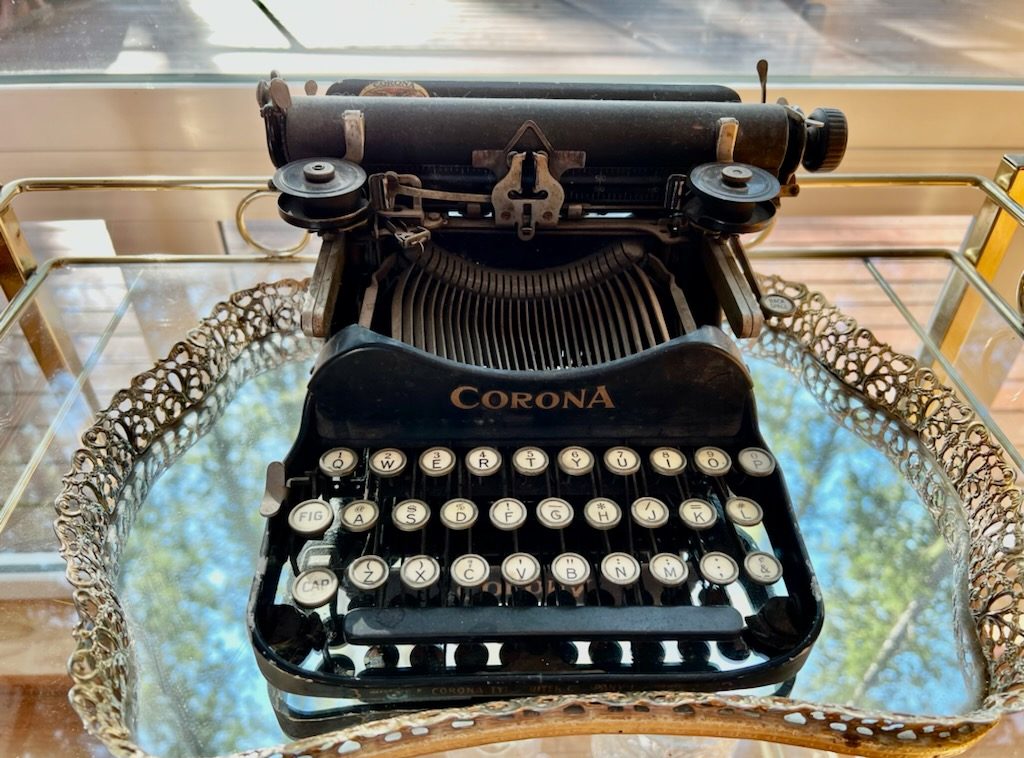


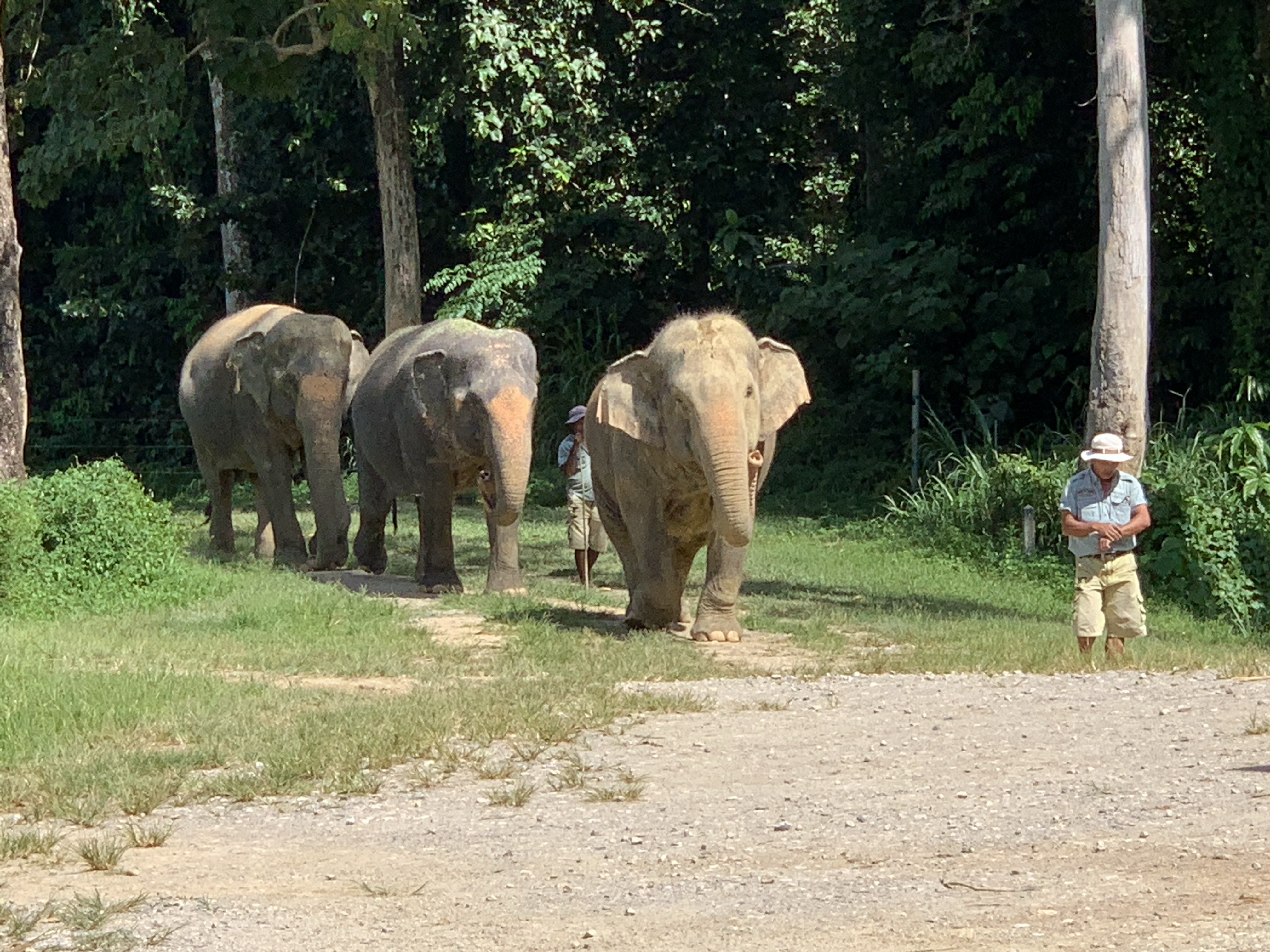


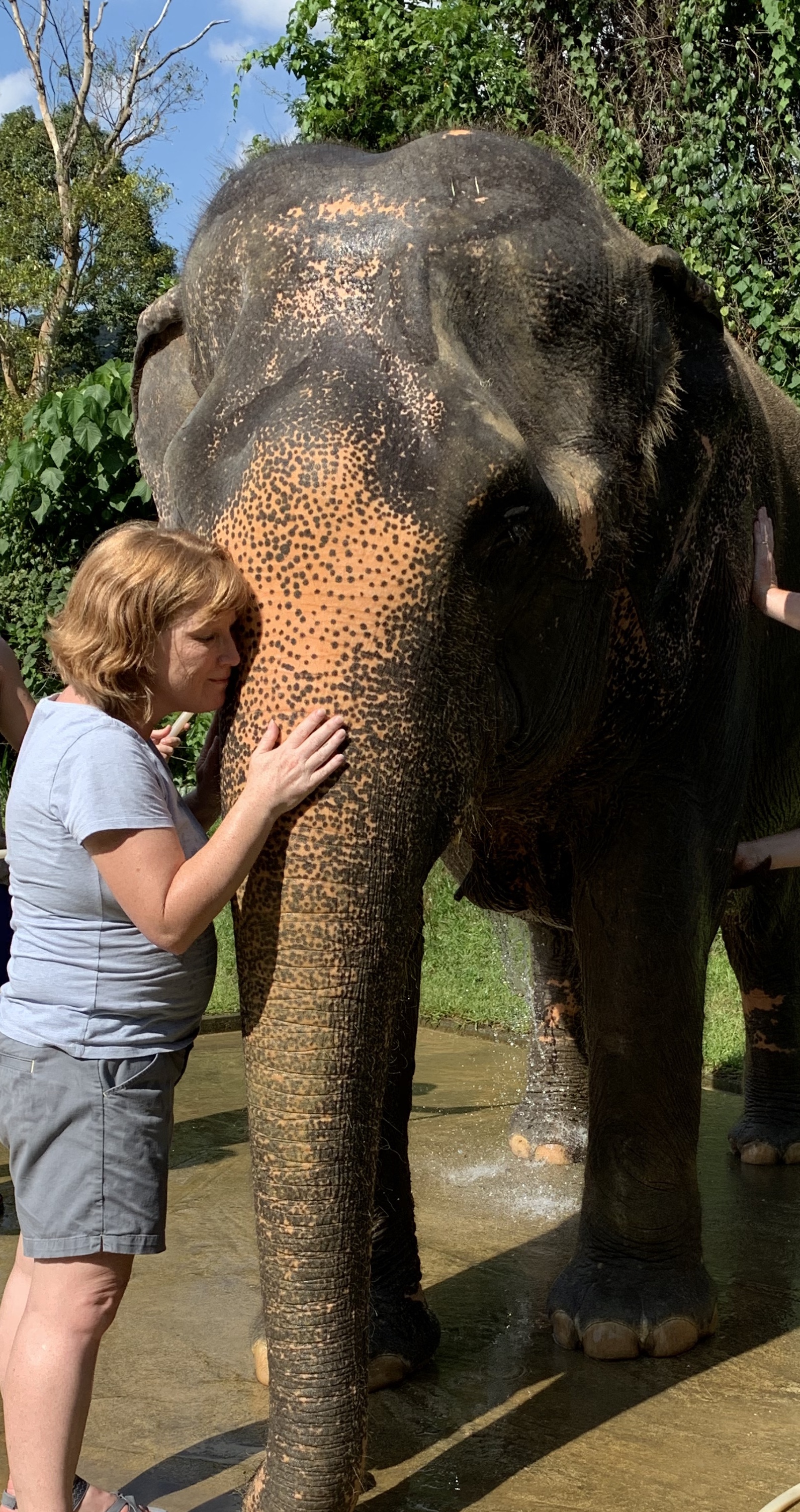
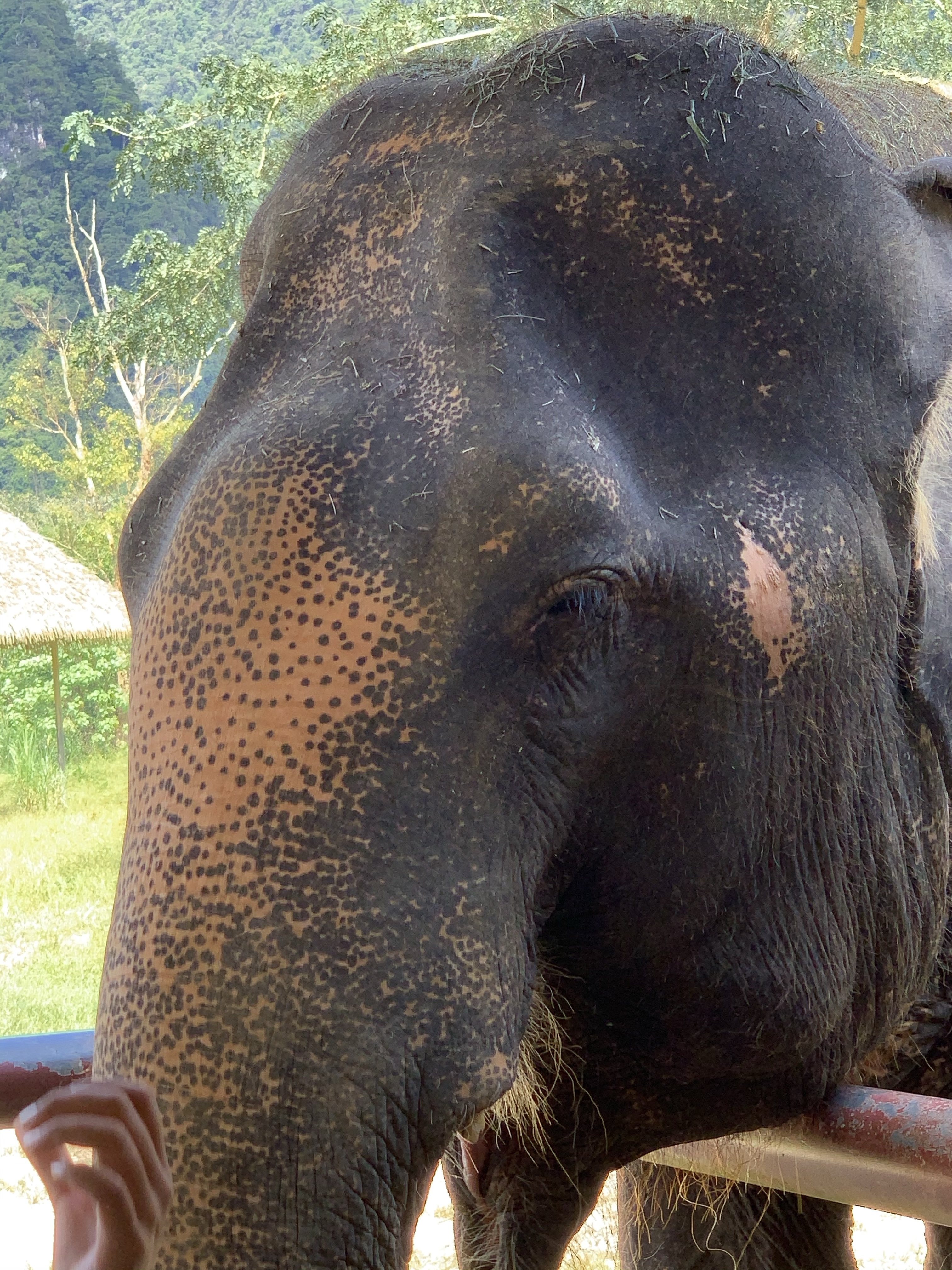
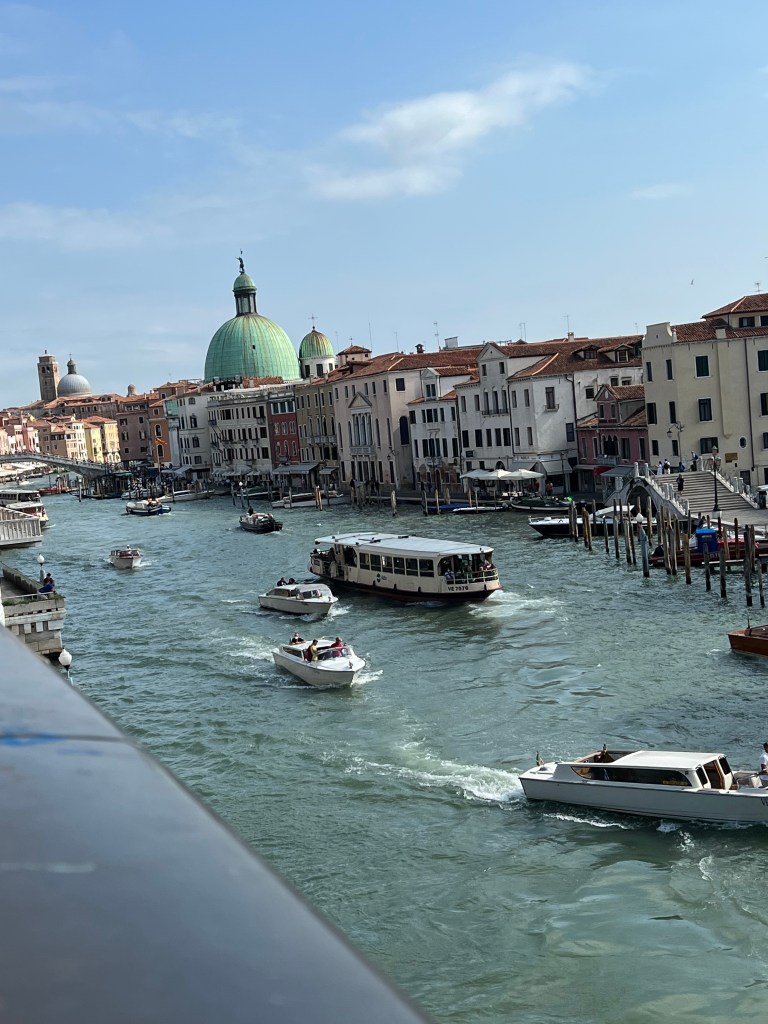

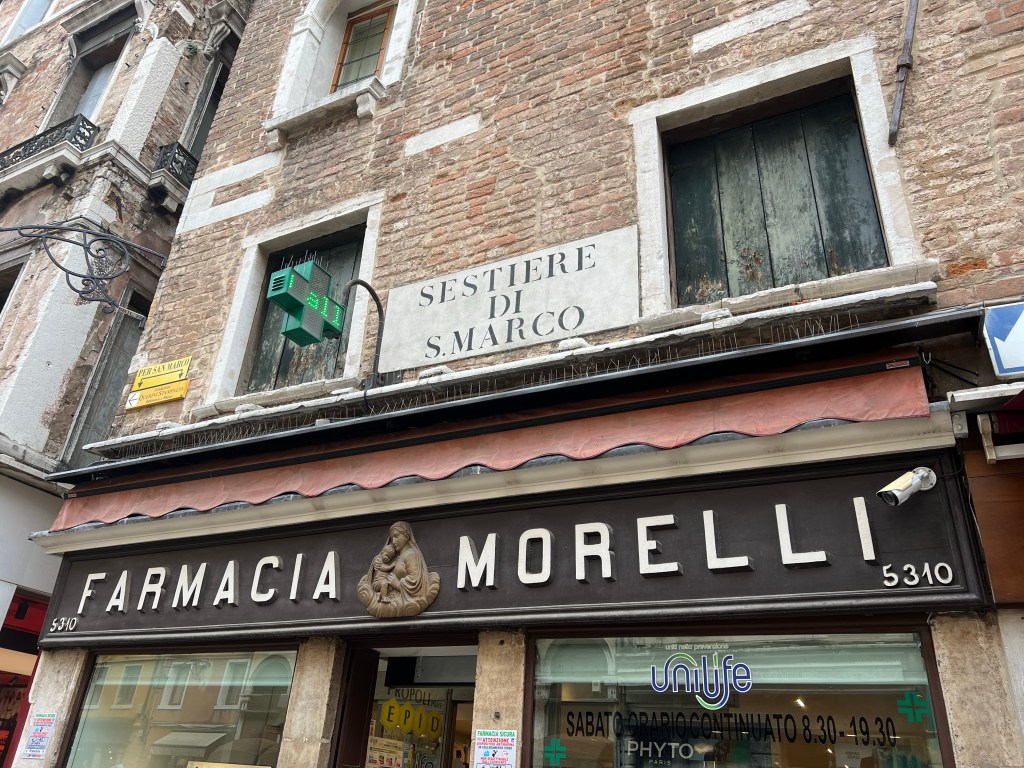


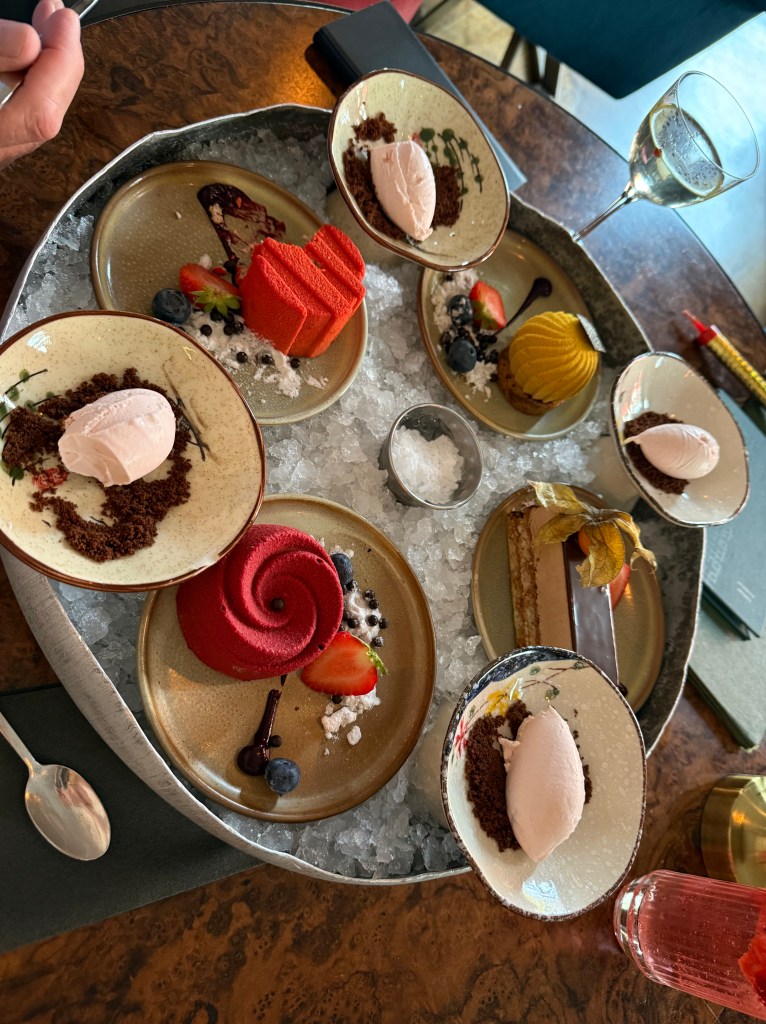



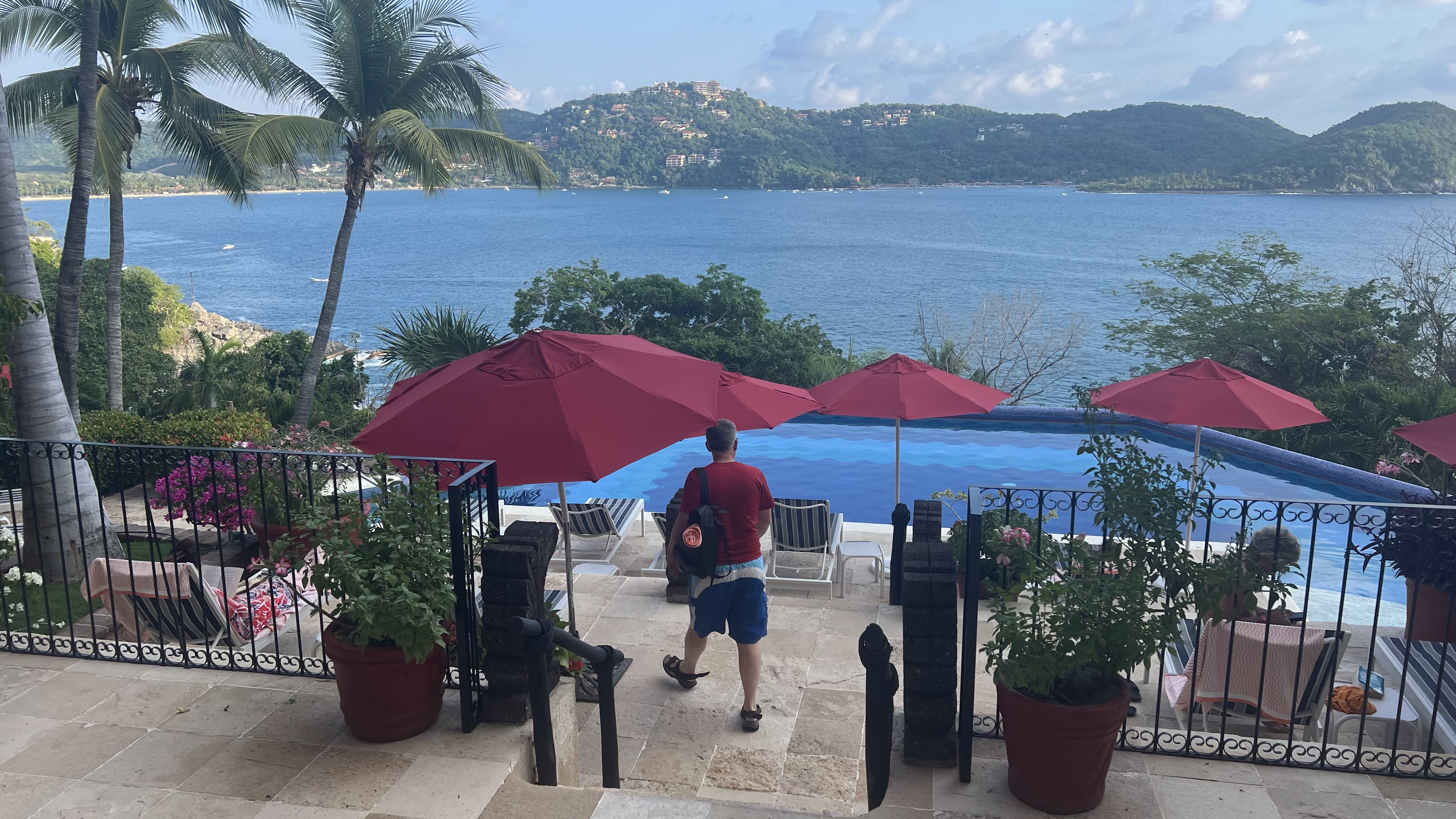
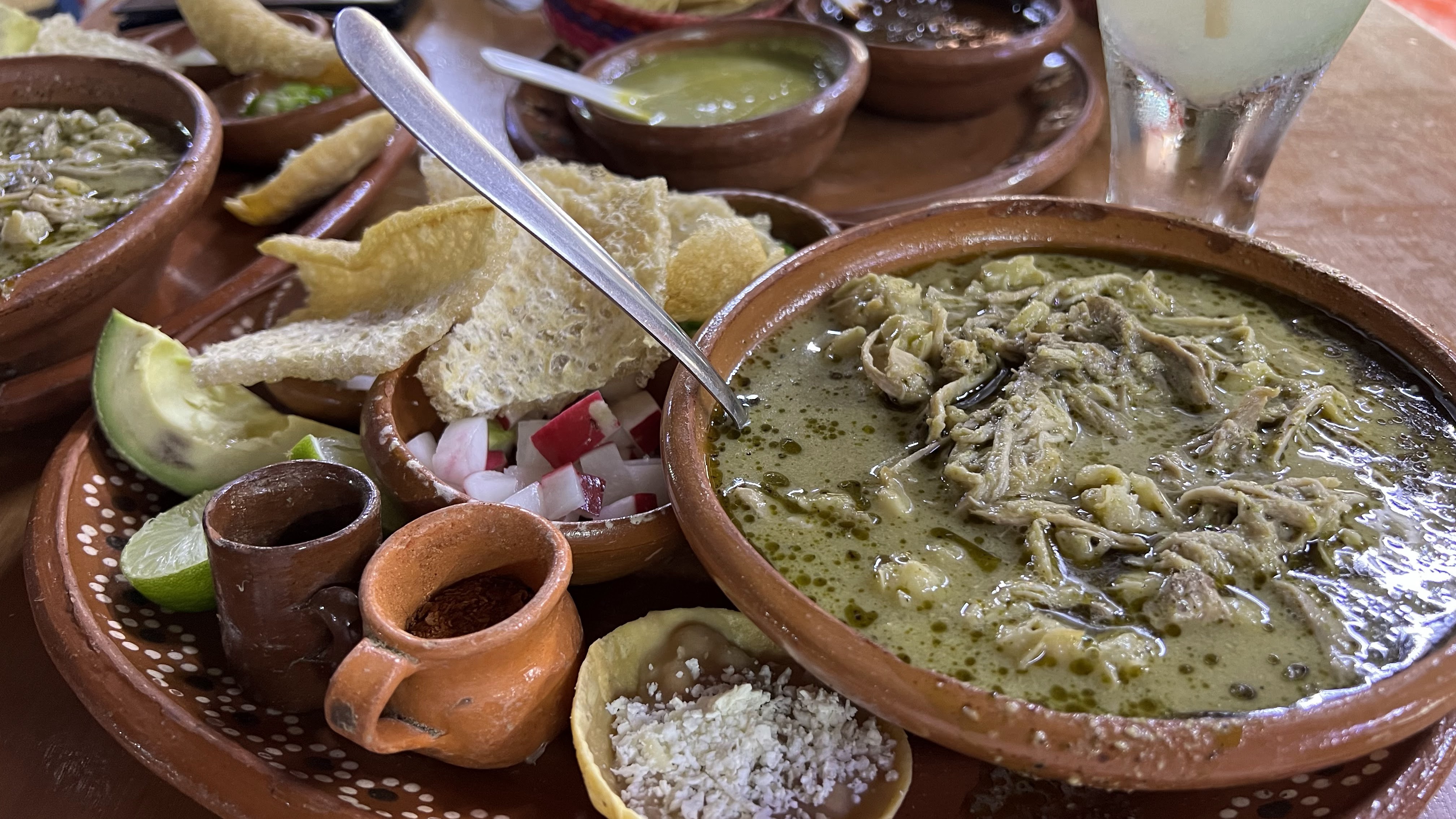
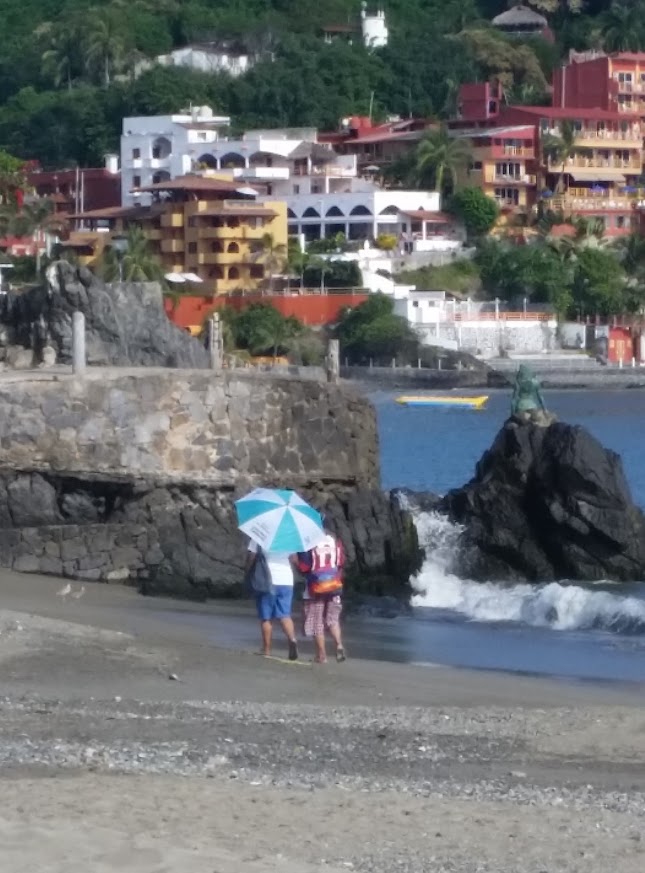

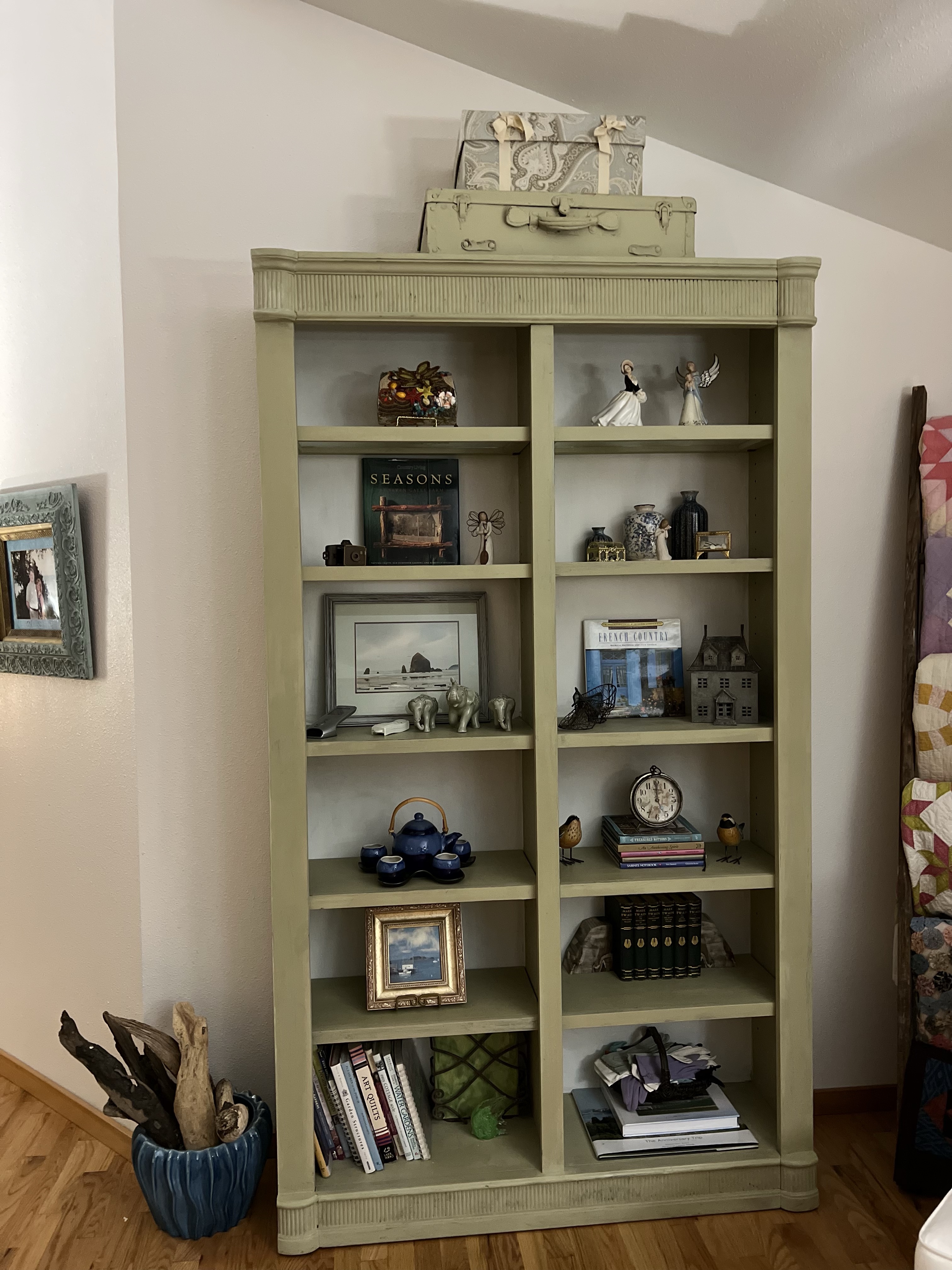


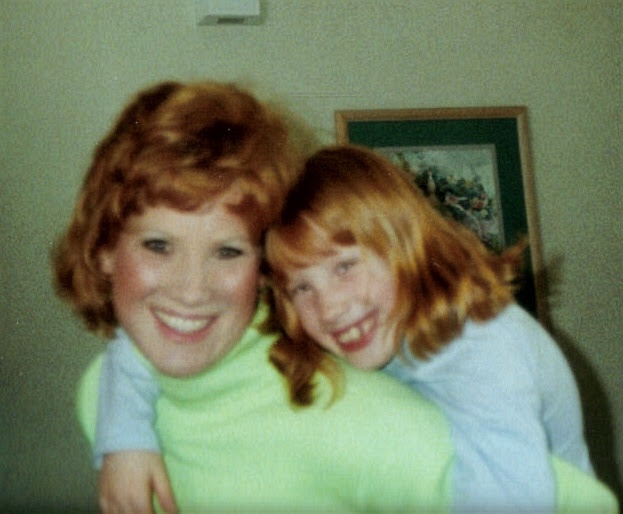

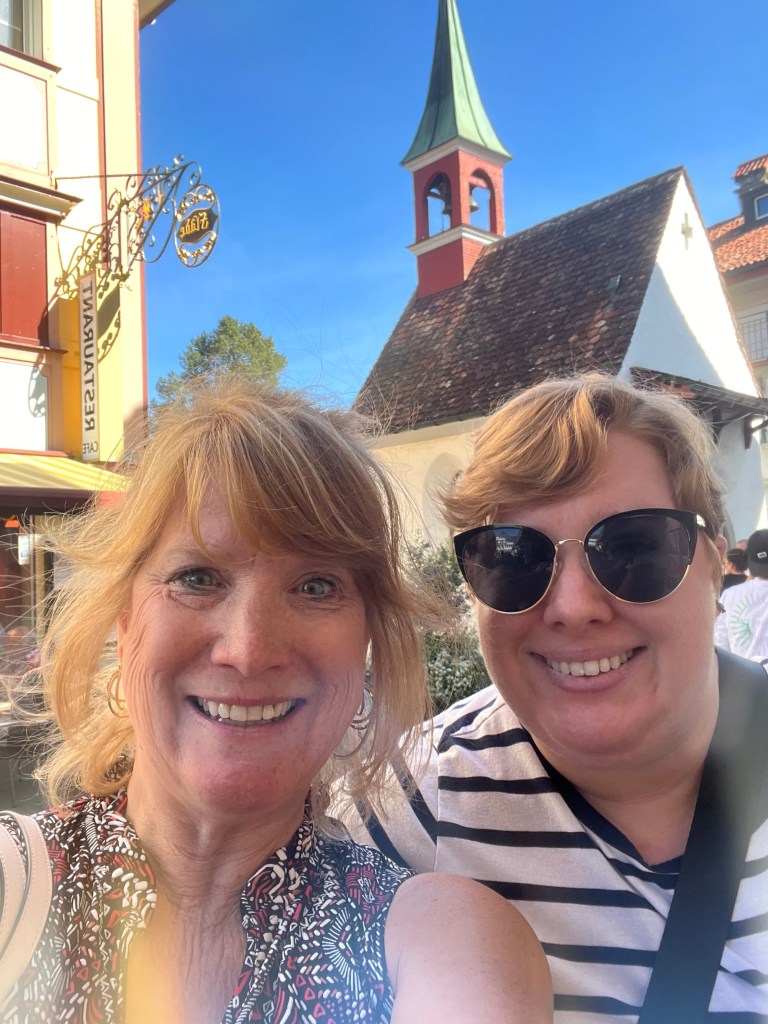


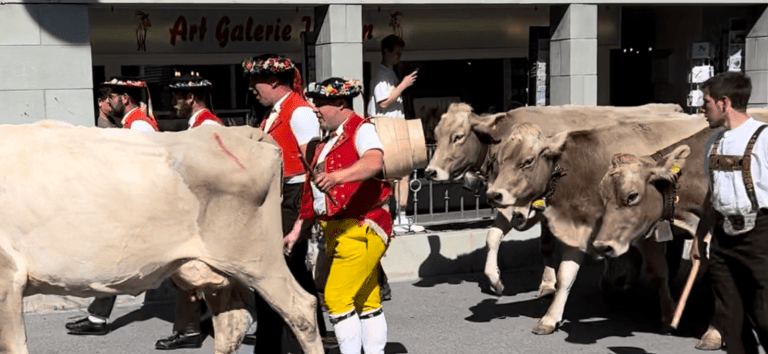
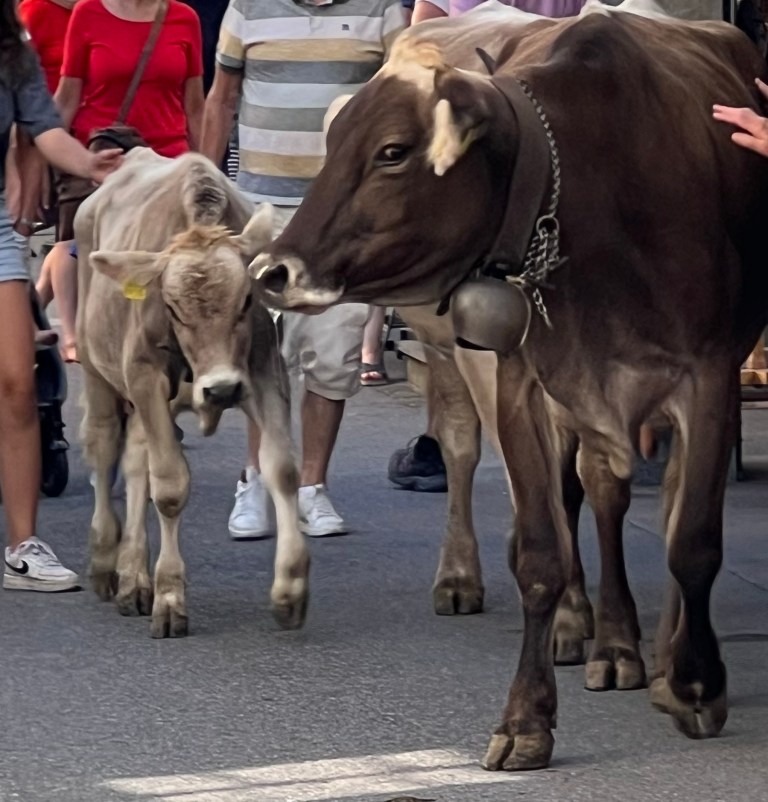
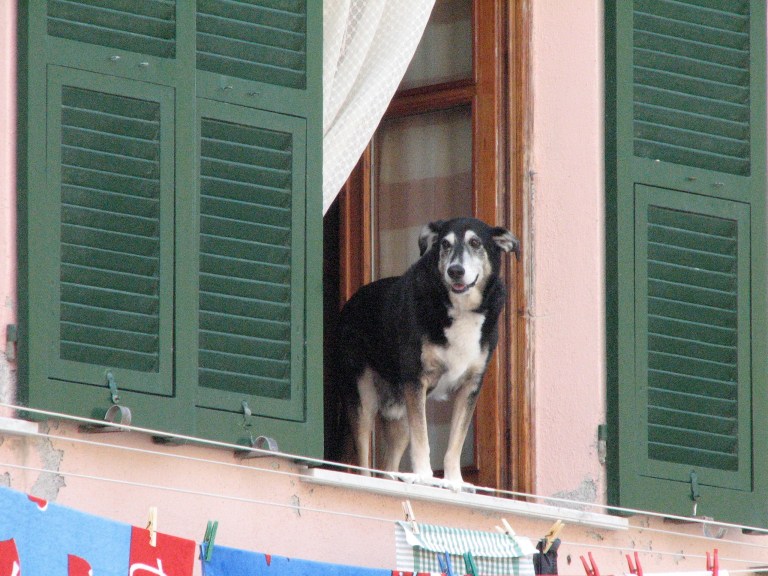

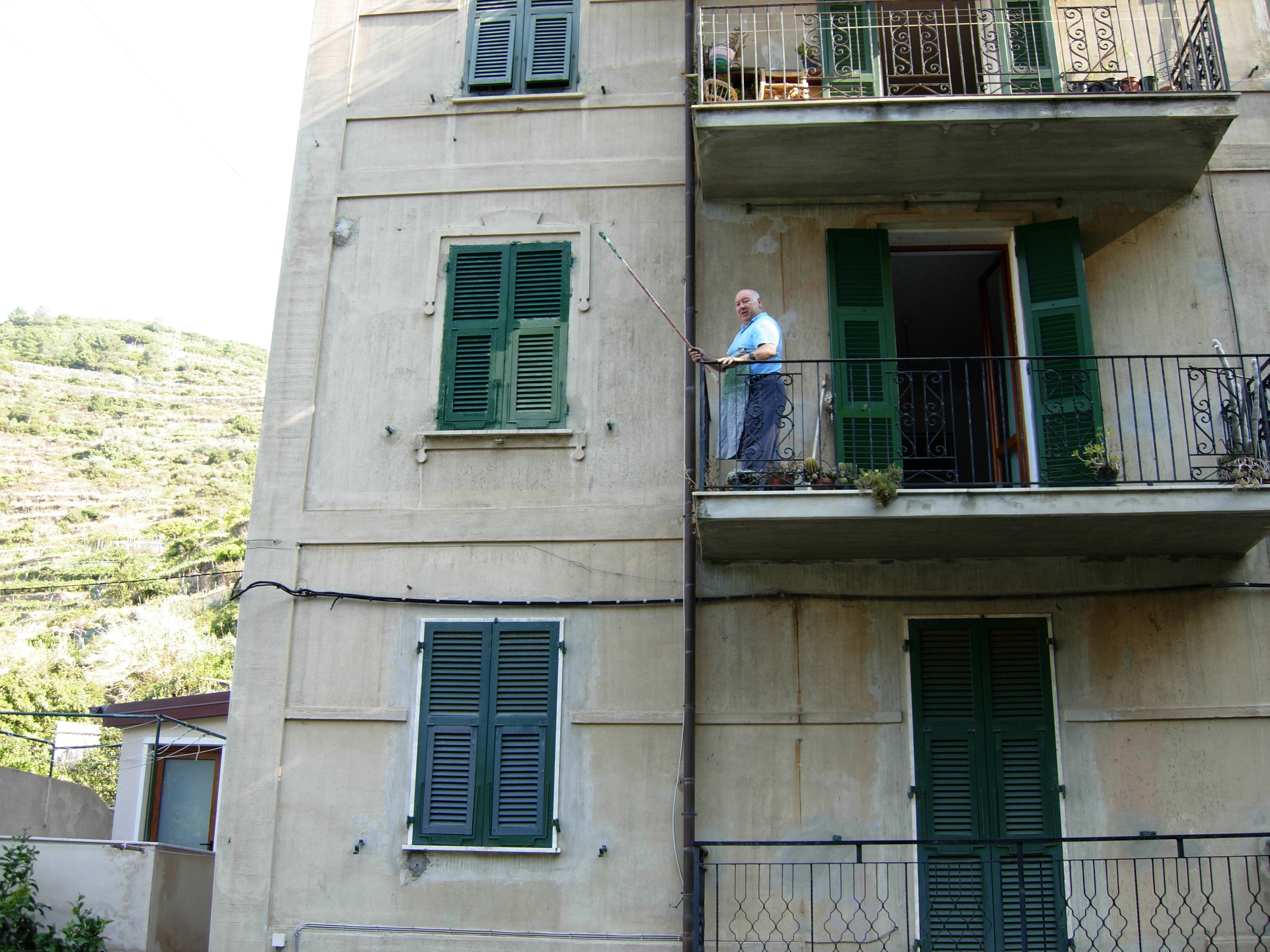



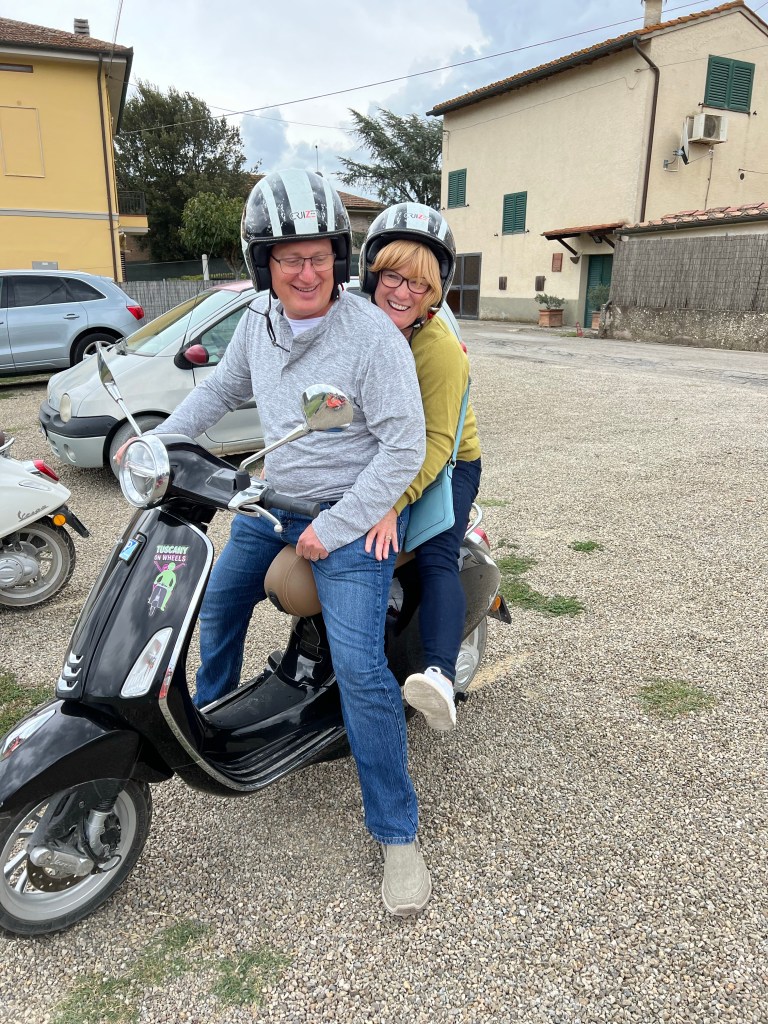
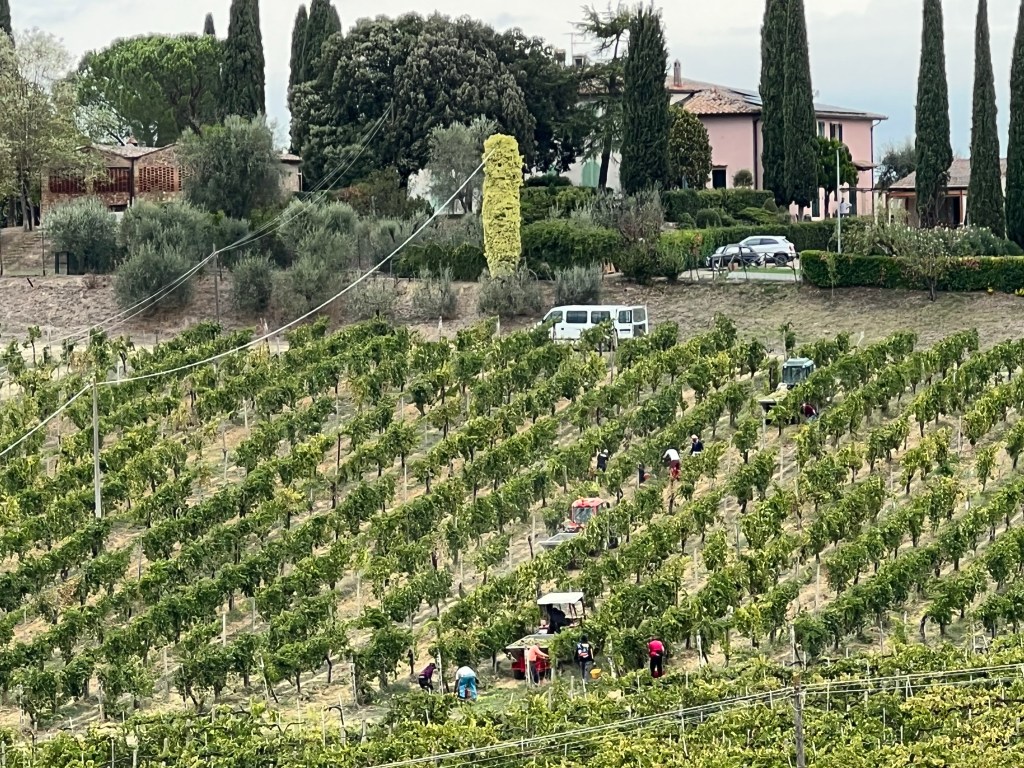
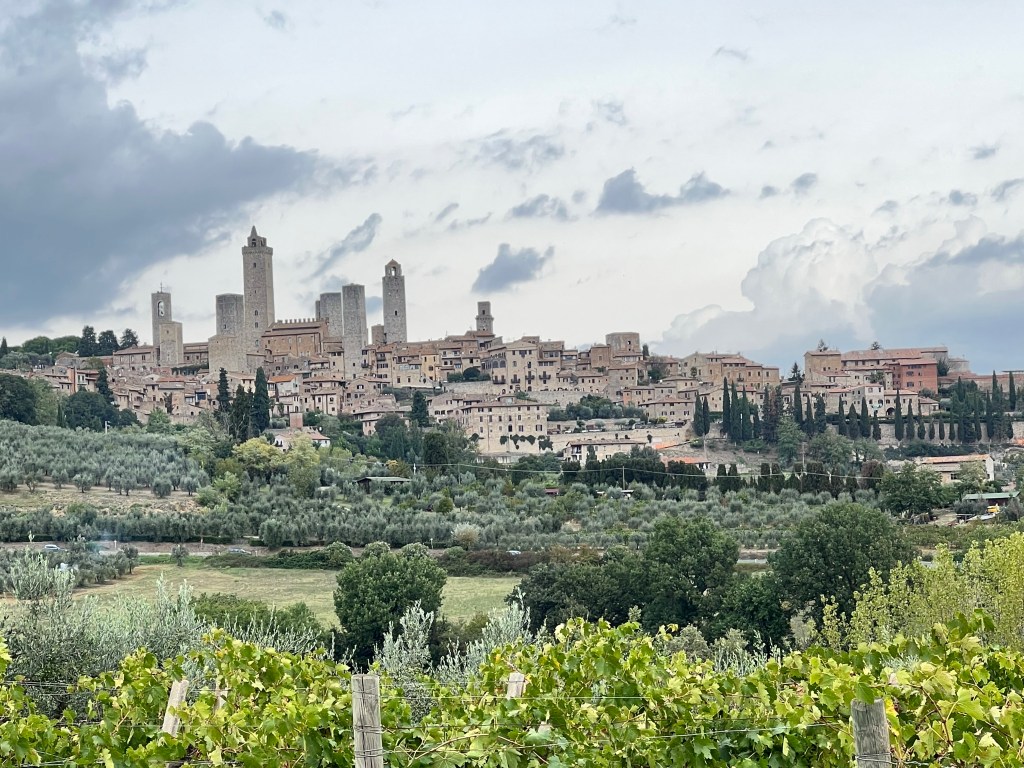
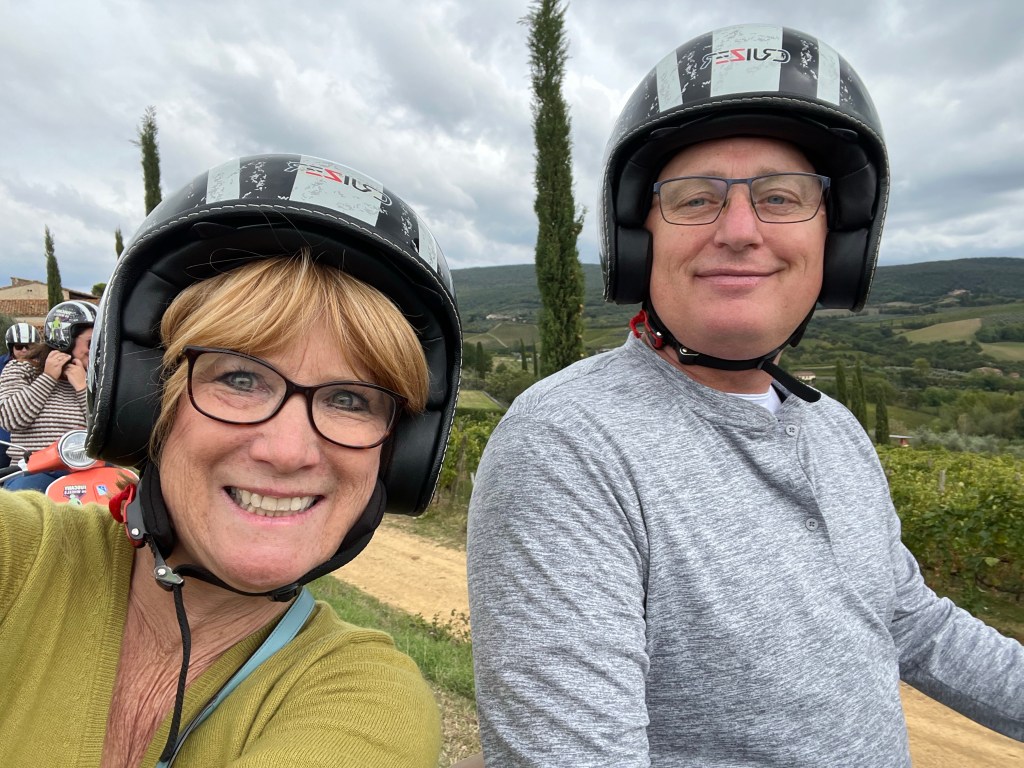


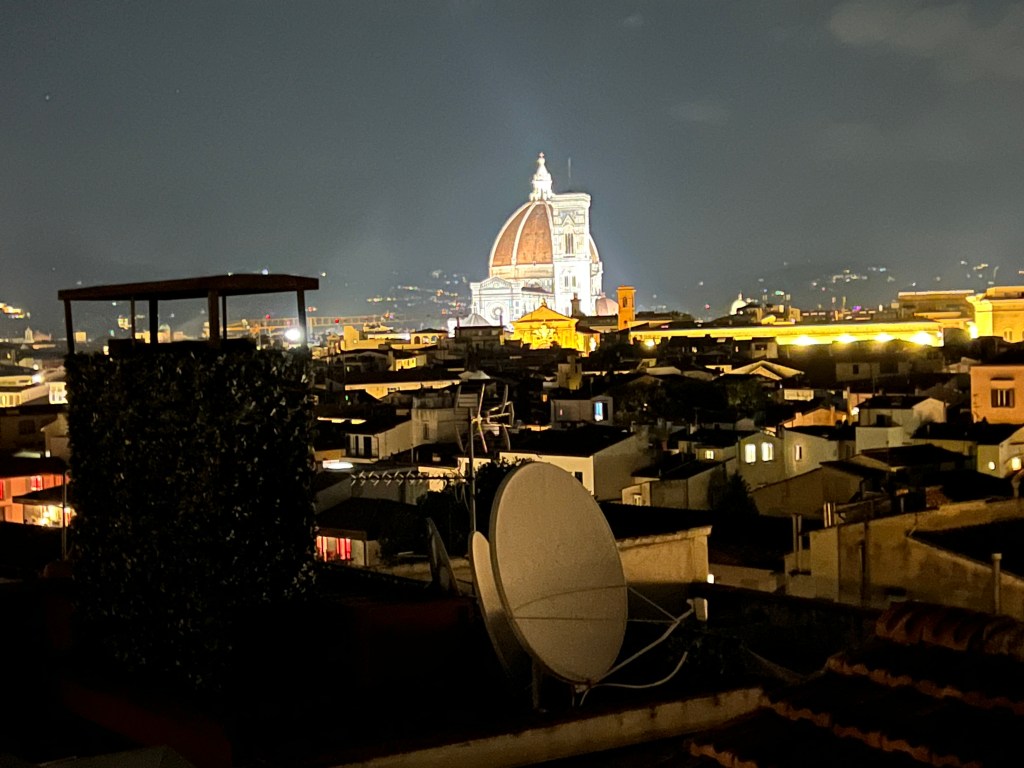


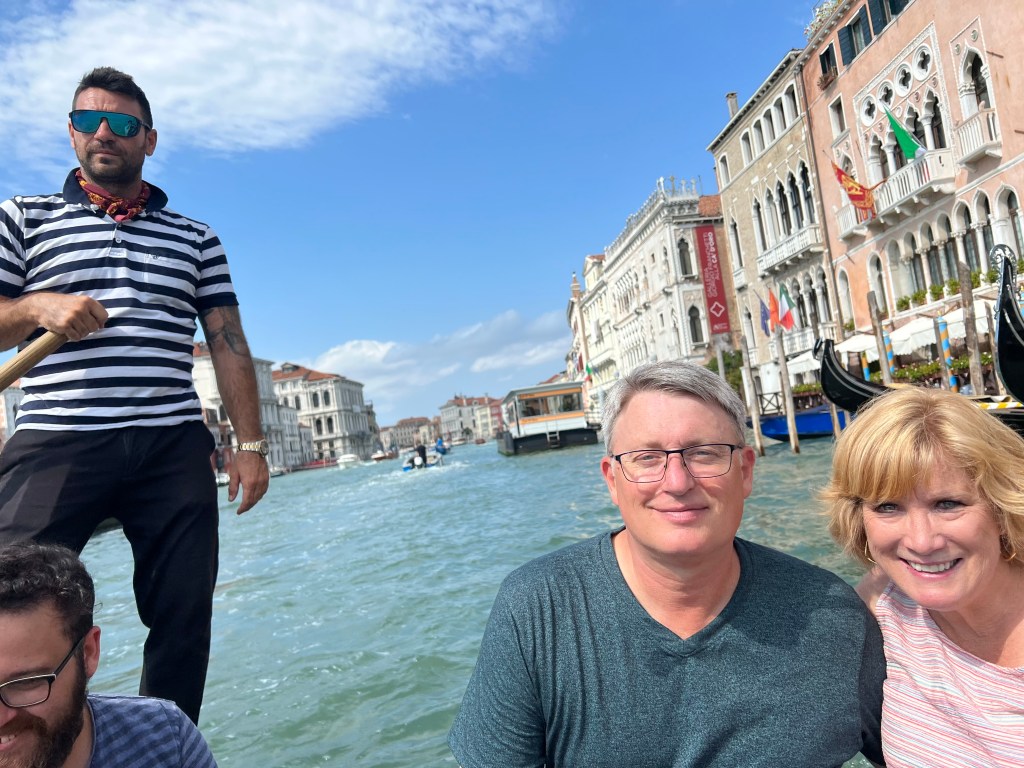
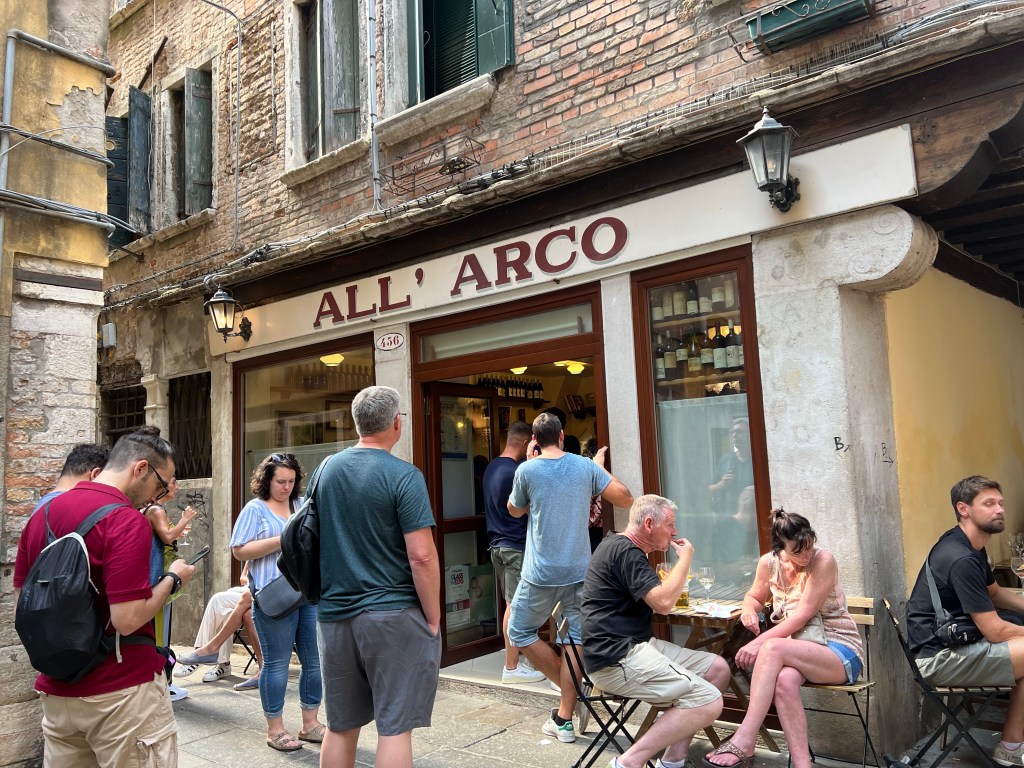
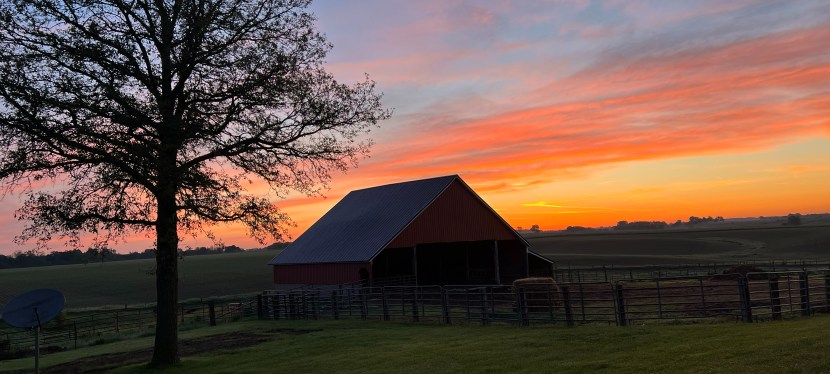


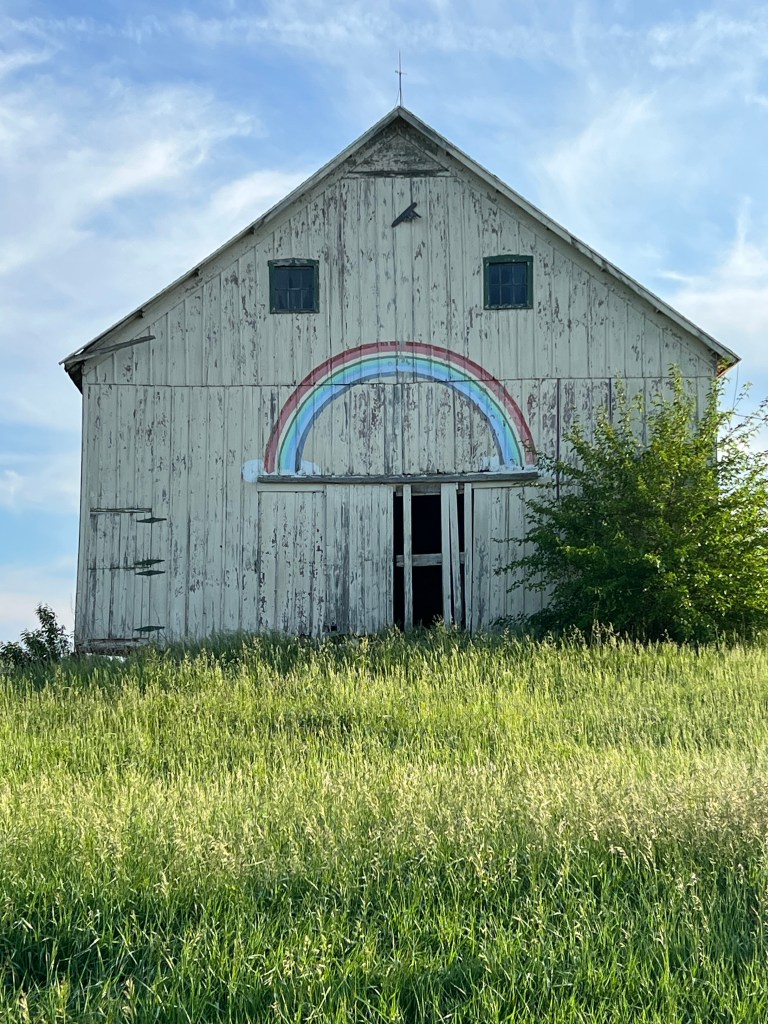






 Lesley Klenk, Author