

Zihuantanejo is a magical town. If you read my blogs you know it captured my heart years ago. I just found out Mexico feels the same way I do.
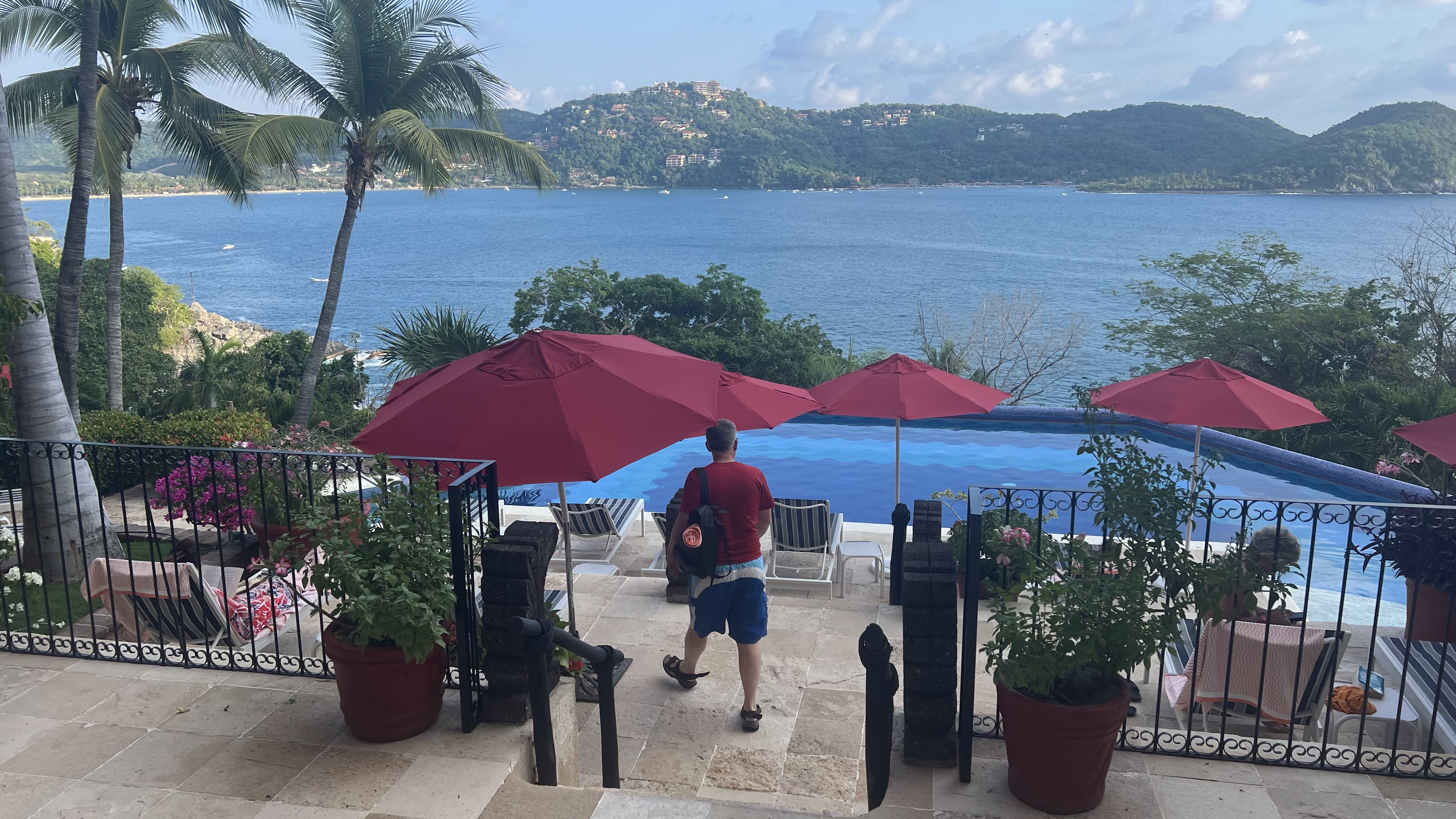
There are 177 Pueblos Magicos in the entire country of Mexico. What is one? A “Magic Town” is designation granted by the Mexican government as a best place to go in Mexico. It is not an easy title to earn. The town or village must apply for the special status and form a committee to showcase their town’s beauty, historical importance, natural wonders, and cultural traditions. If the town is successful, the government provides funds to improve infrastructure, communication opportunities and tourism-based employment. The government insists on one more quality before it bestows the moniker—magic. How can a town demonstrate magic? Read on.
It is our third trip to Zihuantanejo. We are awakened each morning by roosters lustily crowing in the sunrise; we keep the toilet lid closed in case an iguana takes up lodging there, and the local waiters in the bar downstairs sing “American Pie” and “Islands in the Stream” with gusto even though they are still mystified by the difference between American syrup and jam and bring them both to our table for our inspection. Yoonel, one of the staff who remembers us each time we come, sidled up to me at the doorway and whispered, “Miss Lesley, I am now the Assistant Desk Manager.” He raised his eyes heavenward in gratitude, and I gave him an elbow squeeze. To me this is all magic. Even the possibility of an iguana surprising us in the toilet bowl.
One online dictionary defines magic as, “an unaccountable noun.” Another says, “the power to use supernatural forces to make impossible things happen.” Still another postulates, “a person’s magic is a special talent or ability that others admire or consider very impressive.” So, magic can be an impossible event made possible or a single person with a special gift. My daughter, SarahKate, said, “It is a thinning of a veil between this world and another.” I like that.
Put all of it together, and you have Zihuantanejo.
Zihuantanejo is a small town on the Pacific coast where blue-footed boobie birds soar overhead with neon-azure feet and western Mexico chachalaca pheasants rustle in the bushes as loudly as miniature elephants. Other than the way the crow flies, Zihuantanejo residents are five hours from aging Acapulco, twelve hours from sophisticated Puerto Vallarta, and six hours from stalwart Mexico City. Few people own cars in Zihuantanejo that would actually make it more than 100 miles, so double all of those times and imagine spending them on a dusty bus–that’s how isolated this small town is.
Most people in Zihua (short version the locals prefer) start their day by sweeping their front stoop or walkway. It is a beach town and sand is everywhere. The act of sweeping off the old is necessary to welcome the new. It is creating a blank slate and being open to unknown possibilities. Yesterday a butterfly landed on my nose and studied me gravely before taking flight. I’d be lying if I didn’t think in that moment someone or something was putting a spell on me.
Zihuantanejo is a place where a single yodeling goose can guard a family’s house, people sternly tell their dogs to stay home and see them in town an hour later, and children teach their younger siblings to navigate a skateboard through the Zocalo (town square) by riding three across, all holding hands, and people have to scatter or risk getting tangled in the mess of beribboned braids and scraped knees.
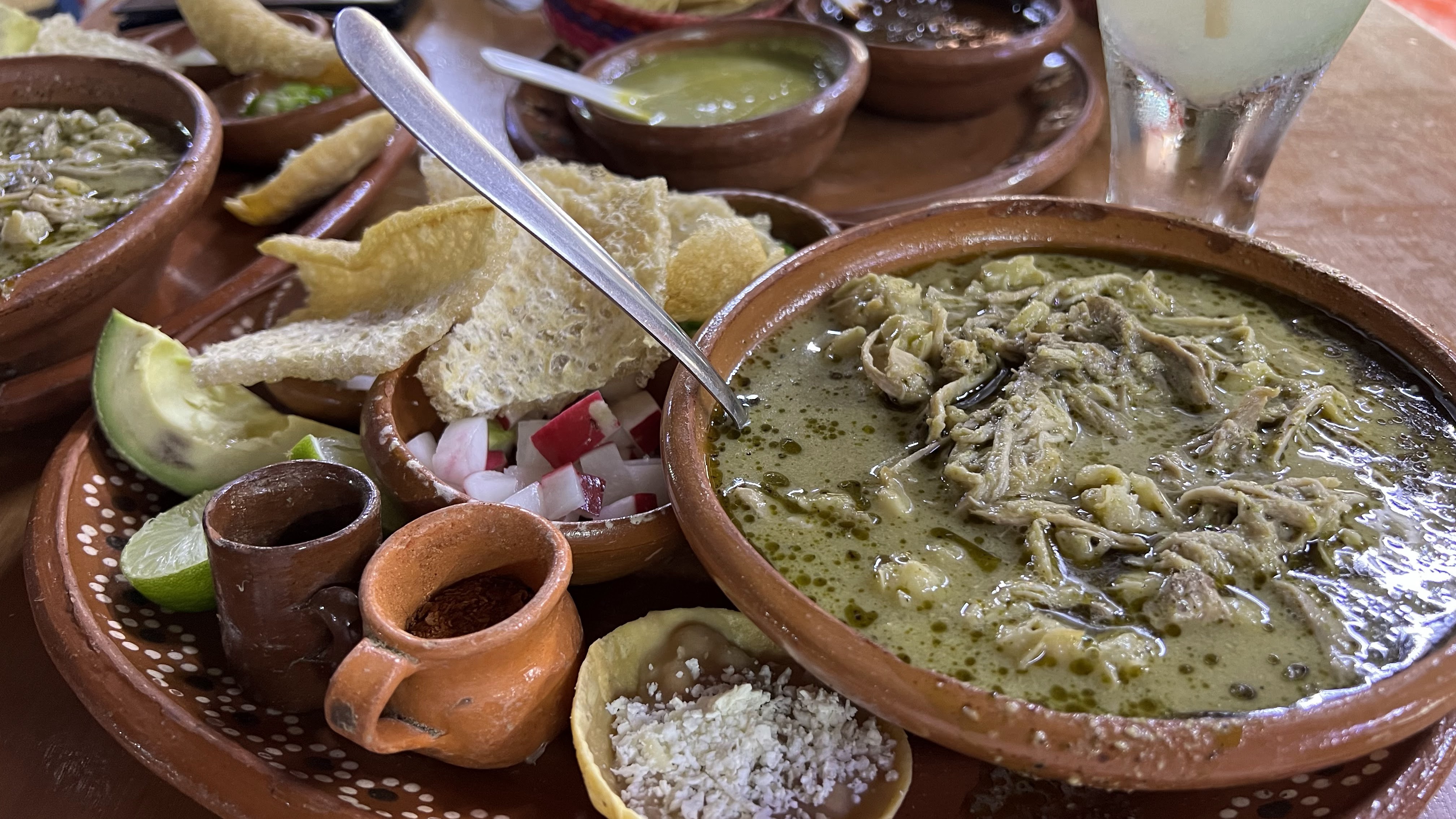
On Thursdays in Zihuantanejo, you are only allowed to eat pozole soup for lunch. Seriously. Made of chicken, radishes, onions, jalapeno peppers, and these odd little things that look like tiny spines (hominy), there are three choices of color for your soup–red, white, and green. If you just thought of the colors of the Mexican flag, congratulations, you pass. Pozole is also served with shots of mezcal. Don’t even confuse it with tequila. Mezcal comes in unmarked bottles and is stored under the counter. You hold up your tiny mug, and a nonchalant young slip of a thing will fill your cup so it is quivering to the top about to cascade over. (Or, maybe that is your hand that is quivering after too many free shots).
Even the locals recognize tourists if you visit often enough or you are a heavy-handed tipper. You guessed it–that’s me. There is a teenage couple we see at nighttime. She wears a dress with a wide flouncing skirt, and he is garbed in jeans, large boots and an even larger cowboy hat. They carry music from restaurant to bar and dance the zapateado—a combination of toe taps and heel stomps matched to traditional Mexican music. Paul thinks it is a 4-H project, I think it is college savings, but we both agree they are the real thing.
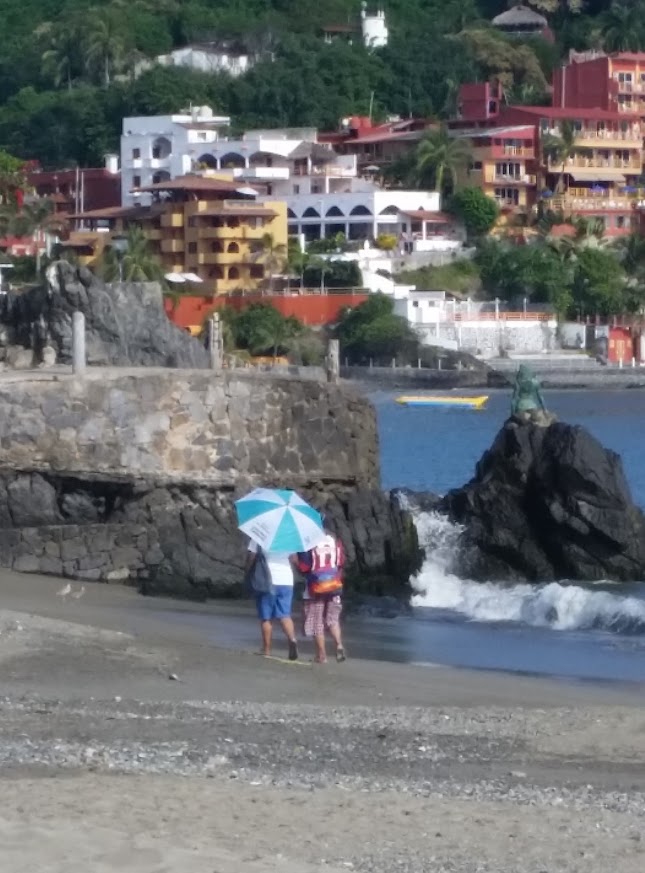
There is one more example of Zihuantanejo’s magic, and it causes my eyes to crinkle at the corners in a rush of emotion. All over town umbrellas pop open like luscious tropical flowers when you least expect it. They burst open unexpectedly at the beach while crossing the sand, or drift in and out of the foliage in the trees on the way home from school, and even two of them will pop at once in a boat crossing the bay. These nylon flowers dotting the landscape are carried by children to protect beloved grandparents from the sun and it is a honor to carry them.
I love the yodeling geese, flying skateboards, whirling umbrella flowers, foot-stomping music, shockingly hot food, burning, mysterious alcohol, and more. I love the chaos of Zihuantanejo. I love it all. Each day from sunrise to sunset, Zihuantanejo is a blaze of color, light, and sound. The events happen in singular moments, yet they all belong to the collective whole.
All of this is magical to me, but I am on vacation, and I don’t have to chase down the cheeky dog or walk carefully around the goose’s pen. So, it brings me back to SarahKate’s words and I think I know what Mexico requires of its magic towns: to thin the veil between my experience and the town’s life. They must be kept separate, so it remains authentic and real, yet the near opaqueness allows me to know Zihuantanejo in an intimate way without approximating it. Magic.
Fisherman fish at night at Zihuantanejo. Their panga boats (tall bow with a low stern) are beached high on the sand all day, and when the sun begins to set, the men, their hands full of tortillas stuffed with beans, finish their dinners, and walk down to the water’s edge to help one another push their boats across the wet sand. They place logs under the sky-blue bottoms and roll the boats on the logs. It is the smallest man’s job to race to the back of the boat, grab the last log and run it around to the front of the boat so there is no pause in the boat’s return to the sea.
The boats come back with the sunrise, and Paul and I join the rest of the town to greet them at first morning’s light. The boats float offshore and bob across the horizon in an orderly line. Then, one by one, a fisherman guns his motor, flies through the water, and hurtles his boat as far up onto the sand as possible. At the last minute, he pulls his motor up and the boat glides to a stop in the sand. Other fishermen rush forward with the logs, and they grunt together and push the boat up higher. By eight in the morning, the entire flotilla is back home. The crews unload their catch and spread the fish on blankets next to their boats. Townspeople and restaurant owners come to purchase fish for the day. Children dash between the boats clapping their hands at pelicans who, although huge, are known to sneak between the boats and gobble up a mess of fish right in front of a tired fisherman.
The daily ritual of the boats departing at night and returning in the morning is the magic that holds the lives, culture, history, and beauty of Zihuantanejo together. I think of it as the continuous drumming sound of the waves on the beach, but to the people of the town, it is the steady beating of the heart. I feel the thrill of the impossibility of boats flying onto the sand. The veil is lifted, and I am welcomed to a town that embodies magic in all its grubby, funny, sweet, and lovely splendor.
 Lesley Klenk, Author
Just read to Dad……both loved it…..makes us want to jo
LikeLiked by 1 person
This is another beautiful story told with “sophistication” and enchantment. I’m adding Zihauntanejo to my bucket list!
LikeLiked by 1 person
I want to go❤️💃 This place sounds enchanting!
LikeLiked by 1 person